

In the corner workshop at SILK Arts, the sound of chisel meeting stone creates a rhythm older than cities—patient, persistent, transformative. David Chen has been carving stone for 27 years, not as profession but as practice, and his workshop has become a gathering place for those who believe making things with your hands is not luxury but necessity.
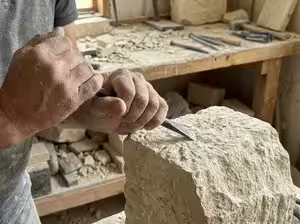
David Chen has been carving stone for 27 years. Not as profession—he worked construction most of his life—but as practice. "Stone teaches patience," he says, running calloused hands over a piece of limestone gradually becoming a heron in flight. "You can't rush it. You work with the grain, respect what the stone wants to be."
He's one of three stone carvers who regularly use the SILK Arts workshop. The others are Maria, a retired art teacher working in soapstone, and James, a younger artist exploring abstract forms in marble. They're different ages, different styles, different backgrounds. What unites them is the belief that making things with your hands is not luxury but necessity.

The stone already knows what it is. My job is just to remove what doesn't belong.
Creative Expression as Philosophy
SILK Arts operates on a radical premise: every member is an artist. Not because everyone produces gallery-worthy work, but because everyone has creative capacity yearning for expression. The arts program exists to make that expression accessible—through tools, space, instruction, and community.
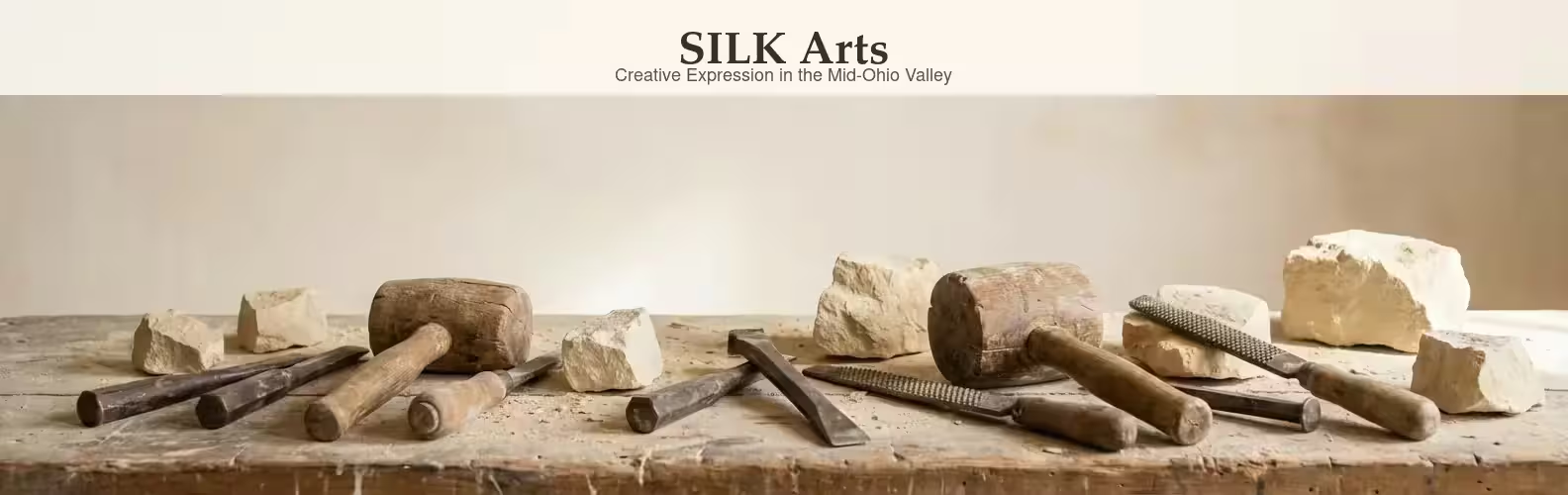
Stone carving is perhaps the most elemental art. No electricity required. Tools are simple—chisels, mallets, rasps, sandpaper. The materials come from the earth itself. And the process is meditation: repetitive striking, gradual revelation, slow transformation.
"People think art is about talent," Maria says, working a curve into soapstone that will become a seated figure. "It's not. It's about attention. Can you pay attention long enough to see what wants to emerge? That's the whole practice."

The Workshop
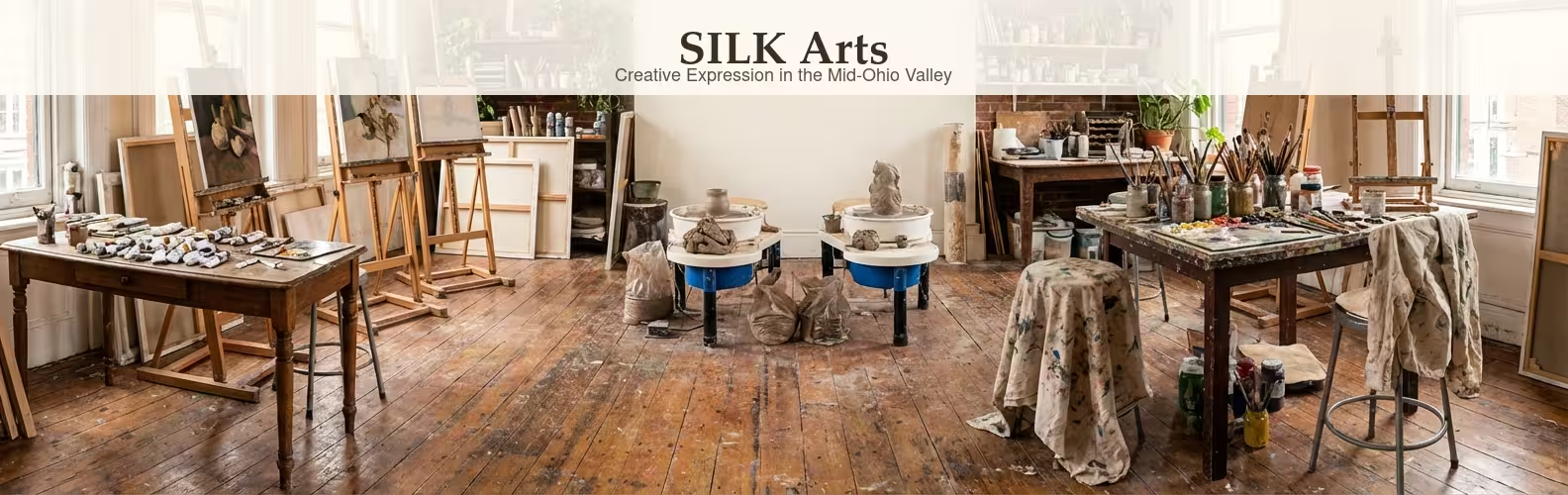
The SILK Arts workshop isn't fancy. Concrete floor, good ventilation, sturdy worktables, tool storage, and natural light from north-facing windows. Stone dust settles on everything. The smell is mineral and ancient.
Every Saturday, the carvers gather. Sometimes they work in focused silence. Sometimes they talk—about technique, about life, about nothing in particular. Newer members come to learn. Experienced carvers share knowledge freely. No one is in charge. Expertise is respected, but hierarchy is absent.
James, working on an abstract piece in white marble, describes his first visit: "I'd never touched stone before. I was intimidated. David just handed me a chisel and a chunk of soapstone and said, 'Try something. You can't break it—it's already rock.' That permission to fail, to experiment, to make ugly things while learning—it's rare."
Advertisement: SILK Arts
When I'm carving, I'm completely present. Not thinking about tomorrow's doctor appointment or yesterday's argument. Just chisel, stone, breath, strike. It's the only time my mind quiets.
Process Over Product
SILK Arts emphasizes process over product. Yes, beautiful objects emerge. David's birds are exquisite. Maria's figurative work has real power. James's abstractions are getting interesting. But the point isn't producing museum pieces—it's the practice itself.
"When I'm carving, I'm completely present," David explains. "Not thinking about tomorrow's doctor appointment or yesterday's argument. Just chisel, stone, breath, strike. It's the only time my mind quiets."
Maria nods. "It's meditation with tangible results. You see progress. Last week this was just a block. Today it's becoming something. That's powerful when so much of modern life feels abstract and inconsequential."

The workshop has attracted unexpected people. A software developer who spends all day in virtual space wants to make physical objects. A hospice nurse who witnesses constant change wants to work with permanent materials. A retiree who raised four kids and ran a business finally has time for the art she deferred for decades.
They come for different reasons. They stay because the practice matters. Because creating beauty is its own justification. Because working with ancient materials connects them to long lineages of makers. Because the workshop community offers something rare—shared silence, shared purpose, shared respect for the slow work of transformation.
Every Member is an Artist
"SILK Arts believes every member is an artist," I say, watching David work. "Not potentially an artist—is an artist. We're just helping people remember that and providing space to practice."
This philosophy extends beyond stone carving to painting, ceramics, textiles, metalwork, and more. But stone carving embodies something essential: the understanding that creativity isn't about inspiration waiting to strike, but about showing up to practice, trusting the process, and being willing to chip away at hard things until beauty emerges.
David's heron is nearly finished. Soon it will join the sculpture garden, where visitors can encounter stone transformed by patient attention. But David is already looking at the next block—rough limestone, no obvious form yet, just possibility. He knows from experience that the heron was always there. He just had to carve away everything that wasn't heron.
That, ultimately, is what all the stone carvers are doing—removing what doesn't belong, revealing what was always waiting underneath. It's true of the stone. It might be true of themselves too.

Ben Okafor
13 Dec 2024Elena, this is beautiful. I've photographed David's work several times but never quite captured what you describe here—that sense of patient revelation. Maybe I need to try stone carving myself.
REPLYRachel Kim
13 Dec 2024"The stone already knows what it is"—that's going to stick with me. There's something about that philosophy that applies to more than just carving.
REPLYMarcus Webb
14 Dec 2024As someone who's spent decades teaching music, I recognize that truth—art isn't talent, it's attention. The students who paid attention always went further than the "naturally gifted" ones.
REPLYEmma Clarke
14 Dec 2024I've been thinking about taking up a creative practice that isn't sitting at a computer. Stone carving sounds intimidating, but maybe that's exactly why I should try it. When are the Saturday workshops?
REPLYOmar Hassan
14 Dec 2024As someone who works entirely in virtual space, the idea of making something permanent and physical is deeply appealing. I spend all day creating things that could vanish with one bad server crash.
REPLYEvie Stone
15 Dec 2024The description of being completely present while carving—that's what we're always trying to find in yoga practice. Maybe I've been looking for it in the wrong place. Physical creation might be my meditation.
REPLYBill Henderson
15 Dec 2024David's got patience. Always has. Watched him work on that heron over months, never rushing. Same way the river cuts through stone—slow, persistent, one day at a time.
REPLY