We agreed in November: handmade gifts only this year. No Amazon. No last-minute mall runs. Just our hands and time and whatever we could create. What could go wrong?
The pact was made November 1st: handmade gifts only. No exceptions, no buying, no taking the easy way out. Fifteen people committed immediately, high on the romance of artisanal living and conscious consumption.
By December 15th, we were all regretting it.
"I can't knit," Jordan announced at community meeting, holding what appeared to be a deformed scarf with three arms. "This is my fourth attempt. It keeps growing appendages."
"I burned the woodworking project," Tom admitted. "Literal flames. My shed still smells like failure."
"I made soap," Sarah offered. "It looked great until I used it. It's basically caustic."
We stared at each other, collectively realizing we'd committed to giving handmade gifts when most of us couldn't hand-make toast without supervision.
This is the moment when most groups would've given up, ordered gift cards, pretended the handmade pact never happened. Instead, we doubled down on disaster.
"We keep going," Elena declared. "Handmade doesn't mean perfect. It means made by hand. Even terrible hands."
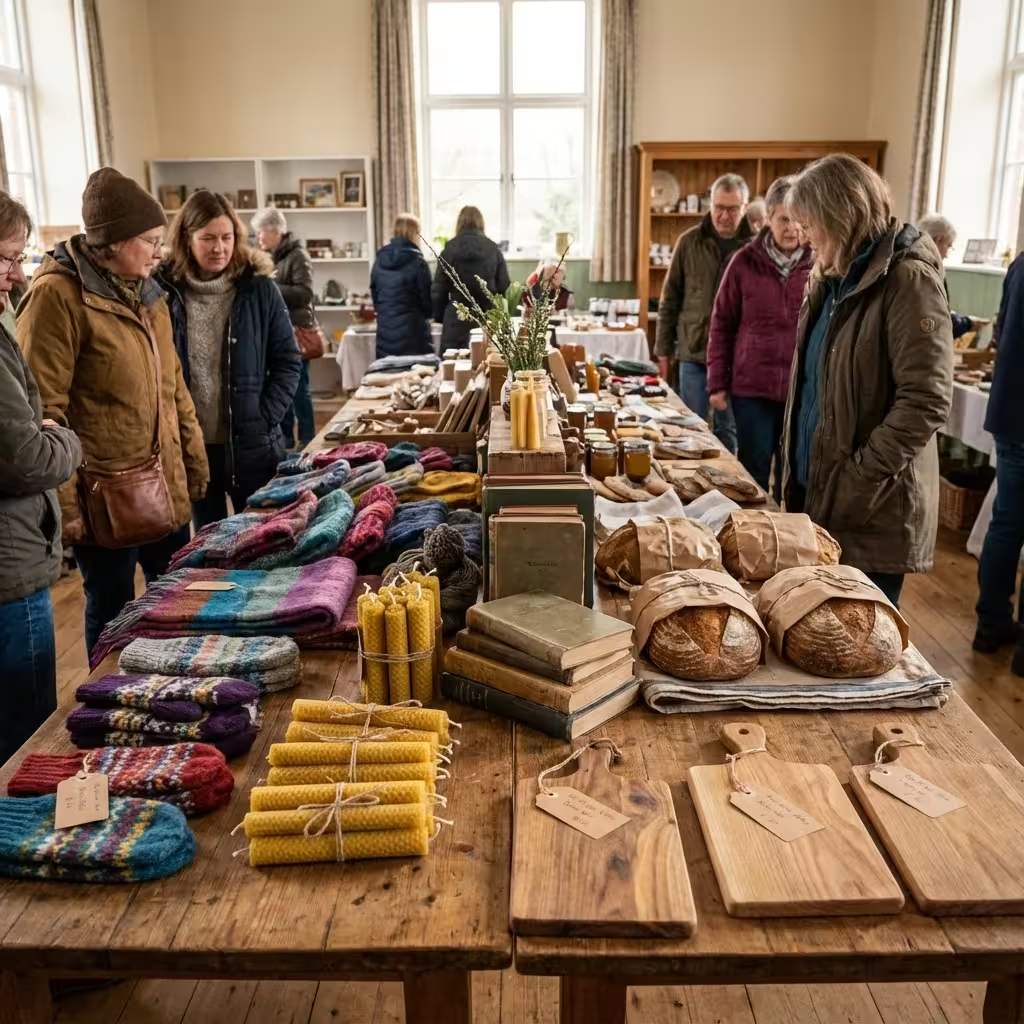
So we did. We shared skills—those who had them teaching those who didn't. Elena opened her pottery studio for "Emergency Mug-Making." Most of us created lumpy cylinders that technically held liquid. She called them "charmingly rustic." We called them "proof of effort."
Bill taught basic woodworking to anyone willing to risk their fingers. Resulted in: seventeen crooked cutting boards, one surprisingly good birdhouse, and Tom's renewed respect for people who build furniture professionally.
Maya showed us bread-baking. Half the loaves came out either raw or charcoal. We wrapped them anyway. "It's the thought that counts," someone said. "If the thought is mild arson," Bill countered.
Rachel attempted to teach bookbinding. This went better, mostly because stapling pages together is hard to catastrophically ruin. We made journals—uneven, over-glued, utterly imperfect. Beautiful in their obvious handmade-ness.
I tried making candles. Melted wax everywhere. Kitchen smelled like a craft store exploded. Produced twelve candles that burned unevenly and dripped dramatically. "They're meditative," I insisted. "You meditate on whether they'll burn your house down," Jordan suggested.
By December 20th, we had a collection of profoundly imperfect objects, each one bearing the evidence of someone's genuine attempt to create rather than consume.
Gift exchange happened December 23rd. We'd agreed: no wrapping paper (wasteful), no expectations (essential), no judging (impossible but we'd try).
The giving revealed everything:
Emma received Jordan's mutant scarf. Wore it immediately. Said the extra arm made it "avant-garde." Jordan looked relieved enough to cry.
Bill got one of my disaster candles. Lit it that night. Said watching it burn lopsided reminded him "beauty doesn't have to be balanced."
Sarah gifted her caustic soap to Tom with the warning "Don't actually use this." Tom put it on his shelf anyway. "Monument to trying," he said.
Elena gave everyone mugs—actually good ones, because she has skill. We felt embarrassed. She shrugged. "Your wonky cutting boards are going in my studio. I like seeing proof of learning."
Maya's bread loaves were distributed with humor and humility. "Some are good. Most are doorstops. Consider it a mystery box situation."
Rachel's handbound journals became the unexpected winners. Even made badly, they held stories. We all immediately claimed ours for the new year.
My candles were accepted with grace and mild concern. Everyone promised to "never leave them unattended." I appreciated the honesty.
Tom's woodworking—those crooked boards and wonky shelves—got installed in various cottages. Emma mounted hers in her kitchen with a plaque: "Made with love and minimal skill by Tom, Dec 2025." It's her favorite kitchen feature.
Bill, who could actually make things, had created simple wooden boxes for everyone. Perfect joinery, smooth finish, exactly one decoration: our initials burned into the lid. "For keeping things that matter," he said gruffly.
We'd expected handmade to mean beautiful. Instead it meant honest. Every wonky mug and crooked board carried the evidence of time spent, mistakes made, trying anyway.
Later that night, after gifts were exchanged and disaster candles lit (under supervision), someone asked: "Would anyone actually trade these for store-bought?"
Silence. Then everyone simultaneously: "No."
Because here's what we learned: perfect gifts are forgettable. These imperfect objects—burned bread and mutant scarves and dangerously uneven candles—they tell stories. Jordan's scarf says "I tried something new and failed visibly and gave it anyway." My candles declare "I'm still learning and that's okay." Tom's crooked boards announce "I spent hours making this wrong and that time still mattered."
The handmade gifts we'll remember aren't Elena's perfect mugs (though we use them daily and treasure them). They're the catastrophes we gave despite their flaws. The objects that said "I made this badly because I cared more about trying than succeeding."
Next year, we'll probably do it again. Maybe better, maybe worse, definitely imperfect. Because that's the point: handmade doesn't mean skilfully made. It means made with hands that tried, time that was given, care that shows even through mistakes.
Amazon can ship perfect things overnight. What it can't ship is Jordan's four weeks of failed knitting, or the evening Tom's shed caught fire, or the morning we all gathered in Elena's studio to make lumpy mugs together.
Those gifts can only be made by hand, given in person, and received with the knowledge that someone spent their limited time making you something imperfect. Which, turns out, is the most perfect gift there is.
Advertisement


Comments
Emma Clarke Dec 19, 2025 at 3:45 PM
I still have Jordan's mutant scarf. It's my favorite thing I own. Not because it's beautiful—it's objectively terrible. But because every time I wear it, I remember that December night when we all showed up with our disasters and gave them anyway. That's what community looks like: witnessing each other's failures and calling them gifts.
Bill Henderson Dec 19, 2025 at 5:20 PM
Tom's right about this. I've gotten a lot of gifts in seventy-three years. Most of them I don't remember. But that lopsided candle he made? It's on my mantle. I light it sometimes when I need to remember that trying badly is better than not trying at all. Skills can be learned, but caring enough to try—that's what matters.
Sarah Mitchell Dec 20, 2025 at 8:10 AM
The caustic soap incident still makes me laugh. I was so embarrassed—spent three weeks learning to make soap, followed all the instructions, and somehow created something that could strip paint. But Tom keeping it as a "monument to trying" actually meant more than if I'd made perfect soap. Because he was honoring the effort, not the outcome.
Tom Richardson Dec 20, 2025 at 11:45 AM
My shed still smells like burnt wood from that woodworking disaster. Every time I walk in there, I remember that you can try something new at forty-five and fail spectacularly and the world doesn't end. Actually, the world improves because you tried. Next year I'm making birdhouses. They'll probably collapse, but I'm doing it anyway.
Rosa Delgado Dec 20, 2025 at 2:30 PM
This is the antidote to perfectionism culture. Amazon sells perfect things made by machines in distant factories by people we'll never meet. These gifts—these beautiful disasters—they're made by hands we know, in kitchens we've sat in, with effort we witnessed. That's worth infinitely more than perfection. I'm joining you all next year.