


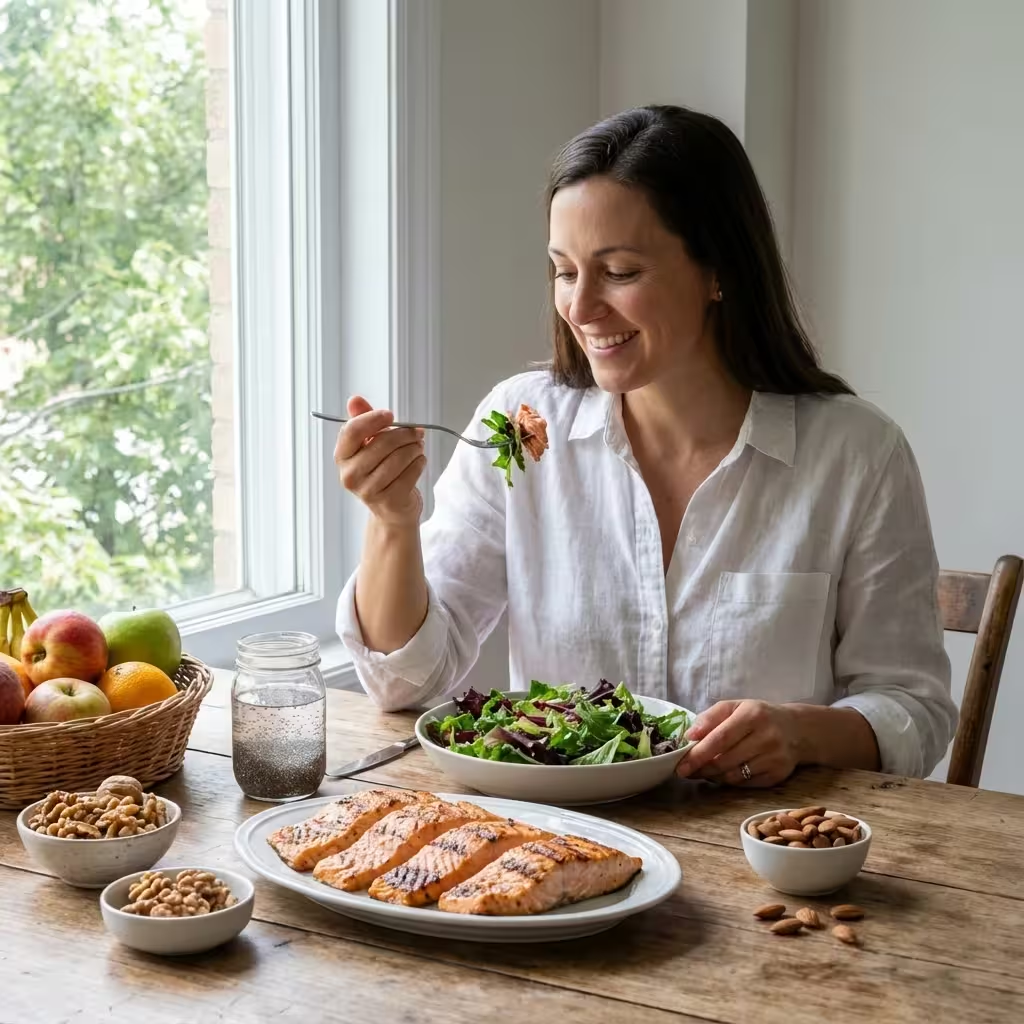
The SILK Diet isn't about what you eat. It's about how you live. When I moved to Ravenswood and joined this community, I kept hearing about Strength, Integrity, Love, and Knowledge—but I didn't understand what those words had to do with my daily breakfast choices or whether I rolled out my yoga mat that morning.
Then Bill handed me a bag of Cherokee Purple tomatoes one August morning, and something clicked.
"Eat these before they go bad," he said, standing on my porch with dirt still under his fingernails. "Got too many."
I made tomato salad for three days straight. Not because I was following a meal plan or counting nutrients, but because Bill grew them, because they came from soil I could see from my window, because eating them before they rotted felt like the right thing to do.
That's Integrity. Making choices that align with what you actually believe matters.
The SILK philosophy doesn't give you a meal plan. It gives you a framework for deciding what matters to you—and then choosing to live like it.
When I talk about the SILK Diet to people outside this community, they expect me to tell them what to eat or when to exercise. But that's not how it works. The four pillars—Strength, Integrity, Love, Knowledge—aren't prescriptions. They're questions you ask yourself.
Strength: Does this choice build resilience in my body and mind? When I skip yoga because I'm tired, is that rest or avoidance? When I push through pain, is that discipline or harm? Strength isn't about punishing yourself into shape. It's about showing up consistently, building capacity slowly, honoring where you actually are.
Tom runs every morning at 6 AM. Has for years. That's his strength practice. Mine is showing up on my mat three days a week, sometimes five, occasionally one. Both are valid. Strength is the practice of return, not perfection.

Advertisement
Integrity: Do my actions match my values? This is where most diets fall apart. You say you care about the environment but eat food shipped from across the world. You say you value your health but skip the one practice that actually makes you feel good because you're "too busy."
Integrity asks: what do you actually believe, and are you living like you believe it?
For me, that meant learning to cook. I'd spent years eating takeout while telling myself I cared about nutrition. The disconnect was exhausting. Now I spend Sunday afternoons chopping vegetables because it aligns my actions with what I say I care about. Is it always convenient? No. Does it feel better than the old pattern? Yes.
Love: Am I treating myself with compassion or punishment? This one took me the longest to understand. I grew up in a family where discipline meant harshness. My mother's voice in my head said things like "You're being lazy" and "Try harder."
The SILK approach to wellness is different. It starts with the assumption that you're doing your best, that you're worthy of care exactly as you are, that sustainable change comes from kindness not self-hatred.
You can't punish yourself into health. You can only love yourself there, slowly, over years of small compassionate choices.
When I miss a week of yoga, Love asks: "What do you need right now?" Sometimes the answer is rest. Sometimes it's to roll out the mat even though I don't feel like it, because I know I'll feel better after. Love is discernment, not indulgence or deprivation.
Knowledge: Am I learning from my body, or imposing theories on it? This is where wellness culture gets strange. We read articles about what we "should" eat, follow influencers who promise transformation, try diets designed for bodies we don't have.
Knowledge in the SILK framework is experiential. You learn by doing. You notice. You adjust.
I learned I feel terrible when I eat dairy—not from a book, but from paying attention after meals. I learned my body wants movement first thing in the morning—not from a fitness guru, but from years of noticing when I feel energized versus sluggish. Knowledge is embodied, specific to you, earned through practice.
The SILK Diet in practice looks like this: I wake up most mornings and do fifteen minutes of stretching because I've learned my back hurts when I don't (Knowledge). I show up even on days when I'm stiff and distracted because I'm building the habit of return (Strength). I source food from Bill's garden and Deb's farm when I can because it matters to me where things come from (Integrity). And when I skip practice or eat poorly for a week, I don't spiral into self-criticism—I notice, I ask what I need, I begin again (Love).
This isn't a dramatic transformation story. I haven't lost weight or achieved some fitness milestone or become the person who meditates for an hour every morning. But I feel more aligned. More whole. Like my life is moving in the direction of my values instead of away from them.
The SILK Diet isn't about restriction or perfection. It's about asking better questions. Does this build strength? Does this align with my integrity? Am I treating myself with love? What am I learning from this experience?
Those four questions—asked honestly, answered with compassion—change everything. Not overnight. Not dramatically. But steadily, over months and years of small choices that add up to a life that feels like yours.
15 COMMENTS





Sarah Mitchell
14 Dec 2024This resonates so much, Maya. The Integrity piece especially—aligning actions with values is harder than it sounds. But it's the only way to stop feeling exhausted by your own life.
REPLYBill Henderson
14 Dec 2024Glad those tomatoes made sense to you. They're just tomatoes, but also not just tomatoes. You get it.
REPLYEmma Clarke
14 Dec 2024"You can't punish yourself into health" — thank you for writing this. I needed to read it today.
REPLYTom Richardson
14 Dec 2024The 6 AM run thing isn't discipline. It's just what works for me. Your three-days-a-week yoga is just as valid. Maybe more, since you're honest about it.
REPLYRachel Kim
15 Dec 2024This is the first time I've read about diet/wellness that didn't make me feel like I'm failing. The four questions instead of four rules—that shift changes everything.
REPLYEvie Stone
15 Dec 2024Twenty years of yoga practice and this is still the lesson: return, not perfection. You're getting it faster than I did, Maya.
REPLYJesse Martinez
15 Dec 2024The Integrity part hit hard. I've been saying I care about food quality while eating fast food three times a week. Time to close that gap.
REPLY