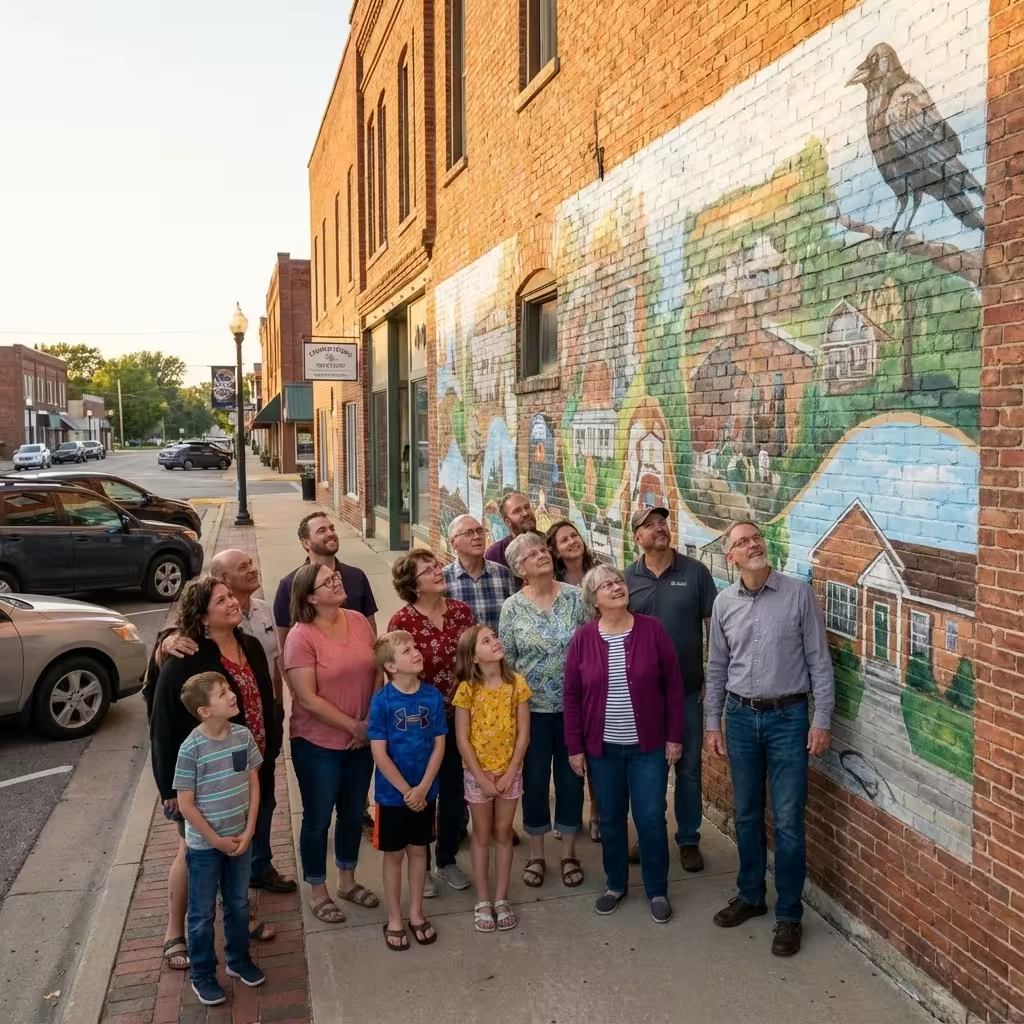
The new mural on Main Street is bright—maybe too bright. Thirty feet of abstract shapes in colors that don't exist in nature, covering the brick wall where the old hardware store used to advertise paint. Bill hates it. Maya loves it. The rest of us were standing there on lunch break, trying to decide.
"It's aggressive," Bill said, squinting at it like the colors might physically attack him. "This is a quiet town. We don't need... whatever that is screaming from a wall."
"It's not screaming," Maya countered. "It's alive. That wall was dead before—just blank brick and faded ads. Now it's something."
"It was fine being nothing," Bill insisted. "Not everything needs to be something."
I'd grabbed lunch from the cafe—turkey sandwich, too much mustard—and ended up in this impromptu town hall meeting about whether public art helps or hurts. Jacob was there, Emma, Sam from down the street, even Mrs. Patterson who never leaves her house but apparently had strong feelings about the mural.
This is what public art does—it makes private opinions public. You can't ignore it. You have to have a reaction, and suddenly you're standing on Main Street debating aesthetics with your neighbors.
"I think it's beautiful," Emma said, tilting her head like a new angle might reveal something. "It reminds me of... I don't know, celebration? Like the town is announcing itself instead of apologizing for existing."
"But who chose it?" Mrs. Patterson asked, and there was the real question. "Did anyone ask us? Or did some arts council decide what we have to look at every day?"
"The arts council did a community meeting," Maya said. "Three people showed up. You can't complain about not being consulted if you don't show up to be consulted."
"I didn't know about the meeting," Mrs. Patterson protested.
"It was in the paper. Online. Posted at the library."
"I don't read the paper. I don't go online. I don't go to the library."
Silence. Because what do you say to that? You can't force people to engage, but you also can't let non-engagement become veto power.
"Here's my thing," Sam said, still chewing his lunch. "Art is supposed to make you feel something, right? So the fact that we're all standing here having opinions means it's working. Whether you like it or not is kind of beside the point."
"That's a cop-out," Bill shot back. "By that logic, any terrible art is good art as long as it provokes reaction. I could paint the wall neon orange and call it successful because people hate it."
"But would you?" I asked. "Like, would you actually do the work of painting thirty feet of wall just to annoy people?"
Bill thought about it. "Probably not."
"Right. Because the artist did this with intention. They spent time, skill, effort. Whether we like the result, there's craft here."
I teach pottery. I know what it's like to make something and put it into the world where people can judge it. Public art is that vulnerability multiplied—permanent, unavoidable, subject to every passing opinion.
"So we're stuck with it?" Mrs. Patterson asked. "Even if we hate it?"
"For now," Maya said. "But murals aren't forever. Weather fades them. Buildings get sold. New artists come through. If this one really doesn't work, it'll change eventually."
"But what if kids grow up thinking this is normal?" Bill asked, and I couldn't tell if he was joking. "What if they think walls are supposed to look like... like exploded rainbows?"
"Would that be so bad?" Emma asked quietly. "Growing up thinking the world is colorful instead of beige?"
We stood there, lunch break ticking down, looking at this mural that had become a referendum on what our town should be. Quiet and traditional, like Bill wanted? Bold and expressive, like Maya and Emma argued? Somewhere in between, which satisfied nobody but offended fewer people?
"I don't think public art is about making everyone happy," Jacob finally said. "I think it's about making shared space more interesting. Even if 'interesting' means controversial."
"But shared space should reflect shared values," Mrs. Patterson argued. "If most people don't like it, what does that say?"
"That most people who have opinions showed up to complain?" Maya suggested. "The silent majority might love it."
"Or they're silent because they're polite," Bill countered.
This is the impossible math of public art—it belongs to everyone and no one. It has to exist in shared space while knowing it can't please everyone who shares that space.
Advertisement
"Can I say something weird?" I asked. Everyone turned. "I hated this mural when I first saw it. Like, viscerally hated it. Too bright, too much, too everything. But I've walked past it three times now, and it's growing on me. Not because it changed, but because I'm getting used to it being here."
"That's Stockholm syndrome for art," Bill said, but he was almost smiling.
"Maybe," I admitted. "Or maybe good public art is challenging at first. It asks you to adjust your expectations of what belongs in your visual landscape."
"Or maybe bad public art becomes tolerable through exposure," Bill suggested. "Doesn't make it good."
"True," I conceded. "But I think there's value in being challenged. In not having everything in public space be safe and agreeable."
Sam checked his watch. "I gotta get back to work. For what it's worth, I like it. Makes walking to lunch more interesting."
"I still think it's too much," Bill said. "But I respect the argument."
Mrs. Patterson shook her head, walking away. Emma stayed, taking a photo of the mural on her phone. Maya stood close, studying details—the way colors overlapped, the texture of brush strokes, the signature hidden in the bottom corner.
"You know what I love?" Maya said to no one in particular. "This will be here tomorrow. And next week. And people will keep having opinions about it, keep arguing, keep stopping to look. That's what good public space does—it creates opportunities for people to interact, even if the interaction is disagreement."
By the time I got back to my studio, lunch was cold and my break was over. But I kept thinking about that mural—the way it had pulled us together, created conversation, forced us to articulate what we wanted our shared space to be.
Help or hindrance? Maybe both. Maybe that's the point.
23 COMMENTS