



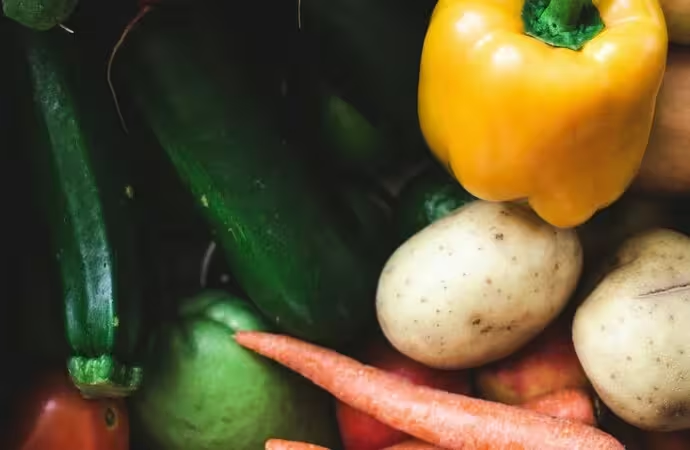
Seasonal cooking isn't a trend at SILK Cafe—it's a necessity born from connection to land. Our chef shares how working with what's available creates more interesting menus than any planning could achieve.
Walk into SILK Cafe on any given morning and the menu board tells a story about the season. December means root vegetable hash with preserved tomatoes. April features asparagus seven ways. August celebrates tomatoes in every form imaginable. This isn't culinary philosophy—it's practical reality when you cook from a garden.
Head chef Rosa Delgado started the cafe's garden program five years ago on a half-acre plot behind the building in Ravenswood. What began as a few raised beds has evolved into a diverse food production system featuring vegetables, herbs, edible flowers, fruit trees, and even a small hoophouse for winter greens.
'I wanted to understand where food comes from,' Rosa explains, hands dirt-stained from morning harvest. 'Not intellectually—viscerally. To feel the weight of a pumpkin I'd watched grow from seed. To know the work behind a single tomato. Cooking changed completely after that.'
The garden produces roughly 40% of the cafe's ingredients during peak season. The rest comes from partnerships with local farms within 30 miles. This creates natural limitations that force creativity. Can't get tomatoes in February? Develop recipes around winter squash and preserved goods. Drowning in zucchini in August? Time for creativity.
'Constraints breed innovation,' Rosa notes. 'When you have 50 pounds of kale, you find 10 interesting ways to use it. That exploration leads to menu items you'd never conceive in the abstract. Our most popular dish—charred kale salad with preserved lemon—came from desperation during an abundance crisis.'
Seasonal cooking forces creativity. You can't rely on the same ingredients year-round. You have to respond to what the land offers.
The menu changes weekly, sometimes daily, following what's ready. Regular customers learn to embrace this uncertainty. They don't come for a specific dish—they come to discover what the season offers. 'I don't even look at the menu anymore,' says longtime customer Patricia Hoffman. 'I just ask what came from the garden today.'
Preservation extends the season. Summer's bounty transforms into jars lining the cafe's shelves: tomato sauce, pickled vegetables, herb pestos, fruit jams. These preserved goods become supporting actors in winter menus, providing brightness when fresh options narrow.
Rosa teaches seasonal cooking classes monthly, always in the garden when weather permits. Students learn not just recipes but philosophy: how to taste food for ripeness, judge soil health, understand plant cycles. 'Cooking is the final step,' she explains. 'Understanding seasons starts with understanding growth.'
The model isn't perfectly efficient. Some weeks bring gluts, others shortages. Planning menus proves challenging. Food costs fluctuate. But Rosa wouldn't change it. 'We've traded efficiency for connection. I know every tomato's story. I watched it grow. That relationship changes how I cook, and I think people taste it.'
28 COMMENTS










Community Member
Dec 2024This article really resonates with me. Thank you for sharing this perspective!
REPLYFrank Morrison
17 Dec 2024Farm-to-table isn't just a trend for us—it's how we live. Thank you for sharing our story.
REPLYMaya Chen
18 Dec 2024Those tomatoes from Frank's farm changed everything for me. You can taste the care.
REPLYEmma Clarke
18 Dec 2024Supporting local farmers like Frank has transformed how I think about food.
REPLY