



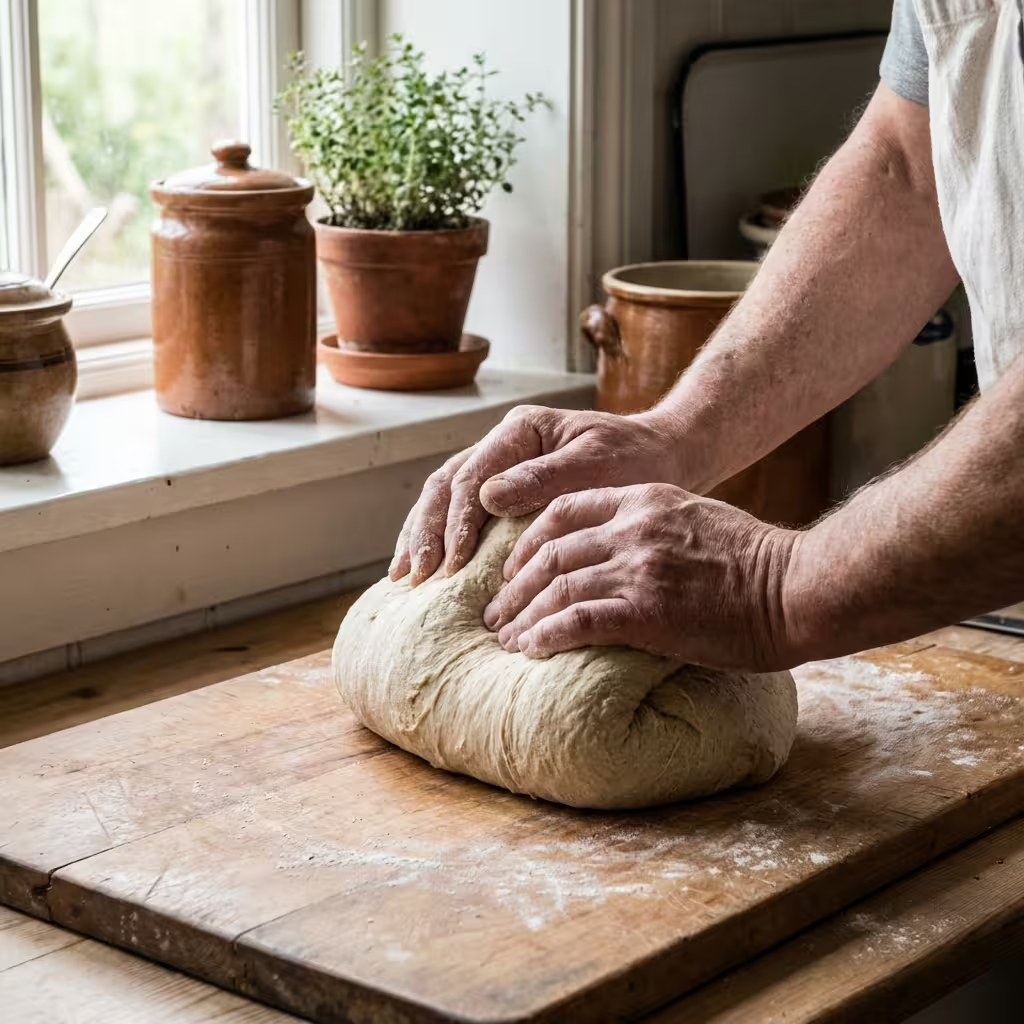
I killed seventeen loaves before I understood: baking isn't about perfection. It's about showing up, every day, feeding something fragile, hoping it survives your mistakes.
The jar sits on my kitchen counter, bubbling quietly. Inside: flour, water, wild yeast, bacteria—a living thing that depends on me to remember it exists. Some mornings I forget. Those mornings, I panic, convinced I've murdered it through neglect.
I named it Clara, after my mother's mother, who I never met but heard about constantly. "Halmeoni could make anything rise," my mom would say, kneading dough with her capable hands, flour dusting her black hair white.
Mom died in May. Three weeks later, I started trying to bake bread.
Loaf number one: dense as a brick, sour as vinegar, inedible. Loaf number two: forgot to score it, exploded sideways in the oven, looked like a cartoon disaster. Loaf number three through seventeen: various failures, each uniquely disappointing.
You don't learn to bake bread by reading about it. You learn by screwing it up, over and over, until your hands remember what your brain never will.
Emma gave me that advice after tasting loaf number nine—pale, gummy, sad. She didn't lie and say it was good. She just said, "Keep going. Bread takes time." Then she handed me her own starter, a spoonful of bubbly culture descended from one her grandmother kept alive in Cincinnati for forty years.
I almost killed it immediately. Forgot to feed it for three days, found it gray and neglected, smelling like nail polish remover. Emma talked me through the rescue: discard most of it, feed what remains, wait, hope.
Clara survived. I started setting phone alarms: "Feed the starter." Twice a day, every day, like caring for a pet that never grows up or moves out. Flour, water, stir, wait. Repeat forever.
Loaf eighteen was edible. Not good, but edible. I took a photo, texted it to my brother David in Columbus. He replied: "Looks like bread!!" Three exclamation points—high praise from David.
Loaf twenty-two, I brought to Bill's porch. Sliced it thick, passed it around with butter. Tom ate three pieces without comment—from Tom, this meant approval. Maya asked for my recipe. I laughed. "There is no recipe. Just keep trying until something works."
The thing about sourdough: you can't rush it. You mix flour and water, then you wait. Six hours. Twelve hours. Overnight. The dough does its work slowly, invisibly, while you sleep or work or forget it exists. You have to trust the process even when nothing seems to be happening.
My mother used to make bread every Sunday. I'd wake up to that smell—yeast and warmth and home. After she died, I couldn't remember the last time I told her I loved her Sunday bread. Couldn't remember if I ever said it out loud.
So I started baking. Badly at first. Then slightly less badly. Now, most weeks, I manage a decent loaf—open crumb, crispy crust, that tangy sourdough flavor that means the bacteria are alive and doing their invisible work.
Last Sunday, I baked two loaves. One for me, one for Emma—returning the favor, paying forward the gift of patience and starter culture and not giving up after loaf number nine exploded.
This morning, Clara is bubbling on the counter, happy and fed and alive. In a few hours, I'll mix dough—flour, water, salt, time. Tomorrow morning, I'll bake. Maybe it'll work, maybe it won't. Either way, I'll try again next week.
Because that's what you do with living things: you show up. You feed them. You pay attention. And if you're lucky, they rise.
8 COMMENTS








Emma Clarke
14 Dec 2024Rachel, I'm so proud of you! Clara is thriving in your care. Your loaf twenty-two was absolutely delicious.
REPLYMaya Chen
14 Dec 2024This story hit me hard. My grandmother used to bake too, and I never learned. Maybe it's time to start.
REPLYTom Richardson
17 Dec 2024Maya's coffee really is something special. I look forward to it every morning.
REPLYSarah Mitchell
17 Dec 2024This captures exactly what makes our community so special. Thank you for writing this.
REPLYEmma Clarke
18 Dec 2024I remember this moment! You should have seen your face when you first tasted the difference.
REPLY