

I discovered Maya's Saturday coffee ritual by accident. It was my second week living in Ravenswood, and I was taking a walk at 8:30 AM trying to orient myself to the neighborhood. I noticed four people drifting toward the yellow cottage on the corner, mugs in hand, looking purposeful. Curious, I followed.
Maya was at her stove making pour-over coffee when I knocked on her open kitchen door. She glanced up, smiled, and said, "You must be Rachel. Elena mentioned you moved into the blue house. Coffee?"
That was it. No formal invitation, no explanation of what was happening, just an offer of coffee and the assumption I belonged there. I've been showing up most Saturdays since.
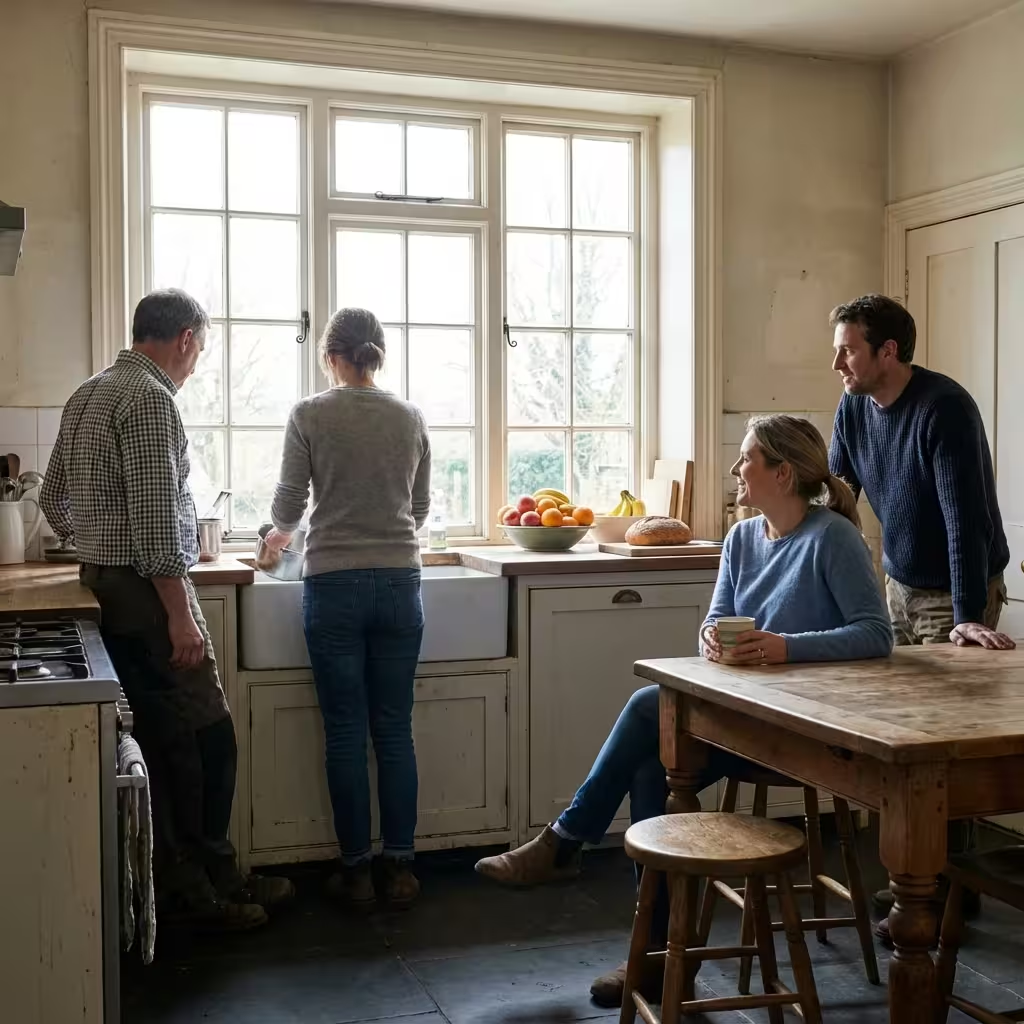
The ritual has no official rules, but it has rhythms everyone understands. Maya starts coffee around 7:30. People drift in whenever they wake up—some at 8, some closer to 9:30. You bring your own mug if you remember; Maya has extras if you forget. There's usually bread (Emma's sourdough, or bagels someone picked up, or banana bread if Bill's been baking). Sometimes fruit. Always coffee.
You help yourself. You sit wherever there's space—the breakfast table seats four, but people also lean against counters, sit on the back steps if it's warm, claim the window seat with the cushions Emma made. Conversations happen organically. Sometimes everyone's talking together. Sometimes you have three separate quiet conversations happening in different corners. Sometimes people just sit in companionable silence, reading phones or staring out windows, grateful for coffee and company.
I don't run a cafe. I just like making coffee and I don't like drinking it alone. Turns out half the neighborhood feels the same way. So we gather. Simple as that.
What strikes me most about Saturday mornings at Maya's is how unforced everything feels. Nobody's performing community or trying to create Instagram-worthy moments. People show up in pajamas and yesterday's clothes. Hair uncombed, faces unwashed, the version of yourself that exists before you're ready for the world. There's something vulnerable and real about that—letting people see you before coffee, before the day's armor goes on.
Last Saturday I arrived at 8:15, anxious about a work deadline. Tom was already there, half-asleep, drinking Americano and scrolling his phone. Emma was grading papers at the table, red pen moving steadily. Bill sat in his usual corner chair doing a crossword. Maya was kneading bread dough, hands moving in that rhythmic way that comes from years of practice.
"Rough week?" she asked, pouring me coffee without waiting for an answer.
"Long one," I admitted.
She nodded, slid the honey jar toward me (she remembers I take honey, no milk), and went back to her bread. That was the whole exchange. But somehow it helped—being seen, being offered coffee, sitting in a kitchen with other people living their own early-morning lives.
Around 9, Elena arrived fresh from yoga by the river, bringing that particular energy people have after exercise and cold water. She made herself oat milk cappuccino (Maya keeps oat milk just for her), told a story about the heron she'd seen, asked if anyone needed help with anything this week. Jacob mentioned his truck was making weird sounds. Elena knows cars. They made plans to look at it Tuesday.
This is how community happens at Maya's kitchen—not through formal organizing but through proximity and coffee and the assumption that other people's problems are, to some degree, your problems too. Nobody's keeping score. Jacob will look at Elena's porch railing when it needs fixing. Elena will help with his truck. The debts don't balance precisely, but the network holds.
Before I found this place, I'd go whole weeks without talking to anyone face-to-face. Work from home, grocery delivery, Netflix alone. I was functional but isolated. Maya's kitchen reminded me that humans need other humans, especially in the messy, unguarded morning hours.
The coffee itself is good but not fancy. Maya uses a simple Chemex, beans from the roaster in Marietta, water just off boil. She's particular about ratios—weighs the beans, times the pour—but it's craft, not theater. She makes coffee the way some people make art: quietly, competently, with attention to detail but no need for audience.
"Where'd you learn to make coffee like this?" I asked her once.
"YouTube," she said, which made me laugh. "I got tired of bad coffee. Looked up how to make it better. Turns out it's not complicated. Just pay attention."
By 10 AM, the kitchen empties. People have weekend plans—errands, projects, time with families. Maya starts cleaning up, but there's never much to clean. We all rinse our own mugs, wipe the counter if we spilled, take banana bread home in napkins. The whole gathering leaves barely a trace except the lingering smell of coffee and the feeling that you've been part of something good.
I've lived in cities where I never learned my neighbors' names. Places where community was something you had to schedule and organize and work at—book clubs, volunteer groups, meetups that felt more like networking than friendship. There's value in those things, but they're not the same as drifting into Maya's kitchen at 8:30 on Saturday morning and being handed coffee by someone who's noticed you look tired.
This is what intentional community looks like at ground level. Not communes or co-housing or any grand experiment. Just a woman who makes coffee in her kitchen and doesn't want to drink it alone. The rest of us showing up because we don't want to drink alone either. And somehow, in that simple exchange—coffee for company, company for coffee—we've built something that sustains us through the week.
Last Saturday, Maya mentioned she might be away next weekend. Visiting family downstate. There was a brief pause, everyone calculating what Saturday morning would look like without this ritual.
"I can do coffee at my place," Tom offered. "Won't be as good, but I've got a machine."
"I'll bring bread," Emma said.
And just like that, the problem was solved. The ritual will continue even when Maya's gone because it's not really about her kitchen or her coffee—it's about the commitment we've all made, mostly unspoken, to show up for each other. To not let the week scatter us so completely that we forget we're connected.
That's the revolution, I think. Not changing the world, just changing how fifteen people in one Ohio River town experience Saturday mornings. Making sure nobody has to drink their coffee alone unless they want to. Small, local, quiet. But real.
12 COMMENTS






Sarah Mitchell
14 Dec 2024Beautiful piece, Rachel. Maya's kitchen really is the glue that holds us together.
REPLYDavid Chen
14 Dec 2024This makes me miss having a real community. How do I find something like this where I live?
REPLYTom Richardson
17 Dec 2024Maya's coffee really is something special. I look forward to it every morning.
REPLYSarah Mitchell
17 Dec 2024This captures exactly what makes our community so special. Thank you for writing this.
REPLYEmma Clarke
18 Dec 2024I remember this moment! You should have seen your face when you first tasted the difference.
REPLY