



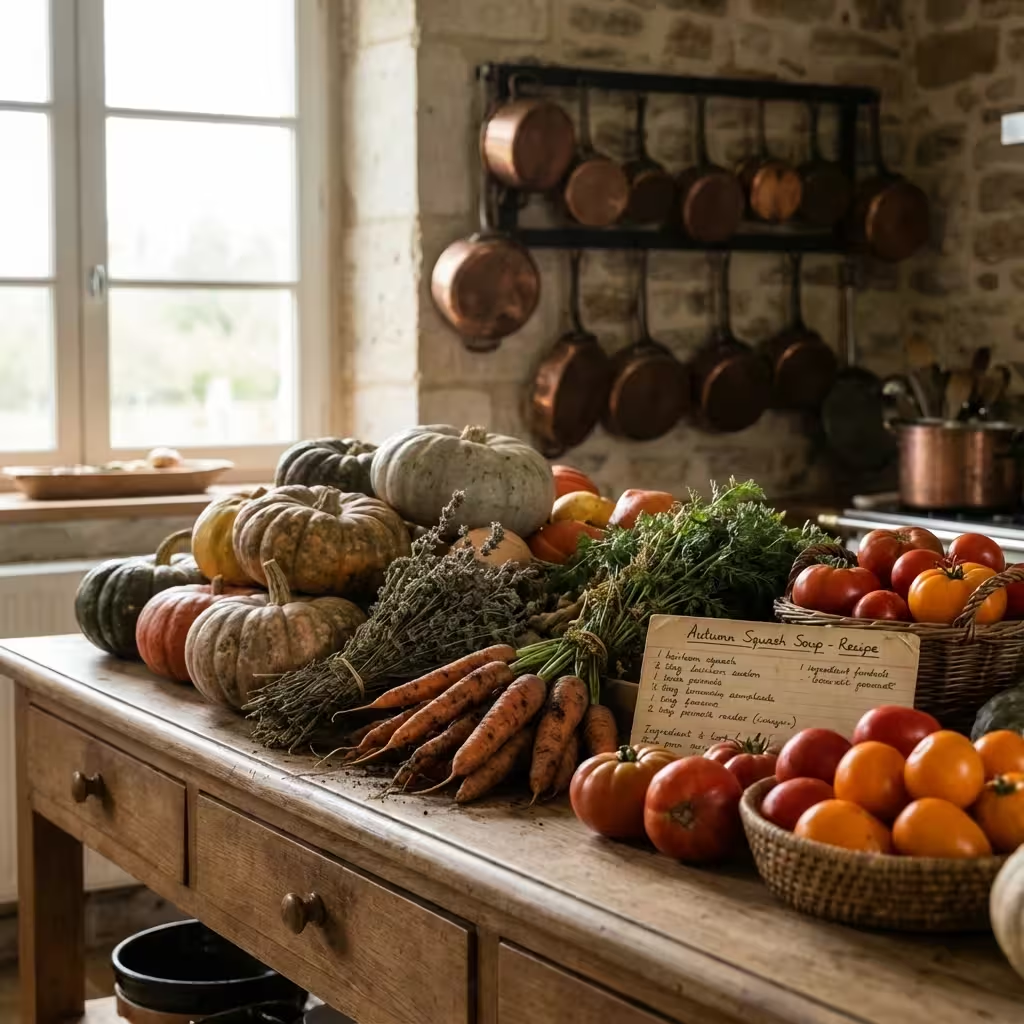
Emma's kitchen counter right now: three kinds of squash, root vegetables still dirty from Bill's garden, late-season tomatoes, and Maya's handwritten recipe for "whatever soup." This is what seasonal eating actually looks like—no meal plan, just cooking what's ripe.
I stopped by Emma's yesterday to return a book and found her staring at vegetables like they were a puzzle she couldn't solve.
"Too much squash," she said. "Bill keeps bringing squash. I've never cooked squash in my life."
On her counter: two acorn squashes, one butternut, something pale green I couldn't identify. Carrots with dirt still clinging. Beets. A basket of the last tomatoes before frost. Herbs from Maya's garden, already wilting. The beautiful chaos of October in Appalachia.
"I don't know what to do with half of this," Emma admitted.
"Make soup," I suggested, channeling every grandmother who's ever dealt with harvest excess.
Seasonal eating isn't a diet. It's just eating what your neighbors grow and figuring out how to cook it before it goes bad.
We spent the afternoon turning Emma's counter chaos into something edible. Roasted squash with salt and pepper—the easiest recipe that exists. Beets boiled until tender, peeled, sliced. Tomatoes chopped into whatever passes for salsa when you're making it up.
The kitchen smelled like fall. Earthy. Sweet. That particular scent of root vegetables caramelizing. Emma's ancient oven heated the whole cottage, which felt right for a chilly October afternoon.
"This is more cooking than I usually do in a month," Emma said, laughing.
"Welcome to having a garden," I told her. "Or having neighbors with gardens."
By evening, Emma's refrigerator was full of containers. Roasted squash for the week. Beets she'd eat in salads. Tomato sauce she'd freeze. The satisfaction visible on her face—that particular pride of using food instead of wasting it.
Advertisement

Seasonal eating sounds fancy when food bloggers write about it. In reality, it's just cooking what's cheap and available. Summer means tomatoes and zucchini. Fall means squash and roots. Winter means stored vegetables and hope. Spring means greens and optimism.
We don't plan seasonal menus. We just eat what Bill grows, what Maya shares, what Jesse's garden produces faster than he can manage. The seasons dictate. We improvise.
This week everyone's eating squash. Next week probably more squash. By December we'll be sick of squash and grateful when Bill's storage apples take over. That's the rhythm—abundance, repetition, variety through seasons not through grocery stores.
Emma texted this morning: "Made your squash thing again. Still too much squash. Please help."
I'll go over tomorrow. We'll make soup. Or bread. Or something. That's what you do when October hands you more vegetables than you know what to do with—you figure it out, together, one overloaded kitchen counter at a time.
12 COMMENTS





Bill Henderson
10 Dec 2024My garden produces what it produces. I give it away because what else am I going to do? Can't eat forty pounds of squash myself. Emma's learning what we all learned—seasonal eating means feast or famine, and October is definitely feast.
REPLYEmma Clarke
10 Dec 2024Update: I now have seven containers of roasted squash in my fridge. SEVEN. Sarah abandoned me to deal with this alone. But honestly? I'm kind of proud. Never thought I'd be someone who roasts vegetables. Thanks for the push, Bill (even though I didn't ask for it).
REPLYDeb Morrison
11 Dec 2024This is exactly how seasonal eating works on a farm. You get buried in zucchini in August, squash in October, apples in November. You learn to preserve, share, and get creative. Or you learn to really, really like squash soup.
REPLYMaya Chen
11 Dec 2024My "whatever soup" recipe is literally: whatever vegetables you have, chop them, roast them or boil them, add broth, blend if you want, season until it tastes good. That's it. That's the whole recipe. Cooking seasonal food isn't complicated—it's just using what's there.
REPLY