
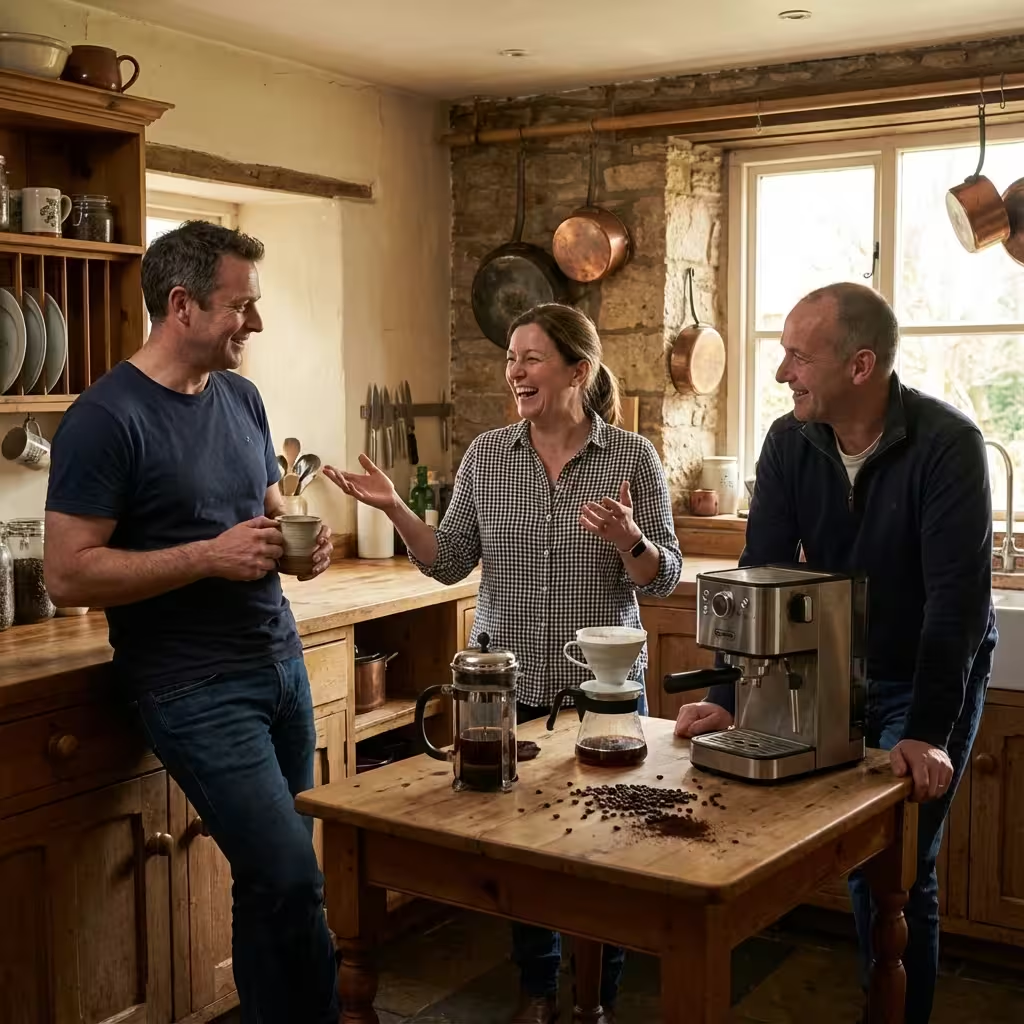
Bill's kitchen at 6 AM is an unlikely place for philosophy, but that's where we ended up—standing around his counter covered in coffee equipment, arguing about whether quality or quantity matters more when you're barely awake.
It started because Jesse showed up with a twelve-cup Mr. Coffee machine from 1987. "Found it at Goodwill," he announced, setting it on Bill's counter next to the French press, the pour-over setup, the AeroPress, and Bill's ancient stovetop percolator. "Five bucks. Makes coffee. What else do you need?"
Annie, who'd been carefully measuring beans for her pour-over, looked physically pained. "What else do you need? How about flavor? Nuance? The ability to taste anything besides burnt water?"
"It's six in the morning," Jesse said. "I need caffeine, not a religious experience."
Bill, already on his second cup from the percolator, watched this exchange like it was theater. "Here we go."
This happens every few weeks—someone brings new equipment, someone else has opinions, and suddenly we're debating coffee like it's politics.
I'd brought the French press, which makes me middle-ground in this group. Not as precious as Annie's pour-over ritual, not as utilitarian as Jesse's drip machine. Jacob was team AeroPress—efficient, portable, "good enough for backpacking, good enough for home."
"The thing is," Annie said, heating water to exactly 200 degrees with a thermometer she kept in her pocket, "coffee can be incredible. Complex. These beans are from Ethiopia—floral notes, citrus, chocolate undertones. But only if you brew them right."
"Or," Jesse countered, dumping Folgers into his Mr. Coffee, "coffee can be coffee. Hot, caffeinated, gets you functional. All this"—he gestured at Annie's precise setup—"is performance. You're not tasting it better, you're just working harder."
"I am absolutely tasting it better," Annie shot back. "Blindfold me and I'll tell you which cup came from your Folgers and which came from properly brewed Ethiopian."
"Deal," Jesse said. "But if you can't tell, you have to admit all this is just snobbery."
Bill cleared his throat. "Done this before. She can tell. It's annoying."
We laughed, but the question hung there: does it matter? Like, really? If Jesse's happy with his five-dollar machine and grocery store grounds, is Annie's thirty-dollar bag of single-origin beans and twenty-minute brewing process objectively better, or just different?
Quality versus quantity isn't really about coffee. It's about how we choose to spend our limited time and attention.
"I think both are valid," Jacob offered, assembling his AeroPress with the efficiency of someone who's done this a thousand times. "Jesse wants volume and speed. Annie wants craft. Different priorities, same end goal—good morning."
"But is Jesse's morning actually good?" Annie asked. "Like, if you're starting the day with bad coffee, what does that say about how you value your own experience?"
"It says I value an extra fifteen minutes of sleep over performing artisanal breakfast rituals," Jesse said, but he was smiling. "Not everyone needs to make every moment special, Annie. Sometimes functional is fine."
"See, I disagree." Annie poured water over her grounds in careful circles, watching the bloom. "Not every moment has to be special, but this moment—this first coffee, before the day gets complicated—this one's worth doing right."
Bill refilled his cup from the percolator. "I've been making coffee the same way for forty years. Tastes like home. Is that quality or quantity? Or just habit?"
That stumped us. Bill's percolator coffee isn't fancy. It's not even particularly good by Annie's standards. But it's Bill's—consistent, reliable, tied to memory and routine. Quality of a different kind.
"Maybe the quality is the ritual," I suggested. "Like, Jesse's ritual is efficiency. Annie's is precision. Bill's is continuity. All quality, just measuring different things."
"Deep thoughts before caffeine," Jacob said. "I'm impressed."
We stood around that counter, five people with five brewing methods, waiting for our various coffees to finish. Jesse's Mr. Coffee gurgled first—he poured a mug, added too much sugar, declared it perfect. Annie's pour-over took another three minutes, but when she finally tasted it, her expression was pure contentment. Jacob's AeroPress produced one perfect cup in ninety seconds. My French press was still steeping. Bill was already done, watching us figure it out.
"You know what's funny?" Jesse said. "We're all drinking coffee together. Same kitchen, same morning. The method matters less than the fact that we showed up."
"Oh no," Annie groaned. "Are you getting sentimental about the Mr. Coffee?"
"Maybe," Jesse admitted. "Or maybe I'm saying the best coffee is the one you drink with other people, even if they're judging your equipment."
"Especially if they're judging your equipment," Bill corrected. "That's how you know they care."
By seven, we'd solved nothing and drunk everything. Jesse's Folgers, Annie's Ethiopian, Jacob's efficient AeroPress, my too-strong French press, Bill's nostalgic percolator.
Walking home, slightly over-caffeinated, I thought about quality versus quantity. In coffee, in life, in the small choices that accumulate into how we spend our days. Jesse's not wrong—efficiency matters. But neither is Annie—beauty and craft matter too. And Bill's middle path—ritual and memory and "good enough" that's actually good—that matters most of all.

Advertisement
The great coffee debate will never be settled. Next week someone will bring a new method, restart the argument, and we'll all stand around Bill's kitchen pretending we're discussing beans when we're really discussing how to live.
Which is fine. Better than fine. Because the best conversations, like the best coffee, happen when you take time to do them right.
23 COMMENTS

Annie Walsh
13 Dec 2024I stand by everything I said. Coffee CAN be incredible if you brew it right. That said, I appreciate Jesse's point about not making every moment performative. Sometimes good enough is actually good.
REPLYBill Henderson
13 Dec 2024Been making percolator coffee the same way since 1977. Tastes like home. That's quality enough for me. Though I'll admit Annie's Ethiopian beans are something special when she brings them over.
REPLYMiguel Santos
13 Dec 2024At the diner, I brew fifty pots a day. Nobody's asking for single-origin beans or precise temperatures. They want coffee, hot and strong, so they can start their morning. Jesse's right—sometimes functional is exactly what's needed.
REPLYHelen Harrison
14 Dec 2024My husband Bob drinks instant coffee. INSTANT. I've tried to convert him for forty years. He says it tastes fine. I've learned to pick my battles. Love isn't about the coffee—it's about drinking it together.
REPLYJacob Torres
14 Dec 2024AeroPress gang represent! Efficiency and quality—best of both worlds. Plus it's portable, which matters when you're always traveling for work. I can make decent coffee anywhere. That's its own kind of luxury.
REPLY