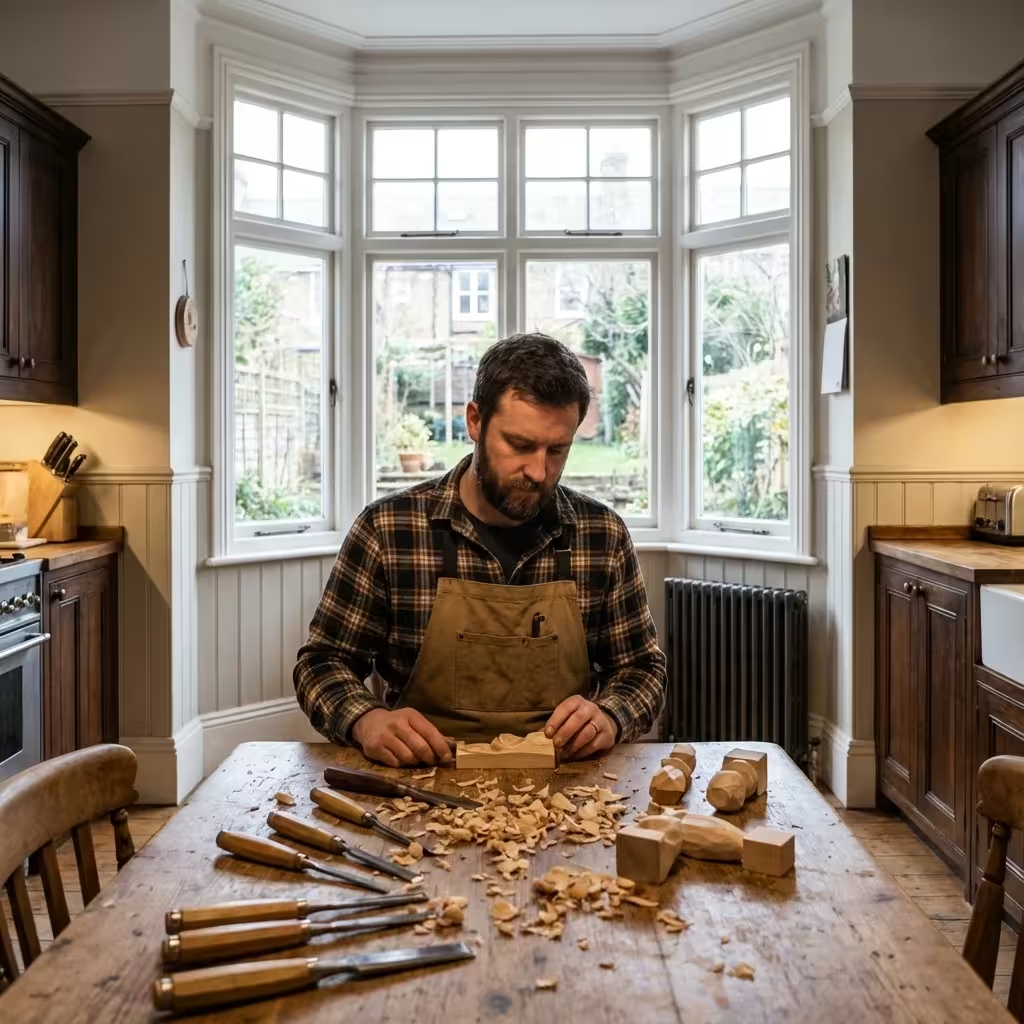
I stopped by Tom's cottage last Thursday to return a drill I'd borrowed, and found him at his kitchen table with clay all over his hands and this look of intense concentration I'd never seen on him before. "I'm making something," he said, like he was confessing.
Tom's an accountant. Spreadsheets, tax season, the kind of meticulous personality that alphabetizes spice racks. The last person I'd expect to find elbow-deep in terra cotta clay at 4 PM on a weekday.
"Elena left clay at the studio," he explained, gesturing toward the lump on his table. "Said anyone could use it. I thought... why not?"
The thing he was making—I'm not sure you'd call it a sculpture exactly. Abstract shapes, rough and uneven. No clear subject. Just forms that felt good to his hands, he said. Curves and angles that made sense tactilely even if they looked like nothing in particular.
"I have no idea what I'm doing," Tom admitted. "Elena tried to explain wedging and scoring and I nodded like I understood. Mostly I'm just pushing clay around and seeing what happens."
There's something freeing about being terrible at something. No expectations. No performance. Just you and the material and permission to fail.
I sat down. Tom kept working. His kitchen smelled like wet earth and the coffee he'd forgotten three hours ago. Clay dust covered everything—the table, his laptop, the half-eaten sandwich he'd abandoned. Through the wavy glass window, afternoon light made the whole scene look soft, timeless.
"Why sculpture?" I asked.
Tom paused, hands still on the clay. "I spend all day with numbers. Everything has to balance, add up, make sense. This..." He pressed his thumb into the form, creating a hollow. "This doesn't have to make sense. It just has to feel right."
Emma stopped by around five. Then Sarah. Word spreads fast in fifteen cottages. Soon Tom's kitchen was full of people watching him work, offering opinions, asking questions. Maya brought tea. Bill stood in the doorway looking skeptical but stayed anyway.
"It's very... organic," Emma offered diplomatically.
"It's weird," Sarah said. "I like it."
Elena arrived last, drawn by texts about Tom's sculpture debut. She circled the table, examining his work from different angles. Tom looked nervous—seeking approval from the actual artist in the room.
"Huh," Elena said finally. "It's interesting. You've got good instincts for form."
"Really?" Tom's face lit up like he'd just passed some crucial exam.
"Really. Though you'll need to hollow it out or it'll explode in the kiln." She picked up a loop tool from her bag. "Here, let me show you."
What started as one guy messing around with clay at his kitchen table turned into an impromptu community workshop. That's what happens here—nothing stays private for long.
Advertisement
For the next hour, Elena taught Tom (and the rest of us, honestly) basic sculpting technique. How to work clay so it doesn't crack. Why thickness matters. The chemistry of firing. Tom absorbed it all, asking careful questions, taking mental notes like he was learning a new software program.
The sculpture never got finished that night. Too many people, too much conversation, too much tea. But Tom kept at it over the following weeks. I'd see his kitchen light on late, know he was in there working. He made three more pieces. Each one slightly less terrible than the last, which he took as tremendous progress.
Last week, Elena fired his pieces in the kiln at the SILK Arts studio. The first one—that kitchen table piece—cracked during firing. Tom was devastated for about ten minutes, then laughed. "Guess I didn't hollow it enough."
The other three survived. They sit on Tom's windowsill now, catching morning light through wavy glass. Abstract forms in terra cotta. Imperfect, irregular, completely unique. Tom looks at them sometimes while making breakfast, this small smile on his face like he's surprised by what his hands made.
He's not going to quit his day job. Won't be entering competitions or selling at galleries. But Thursday evenings now, you'll find him at his kitchen table with clay on his hands, making things that don't have to make sense. Sometimes alone, sometimes with neighbors who drift in to watch, to try it themselves, to sit in that quiet creative space he accidentally carved out of ordinary weeknight hours.
"I'm still terrible at this," Tom told me last week.
"Yeah," I agreed. "But you show up anyway."
He grinned, hands already reaching for the clay. "That's the whole point, isn't it?"
9 COMMENTS

Elena Martinez
Dec 2024This captures exactly why I make pottery. It's not about perfection—it's about the meditative process and sharing something handmade with the community.
REPLYRachel Kim
Dec 2024As someone who creates digitally all day for work, these hands-on art practices ground me. There's something irreplaceable about physical materials and the marks our hands leave.
REPLYBen Okafor
Dec 2024I've been photographing our local art scene for two years. What strikes me most is how art brings people together—not just at galleries, but in everyday moments of creative expression.
REPLYMarcus Webb
Dec 2024Music, visual art, poetry—they all speak the same language of human expression. This article reminds me why supporting local artists matters so much.
REPLYDorothy Chen
Dec 2024At my age, surrounding myself with local art feels like living inside the heartbeat of this community. Each piece tells a story I'm proud to preserve.
REPLY