


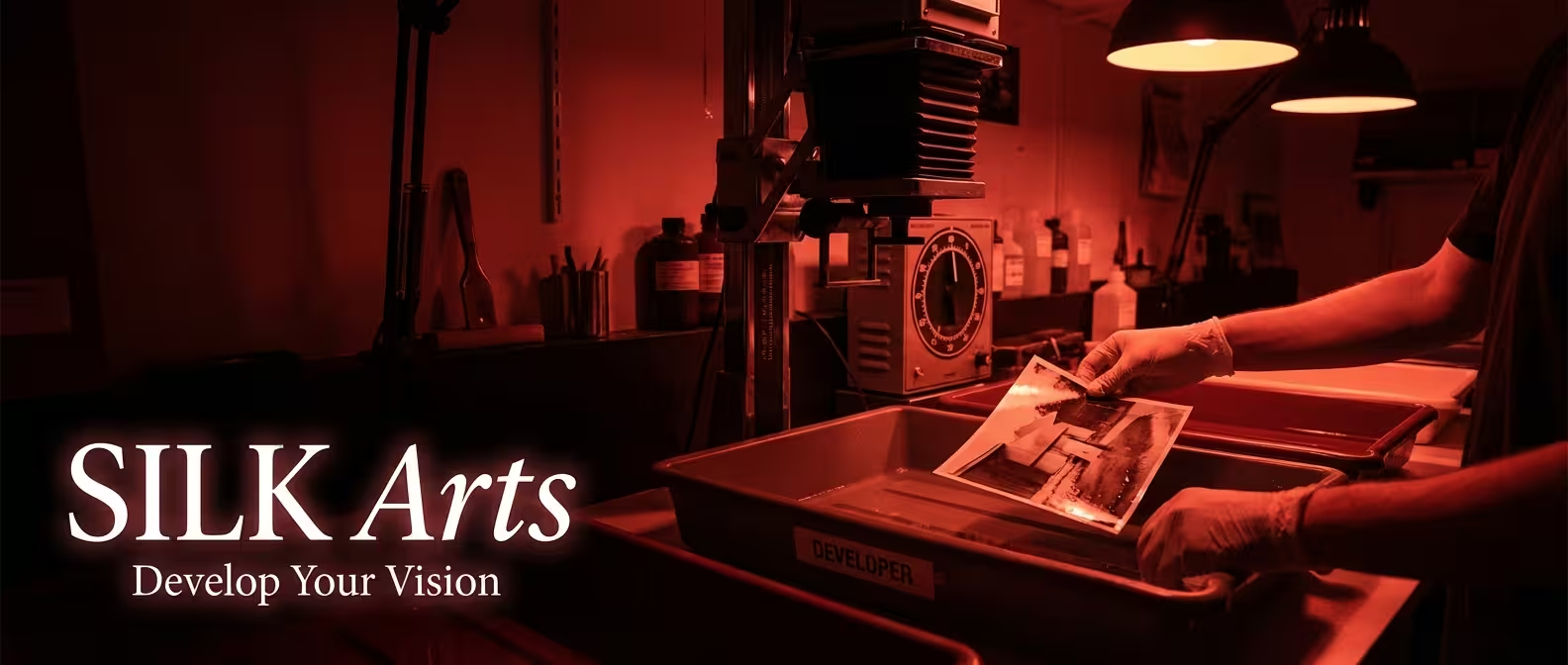
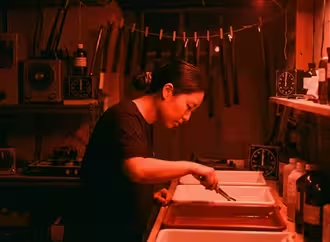
Three nights a week, around 9:30 PM, I disappear into my basement with four rolls of exposed film and a kitchen timer. The red light clicks on. The chemical smell rises. The world gets quiet. This is where I remember my mother.
It's Wednesday, 9:42 PM. I'm standing at the utility sink in my basement—the one with rust stains and a crack down the middle—watching a sheet of photo paper bloom into an image. Tom's hands, covered in clay. The developer tray smells like vinegar and metal. My phone is upstairs. The only light is red.
My mother taught me this. Not directly—she died last May before I moved here—but through the Pentax K1000 she left me and a notebook full of her darkroom notes. "Developer: 68 degrees exactly. Agitate every 30 seconds. Don't rush the fix." Her handwriting, careful and precise, like she knew I'd need these instructions someday.
The basement wasn't meant to be a darkroom. It's cramped, damp, with exposed brick walls and a concrete floor that's always cold through my socks. The enlarger sits on a salvaged door propped across two sawhorses. My developing trays are takeout containers from the Chinese place in Parkersburg. Nothing matches. Everything works.
Film photography isn't efficient. It's expensive, unpredictable, and requires darkness and patience. That's exactly why I do it.
I started shooting film again in June, a month after the funeral. Digital felt wrong—too easy, too instant, too much like I could undo mistakes. Film made me slow down. Thirty-six exposures per roll. Every click counted. Every frame meant I'd have to stand here later, in the dark, trusting chemistry and time.
Tuesday nights, Thursdays, Saturdays. That's when I come down here. I load the film onto the developing reel in complete darkness, sealed in a changing bag my mother bought in 1994. My hands know the motion now—threading the film onto the spiral, feeling for the catches. The first dozen times, I ruined entire rolls. Now I can do it by muscle memory.
Pour developer. Start timer. Agitate thirty seconds. Then again every minute. The kitchen timer ticks. I count inversions. One-one-thousand, two-one-thousand. My mother's voice in my head: "Consistency matters more than perfection."
Last month, Emma knocked on the basement door around 10 PM. I'd forgotten she was dropping off sourdough starter. "Rachel? You down there?"
"Yeah—can't open the door, I'm in the middle of a development cycle."
She left the starter on the top step. Texted me an hour later: "Your basement smells like a chemistry lab. You okay?"
I'm more than okay. I'm remembering. Every Wednesday night in the red light, I'm seventeen again, watching my mother pull prints from the fixer, holding them up to examine the grain. She never got to see these Victorian cottages, never met Bill or Maya or any of the people I photograph now. But she taught me to see them.
The images that emerge from the developer aren't perfect. There's grain, sometimes light leaks, occasional spots where dust got on the negative. Ben—who paints portraits in his sun porch down the street—saw my prints hanging to dry last week. "You know you could just shoot digital and add grain in post, right?"
"I know."
"So why do it the hard way?"
Because the hard way means I'm here, in this cold basement, watching time literally develop. Because my mother's notes are getting soft from my fingerprints. Because standing in the dark for twenty minutes with nothing but a timer and chemical trays is the only time my brain fully stops.
I shot four rolls this week. Bill's tomato plants. The radiator in my parlor at 6 AM when the light comes through the tall windows. Maya laughing at something Tom said. The Ohio River at dusk, all silver and motion.
Tomorrow I'll hang the negatives to dry, scan them, print the ones worth keeping. But tonight, it's just me and the chemicals and the quiet. The fix bath smells sharp. The timer ticks. An image of Bill's hands holding Cherokee Purple tomatoes emerges slowly, like a memory surfacing.
My mother would've loved this basement darkroom. It's imperfect, makeshift, exactly what you build when you can't afford a proper setup but can't afford not to make art. She understood that. She left me the camera, the notes, the permission to spend Wednesday nights in the dark, making something real.
The timer rings. I lift the print from the developer, slide it into the stop bath. The image locks. Tom's clay-covered hands, frozen mid-creation. Imperfect. Unrepeatable. Worth every minute in this cold basement.
Outside, life continues. Cars pass on Front Street. Someone's watching TV. The radiator in Elena's cottage next door clanks to life. Down here, there's only chemistry, time, and the quiet satisfaction of images appearing where there was nothing before.
It's 11:07 PM. I'll be down here another hour, at least. The prints need to wash. The trays need to be cleaned. The negatives need to hang. My mother taught me not to rush the process. Some things are worth doing slowly, in the dark, alone.
That's what Wednesday nights are for.
12 COMMENTS



Ben Okafor
18 Dec 2024As someone who's photographed our community for years, I love seeing someone embrace film. There's something about the deliberate process that makes you more present with your subjects.
REPLYElena Martinez
18 Dec 2024The way you describe working in your basement darkroom reminds me of my pottery studio. It's that same meditative quality—just you and the materials and time.
REPLYNathan Cross
19 Dec 2024I understand the slow process. Building furniture by hand teaches you the same patience—you can't rush good work. Your mother's notes sound like the kind of wisdom that lasts generations.
REPLYEmma Clarke
19 Dec 2024I had no idea what you were doing down there every Wednesday! Now it makes sense. The dedication to analog processes in our digital world is beautiful.
REPLYBob Harrison
20 Dec 2024My father developed film in our basement when I was growing up. Reading this brought back memories of that red light and chemical smell. There's magic in watching an image appear from nothing.
REPLY