
I made seventeen batches of cookies. I hung every piece I'd painted in the last eighteen months on the walls of my parlor. I printed little cards with titles and dates, like I'd seen in real galleries. And then I waited for First Friday to begin.
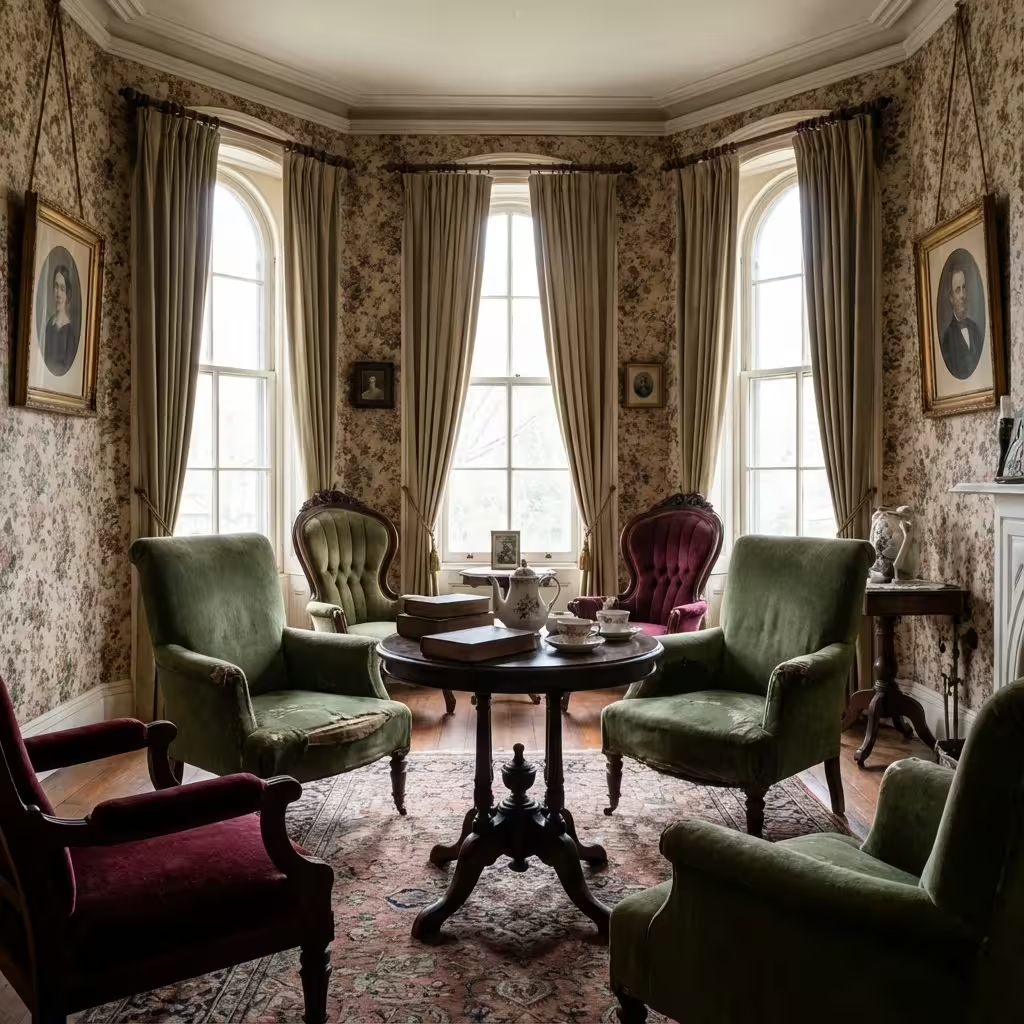
The invitation said 6 to 9 PM. At 5:45, I was standing in my Victorian cottage parlor, wearing the one dress I own that feels like "art opening attire," looking at the paintings I'd leaned against walls and hung on curtain rods and balanced on the mantle. The afternoon light was doing that thing it does through the old wavy glass, making everything look slightly underwater, slightly unreal.
I'd invited everyone. Maya, who I paint with sometimes. Sarah from the next cottage over. Rachel, who'd been coming to my impromptu painting sessions. Tom and Bill, who always show up to things. That's twelve people, counting optimistically. I'd made seventeen batches of snickerdoodles.
At 6:15, nobody had arrived. At 6:30, I ate a cookie. At 6:45, I started rearranging paintings that didn't need rearranging. At 7:00, I heard footsteps on the porch.
Bill and Tom.
Two people doesn't feel like an opening. It feels like failure. But that's only if you think art is about crowds.
"This is it?" Tom said, looking around at the empty parlor, the seventeen batches of cookies, the paintings everywhere. He wasn't being cruel. He was just stating a fact.
"This is it," I said. "Maya texted—her kids are sick. Sarah had a work thing. Rachel's car wouldn't start." I didn't mention the others who hadn't responded at all.
Bill picked up a cookie. "Well," he said, "I guess we should look at the art."
What happened next was not what I'd planned. But it was better.
We sat in the parlor—me, Bill, Tom, and seventeen batches of cookies—and we actually looked at the paintings. Not the way you look at art when you're moving through a crowded gallery, nodding politely. We looked at them the way you look at things that matter.
Tom stood in front of one painting for ten minutes. It was the smallest one, a study of light through a window I'd done in October. "This one," he finally said, "this is the one that works."
"Why?" I asked.
"Because you weren't trying so hard," he said. "Look at this one—" he pointed at a larger, more ambitious landscape. "You're trying to prove something. But this little one? You were just paying attention."
Bill nodded. He was eating his third cookie. "He's right. Most of these are good. But that one's honest."
We talked about art until almost 10 PM. Not in the abstract way people talk about Art with a capital A, but in the specific way people talk about things they're actually making. Bill told me about the furniture he's been designing—how he can always tell when he's forcing an idea versus when he's listening to the wood. Tom talked about the photographs he used to take before he decided he wasn't "a photographer," as if that was a category you had to earn membership to.
At one point, Tom said something I've been thinking about ever since: "You know what's funny? If twenty people had shown up, we'd have spent the whole night doing that thing where you nod and say 'interesting use of color' and eat cheese. But this? This is the actual thing. This is people talking about what it means to make something."
They left around 10:30. I stood in my parlor, looking at the paintings, looking at the cookie crumbs, looking at the cards I'd made that nobody but Bill and Tom had read. And here's the strange thing: I wasn't disappointed anymore.
The next morning, Maya texted. "I'm so sorry I missed it. Can I come by and see the work?" Rachel asked the same thing. So did Sarah. One by one, over the next week, people came by. Not for an opening. Not for an event. Just to look at the paintings and talk about them.
Bill was right about the small painting, by the way. That's the one I'm submitting to the regional show next month. Not because it's the most impressive, but because it's the most honest.
I still have fourteen batches of cookies in my freezer. If you're in Ravenswood, stop by. We can talk about what you're making, or what you're thinking about making, or why you stopped making things and whether you want to start again.
Two people isn't a crowd. But it turns out two people is enough for the truth.
8 COMMENTS


Elena Martinez
Dec 2024This captures exactly why I make pottery. It's not about perfection—it's about the meditative process and sharing something handmade with the community.
REPLYRachel Kim
Dec 2024As someone who creates digitally all day for work, these hands-on art practices ground me. There's something irreplaceable about physical materials and the marks our hands leave.
REPLYBen Okafor
Dec 2024I've been photographing our local art scene for two years. What strikes me most is how art brings people together—not just at galleries, but in everyday moments of creative expression.
REPLYMarcus Webb
Dec 2024Music, visual art, poetry—they all speak the same language of human expression. This article reminds me why supporting local artists matters so much.
REPLYDorothy Chen
Dec 2024At my age, surrounding myself with local art feels like living inside the heartbeat of this community. Each piece tells a story I'm proud to preserve.
REPLY