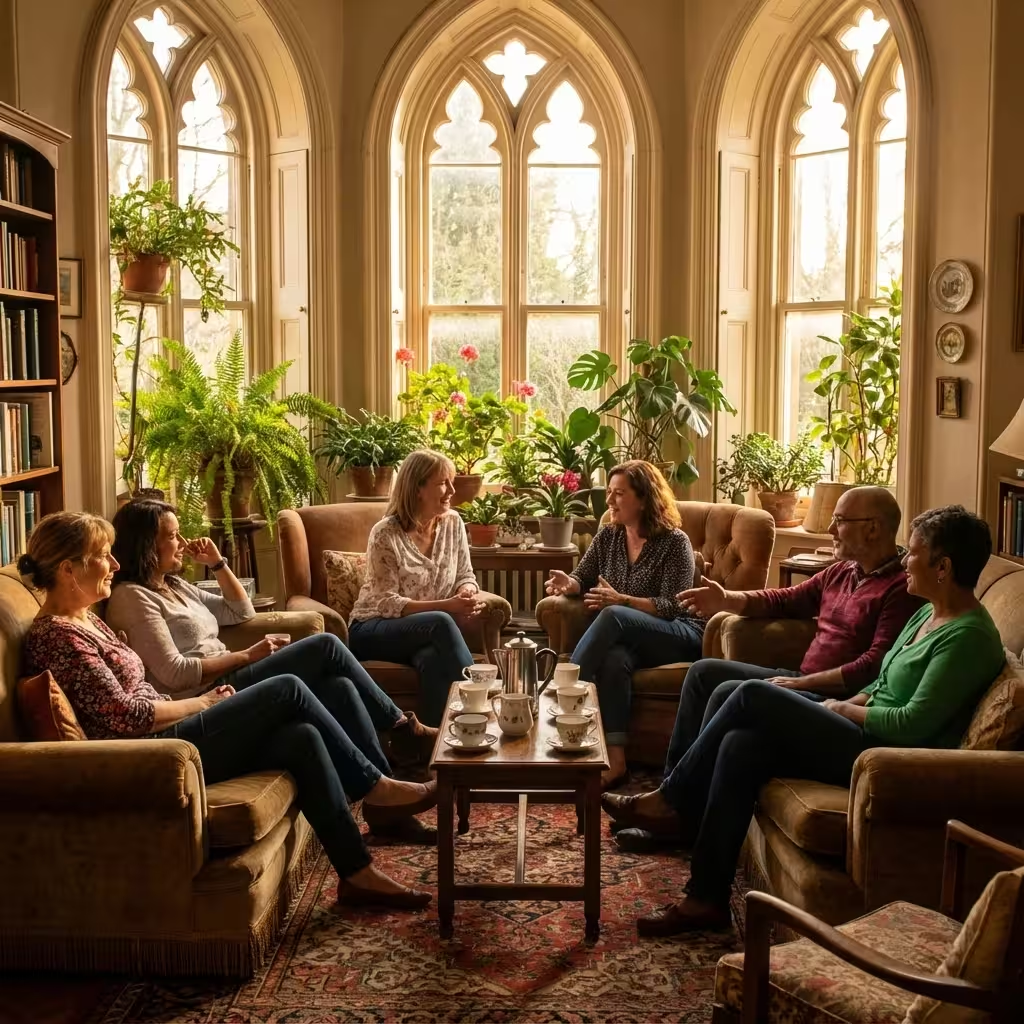
Maya's question started it: "Do you think everyone should live like this?" She gestured around her living room—four of us crammed onto furniture that didn't match, empty mugs multiplying on the coffee table, Thursday night stretching into something unplanned and necessary.
"Like what?" Sarah asked, sprawled on the floor with her back against the couch. "Broke and surrounded by other people's dishes?"
"No—like, in community. Sharing space. Knowing your neighbors this well." Maya tucked her feet under her, serious now. "I was talking to my sister yesterday. She lives in Phoenix, doesn't know the people in her building. Comes home, locks her door, watches Netflix alone. She seems... fine. But is she?"
"Fine is a low bar," Tom said from the armchair. He'd shown up for tea, stayed for the conversation, was now three hours deep into something we hadn't named yet. "I was fine before I moved here. Functional. Employed. Also desperately lonely and didn't know it."
The silence that followed wasn't awkward—it was the kind where everyone's checking their own experience, seeing if it matches.
I'd moved to Ravenswood six months ago from DC. Before that, I'd lived in apartments where I actively avoided neighbors—headphones on in hallways, fake phone calls in elevators. The idea of sitting in someone's living room on a Thursday, talking about loneliness? Would have seemed invasive. Now it seemed necessary.
"But should everyone do it?" Emma asked. She'd been quiet, listening. "Like, as a prescription? 'Community living: recommended for optimal human functioning'?"
"Some people need more space than this," Jordan said. "My cousin lives in Montana, nearest neighbor is three miles away. She's thriving. Says she'd lose her mind here."
"That's different though," Sarah countered. "That's choosing isolation versus having it forced on you by how we've built cities. Your cousin knows her three-mile-away neighbor. She's not anonymous."
"True," Jordan admitted. "She knows everyone in her valley. Weird mountain people who help each other survive winters."
Maya refilled her tea—chamomile that had been steeping too long, would be bitter now but she drank it anyway. "I think the question is whether isolation should be the default. Like, right now, if you want community, you have to seek it out. Join things. Be intentional. What if it was reversed? What if connection was the default and isolation was what you had to work for?"
"That sounds exhausting," Tom said. "Also amazing. Also terrifying."
"Yeah," Emma agreed. "Because sometimes I need to be alone and not explain why. Living like this"—she gestured at the room—"there's always someone who might knock. Always someone who knows you're home. That's comforting until it's not."
This is what I love about these conversations—nobody's trying to win. We're just sorting through it together, seeing what's true.
"I don't think everyone should live in co-housing," I offered. "But I think everyone should have access to it. Like, it should be an option that's actually available, not this weird thing only hippies and intentional communities do."
"Right," Sarah said, sitting up now. "Because the way it is now, you either live alone or with romantic partners or blood family. Those are basically the options. Everything else is 'alternative.'"
"Which is insane," Maya added. "Humans lived in community for thousands of years. Villages. Extended families. You knew your neighbors because survival required it. Now we call that alternative?"
"Capitalism wants you isolated," Jordan said. "Easier to sell you stuff. Can't share lawnmowers if you don't talk to neighbors."
Tom laughed. "Jordan's every conversation eventually becomes about capitalism."
"Because it's relevant!" Jordan protested. "We've built an entire economy on people not sharing resources. Community living threatens that."
We sat with that. Outside, a train whistled—long and low across the river. Somewhere in the house, Maya's ancient radiator clanked to life. The room smelled like chamomile and the banana bread Emma had brought that we'd demolished an hour ago.
"I don't think it should be mandatory," Emma said finally. "But I think we should teach it. Like, kids should grow up learning how to live with people who aren't their blood relatives. How to negotiate shared space. How to ask for help and offer it."
"That's what we're all learning now," I said. "As adults. Badly."
Everyone laughed because it was true. We were figuring it out—how to be neighbors, how to share Bill's porch and Maya's living room and the awkward silences when someone was struggling but didn't want to talk about it yet.
"Should this be normal?" Sarah circled back to Maya's original question. "I don't know. But it should be possible. Accessible. Not this rare thing you stumble into."
"Yeah," Maya agreed. "That's it. That's what I mean."
By ten, we'd talked ourselves out. Emma left first, then Jordan, then Sarah. Tom lingered, helping Maya collect mugs. I grabbed my jacket, stepped out into the November cold.
Walking back to my cottage—two minutes down the street—I thought about my sister in Phoenix. Wondered if she was lonely. Wondered if she knew she was lonely. Wondered if there was a version of her life where Thursday nights meant Maya's living room, terrible tea, conversations that mattered.
Should everyone live like this? Maybe not. But everyone should have the chance.
27 COMMENTS


5 Comments
Bill Henderson Dec 14, 2024 at 4:15 PM
You hit on something important here, Rachel. I've been on Front Street for forty years—before SILK, before any of this intentional community talk. And I'll tell you what: the best years were when people actually talked to each other. Sat on porches. Knew who was struggling and who needed help. That wasn't "alternative living," that was just... living. Somewhere along the way we convinced ourselves that isolation was normal and connection was weird. Got it backwards.
Maya Chen Dec 14, 2024 at 5:30 PM
Still thinking about Thursday night. The way Jordan kept circling back to capitalism made me laugh, but they're not wrong. When my sister visited from Phoenix, she couldn't believe we don't all have our own lawnmowers, our own tools, our own everything. She was like "but what if you need it and someone else is using it?" And I was like "then I talk to them?" Revolutionary concept, apparently.
Emma Clarke Dec 14, 2024 at 7:45 PM
I think about this a lot—how we ended up with such limited options for how to live. You're either married/partnered, living with blood family, or alone. Everything else is "alternative." But humans have lived in extended communities, with chosen family, with neighbors who became family, for most of history. The nuclear family in a separate house is actually the weird new experiment. We just forgot that.
Rosa Delgado Dec 15, 2024 at 8:20 AM
This conversation matters. When I moved here from Columbus, my colleagues thought I was joining a cult. "Why would you want to live that close to other people?" they asked. But I was so lonely in Columbus. Had a nice apartment, good job, no one to talk to. Here, I have people who notice if I'm home or not. Who check in. Who show up with soup when I'm sick. That's not a cult—that's human.
Tom Richardson Dec 15, 2024 at 11:30 AM
I don't have much to add except: yeah. This. The part about being "desperately lonely and didn't know it"—that was me. Thought I was fine because I had work, had hobbies, had Netflix. Didn't realize how much I needed people until I had them. Not going back.