



I'm not much for grand statements about changing my life. I'm sixty-two, been a carpenter for forty years, and I've learned that most things worth doing are small and repetitive. So when people ask about "going green" in my cottage, I just shrug. I made some changes. Some worked. Some didn't. Here's what stuck.
I moved into the Ravenswood cottage three years ago after my wife passed. Needed something different, something smaller. The place was built in 1892—heart pine floors, ten-foot ceilings, windows that rattle when the wind picks up. It was cheap because it needed work, which suited me fine. I know how to work.
What I didn't know was how much these old houses teach you if you pay attention.
The Rain Barrel I Didn't Want
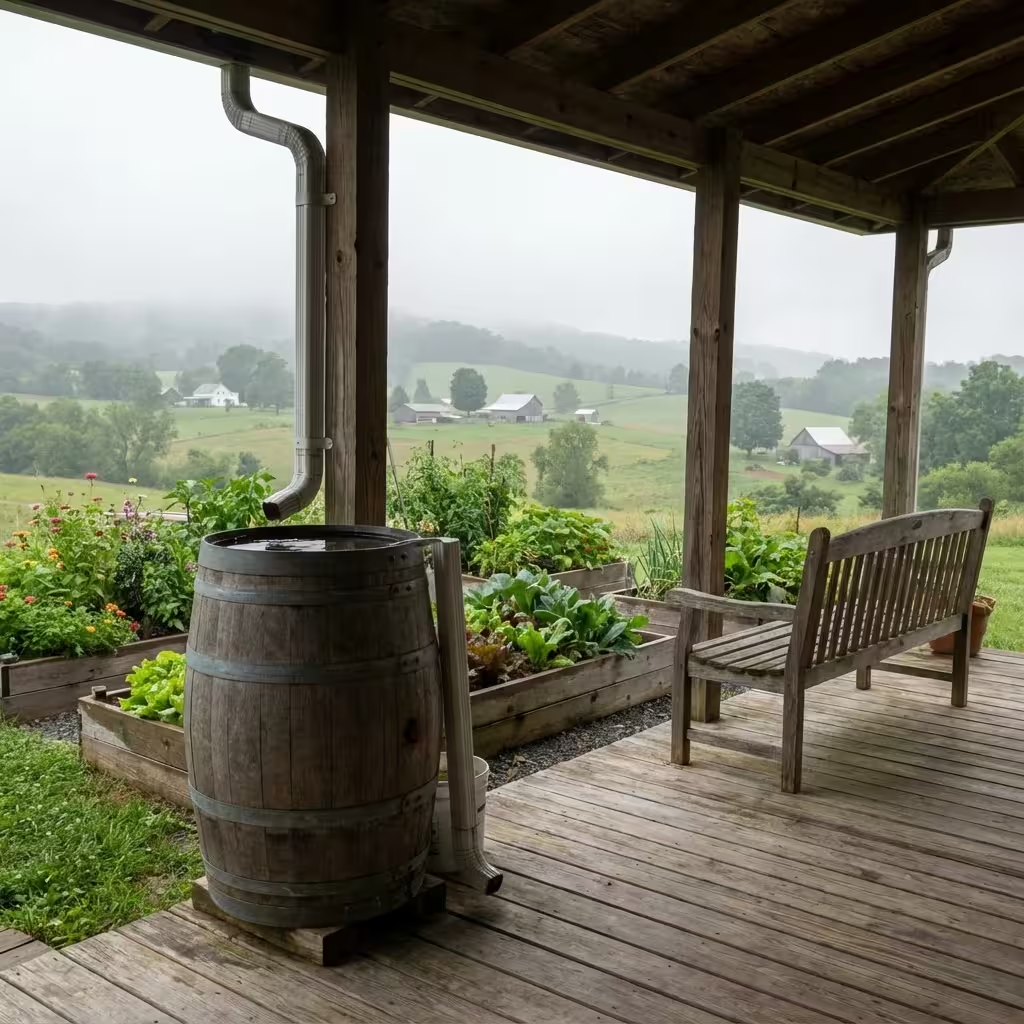
First summer, the downspout by the back door created a mud pit every time it rained. I was tracking mud through the kitchen constantly. Sarah next door suggested a rain barrel. I told her I wasn't trying to save the planet, I just wanted to stop tracking mud inside.
She laughed and brought one over anyway. "Just try it," she said.
That barrel caught about fifty gallons every decent rain. I started using it to water the tomatoes I'd planted—not for any environmental reason, just because the hose was on the other side of the house and the barrel was right there. Easier.
Three years later, I've got two barrels. I still don't care much about "sustainability," but I do care about not paying for water I can get for free from the sky. And the tomatoes don't seem to mind either way.
You don't have to believe in something to do it. You just have to notice what makes sense for where you are.
Advertisement
Weatherstripping That Actually Worked
The windows in these old cottages are single-pane with wooden frames that have been painted over so many times the layers are visible. Beautiful, impractical, and cold as hell in January.
I tried the foam weatherstripping first. Waste of money—fell off within a week because the frames are too warped. Then I tried the rope caulk. Better, but messy and annoying to remove in spring.
What worked was the old-fashioned bronze weatherstripping that gets nailed into the frame. Took me a full weekend to install on all twelve windows, but it's still there three winters later. Cuts down on the draft by maybe thirty percent. Not perfect, but better.
The heating bill went from $220 a month in January to around $165. Not life-changing, but that's fifty-five bucks I'd rather spend on something else. Plus the house is quieter—you don't realize how much noise comes through gaps until you seal them up.
The Herbs I Didn't Plan to Dry
I started a little herb garden in the spring—basil, rosemary, oregano, thyme. Just basic stuff for cooking. By September, I had way more than I could use fresh. I asked Maya what she did with extras, and she said she dried them.
I hung bundles in the kitchen window using twine and a couple small nails. It looked kind of nice, honestly—made the place feel lived-in. After two weeks, I had dried herbs that lasted me through the winter. Didn't have to buy those overpriced jars from the grocery store.
Now I do it every fall. Not because I'm trying to be self-sufficient or anything noble like that. Just because it works and it's free and the kitchen smells good while they're drying.
What Didn't Stick
I tried composting. Lasted about two months before I gave up. The smell was manageable, but the fruit flies were not, and I didn't have the patience to troubleshoot it. Tom next door got his working fine, but I decided that's not a battle I needed to fight.
I tried making my own cleaning solutions with vinegar and baking soda. The house just smelled like vinegar all the time. Went back to regular cleaning products. Some things aren't worth the hassle.
I also tried giving up my truck for a bike. Lasted one week before I realized I'm a sixty-two-year-old carpenter who sometimes needs to haul lumber. Impractical.
The thing about small changes is that some of them don't fit your life, and that's fine. You try it, it doesn't work, you move on. No shame in it.
What I've Learned
The changes that stuck were the ones that solved a problem I actually had. The rain barrel stopped the mud. The weatherstripping lowered the heating bill and made the house quieter. The dried herbs saved me money and tasted better than store-bought.
None of it was about being a better person or saving the world. It was just about making life in this old cottage a little easier, a little cheaper, a little more comfortable.
Our little cluster of SILK cottages has maybe fifteen people total. We're not a movement. We're just neighbors who share tools, trade vegetables, and help each other when the pipes freeze or the roof leaks. Elena brings me zucchini from her garden because she always plants too much. I fixed Sarah's porch steps last spring because I had leftover lumber and know how to use a miter saw.
People ask if living here has changed me. I don't think so. I'm still the same guy who'd rather fix something than talk about fixing it. But the house has taught me to pay attention—to what works, what doesn't, and what's worth the effort.
The rain barrels work. The weatherstripping works. The dried herbs work. That's enough.
8 COMMENTS




Sarah Mitchell
18 Dec 2024Bill, you forgot to mention that you also gave ME a rain barrel after yours worked so well! And yes, your herbs do make the whole block smell good in September.
REPLYMichael Torres
18 Dec 2024This is the most honest article about "sustainable living" I've ever read. No judgment, no pressure, just what worked and what didn't. Thank you.
REPLYElena Ramirez
18 Dec 2024And Bill fixed my porch steps WITHOUT me asking, which I'm still grateful for. This is what community looks like.
REPLY