



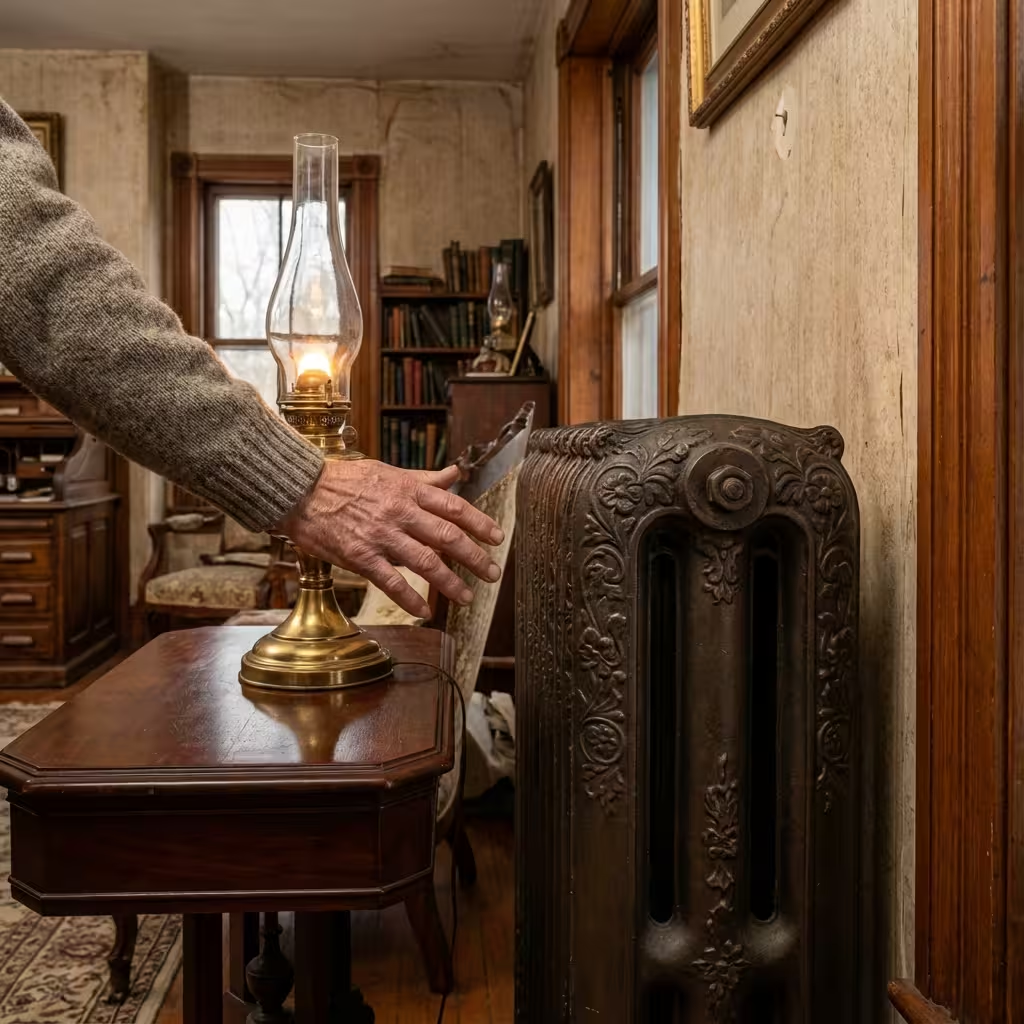
I'm an accountant. I like systems, spreadsheets, predictable outcomes. The radiator in my Parkersburg cottage had other plans.
November was mild. I moved in with a sense of accomplishment—I'd found this beautiful 1890 cottage on Market Street, negotiated a fair rent, budgeted carefully for utilities. The radiators were these gorgeous cast-iron things with decorative scrollwork. They looked like museum pieces. I assumed they worked like modern heating systems.
They did not.
The First Cold Snap
December arrived with temperatures in the teens. I cranked the thermostat to 72, the way I had in my Columbus apartment. The boiler rumbled to life. The radiators started their... performance.
First came the clanking. Not gentle ticking—full metallic percussion, like someone was inside the pipes with a wrench. Then the hissing from the air valves. Then the heat, but only in some rooms. The bedroom radiator was scalding hot. The kitchen one stayed lukewarm. The parlor one made alarming gurgling sounds but produced minimal warmth.
My December gas bill was $340.
I sat at my kitchen table and stared at that number. I'd budgeted $120 for winter heating, based on the square footage and my efficient apartment experience. This was catastrophic. I was already looking at space heater options when Jesse from down the street knocked on my door.
The Education Begins
"Heard your radiators clanking through the walls," Jesse said. "You got water hammer. And you're probably overheating."
I wanted to explain that no, I was clearly *under*-heating, given the cold kitchen and the absurd gas bill. Jesse gently ignored me and walked to my bedroom radiator. He pulled out a small level and placed it on top. The bubble sat decidedly to one side.
"See that? It's pitched wrong. Steam can't condense and drain back to the boiler properly. Gets trapped, makes noise, wastes energy." He moved to the cold kitchen radiator and inspected the valve. "And this one's barely open. These old valves are on-or-off, not like modern ones. If it's cracked open, you get nothing."
You can't fight a 130-year-old house. You have to learn its language and work within its logic.
Over the next hour, Jesse taught me about steam heating systems. How the radiator needs to pitch slightly toward the valve so condensed water drains. How the thermostat setting doesn't matter the way I thought—steam is steam, it's always the same temperature, you just control how long the system runs. How the air vents on each radiator can be adjusted to balance which rooms heat first.
He showed me how to tell if a radiator valve is fully open (counter-clockwise until it stops—no in-between). He explained that the clanking meant trapped water getting hit by fresh steam, and that shims under one side of the radiator would fix the pitch.
The Spreadsheet Phase
I'm an accountant. Of course I made a spreadsheet.
I tracked which rooms I actually used and when. Logged the outdoor temperature against the thermostat cycles. Researched the cost of wooden shims versus calling a plumber to re-pitch the radiators (shims: $8, plumber: $200+). Calculated the payback period on new air vents ($30) versus living with the imbalance (ongoing discomfort and inefficiency).
The spreadsheet told me to: lower the thermostat to 64, invest in the shims and new vents, close off the spare bedroom entirely, and wear sweaters. Total investment: $47. Potential monthly savings: $150-180.
I was skeptical but desperate.
Learning the System
Tom from the Ravenswood cottages came over one Saturday with his level, shims, and a small toolbox. We re-pitched the bedroom radiator so it drained properly. Replaced three air vents with adjustable ones, setting the bedroom to heat slower and the living spaces to heat faster. Fully opened all the valves instead of trying to modulate them.
Then I did the hardest thing: I turned the thermostat down to 64 and left it there.
The first week was cold. I wore two sweaters and thick socks. I questioned everything. But the radiators stopped clanking. The heat started distributing more evenly. The boiler ran for shorter cycles. And slowly—because these old systems are slow—the house found a balance.
January's gas bill was $210. February's was $165.
What Actually Changed
The house didn't change. It's still a 1890 Italianate with twelve-foot ceilings, single-pane windows, and radiators that weigh more than I do. The physics didn't change. Steam is still steam.
What changed was me.
I stopped expecting the house to behave like my modern apartment. I learned that 64 degrees with radiator heat feels different than 72 degrees with forced air—the radiators create these warm zones, you sit near them, the warmth is gentle and radiant instead of blown around. I started keeping a sweater on the coat rack and wearing slippers. I closed the door to rooms I wasn't using.
I learned to listen to the radiators. The initial hiss when the air vent opens? Normal. The gentle ticking as the metal expands? Fine. The violent clanking? That's a problem to address. The gurgling? Could mean a vent is clogged or a pitch is off.
Most importantly, I learned patience. These systems don't heat on demand. You set the thermostat at 6am, and the house warms up slowly over the next hour. You can't blast it warm in ten minutes. You work with the system's rhythm instead of against it.
The Meditation Corner
There's a corner in my parlor where the radiator sits under a window with wavy glass. On cold mornings, I sit in the chair next to it with coffee and watch the frost patterns on the window while the radiator warms up. The metal ticks softly as it expands. Steam rises from the air vent. The warmth spreads slowly across the room.
It's become my meditation practice—unintentionally. I didn't set out to create a mindfulness ritual. But something about that radiator's patient, inevitable warming, the way it doesn't rush, the way it just steadily does its 130-year-old job, taught me something my spreadsheets never could.
You can't optimize everything. Some systems require acceptance rather than efficiency improvements. Some warmth is worth waiting for.
February's Lesson
When the polar vortex hit in late February and temperatures dropped to single digits, my carefully balanced system struggled. The house wouldn't get above 62 no matter what I did. I panicked initially, then remembered Jesse's advice: "You can't fight the house."
I made tea, put on an extra sweater, moved my reading chair closer to the radiator. Iris from two doors down invited me over for her Wednesday meditation group—her cottage stays warmer because it's smaller. I went. We sat in a circle in her tiny warm parlor while my house slowly recovered.
Community, I learned, is also a heating system.
The gas bill that month was $198—higher, but not catastrophic. And I'd learned something more valuable than efficiency: these old houses teach you to be flexible, to accept limitations, to ask for help when systems fail. They teach you that warmth isn't just BTUs and thermostat settings. Sometimes it's tea with neighbors while the radiators do their slow, patient work.
I still keep my spreadsheet. February's data is in there: outdoor temps, gas usage, costs. But I also started a different kind of log—which mornings I sat by the radiator, which nights I joined Iris's meditation group, which days Tom stopped by to check on my heating system. That data doesn't fit in the spreadsheet columns. But it's the more important accounting.
8 COMMENTS




Peter Novak
20 Dec 2024This resonates so much. I've been working on radiator efficiency in our Ravenswood cottage. The key insight about not fighting the house—that's exactly right. Sometimes the old systems know better than we do.
REPLYEmma Clarke
20 Dec 2024The meditation corner by the radiator—I love this. I have a similar spot by my kitchen radiator where I drink morning coffee. There's something about that slow, patient warmth that changes your whole relationship with winter.
REPLYJesse Martinez
20 Dec 2024Happy to help anytime, Sam. Your heating bill journey is exactly what most of us go through. Year two gets easier—you'll know what to expect and how to prepare.
REPLYBill Henderson
20 Dec 2024These old radiators have personality. Mine's been clanking since 1955. You learn to appreciate it.
REPLYSarah Mitchell
21 Dec 2024The meditation corner by the radiator is genius. I have a similar spot in my Marietta cottage. That warmth changes everything about winter mornings.
REPLYTom Richardson
21 Dec 2024Good work on the shims. That pitch makes all the difference. If you need help adjusting the other radiators before next winter, let me know.
REPLYIris Yamamoto
22 Dec 2024I love that your radiator became a meditation practice. Mine hisses at 6:15 every morning—it's my wake-up call. These old systems have their own wisdom if we listen.
REPLYMaya Chen
22 Dec 2024Sam, this is so relatable. My first winter I kept the house at 68 and nearly bankrupted myself. Now I'm at 62 with sweaters and it feels normal. You learn what warmth actually means.
REPLY