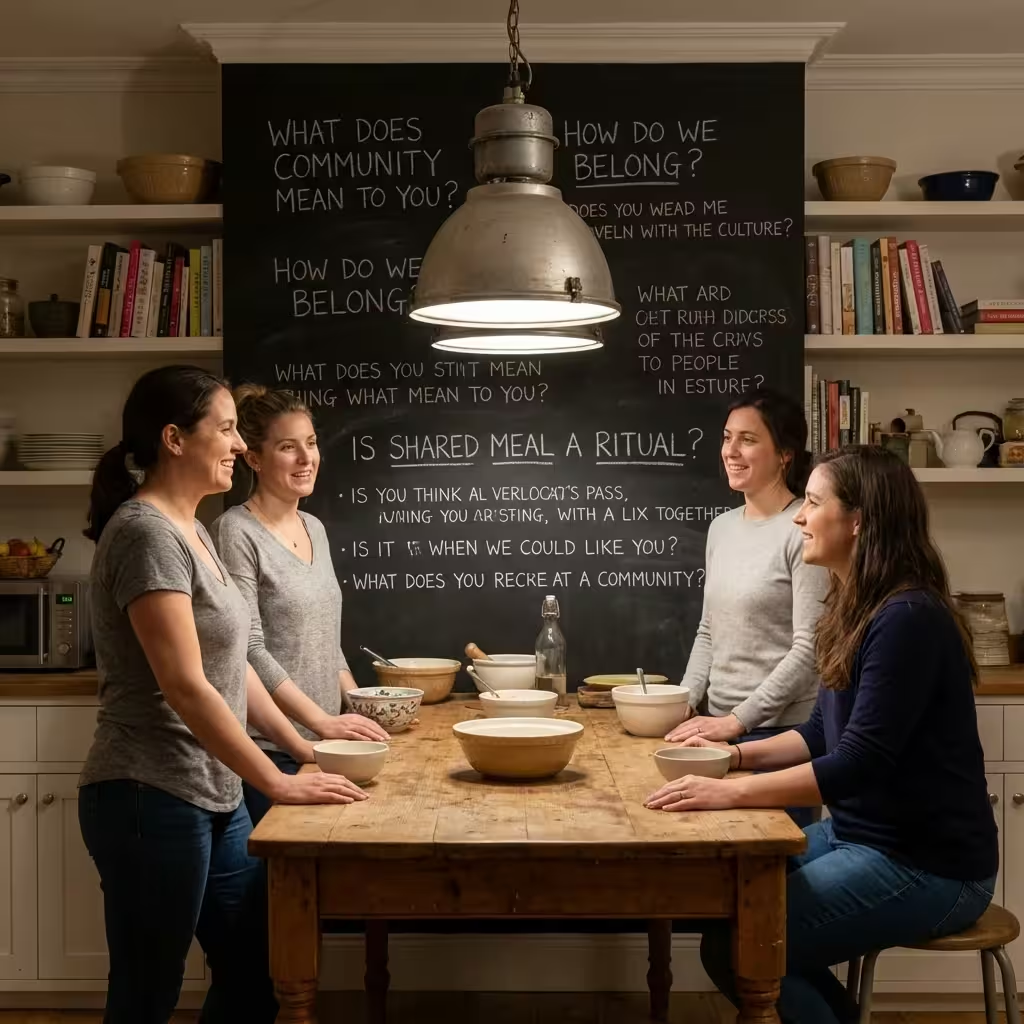
It started with Emma asking "Why did you move here?" at 11 PM in her kitchen. By 2 AM, we'd accidentally created our own version of a reader Q&A—except we were both the readers and the answers.
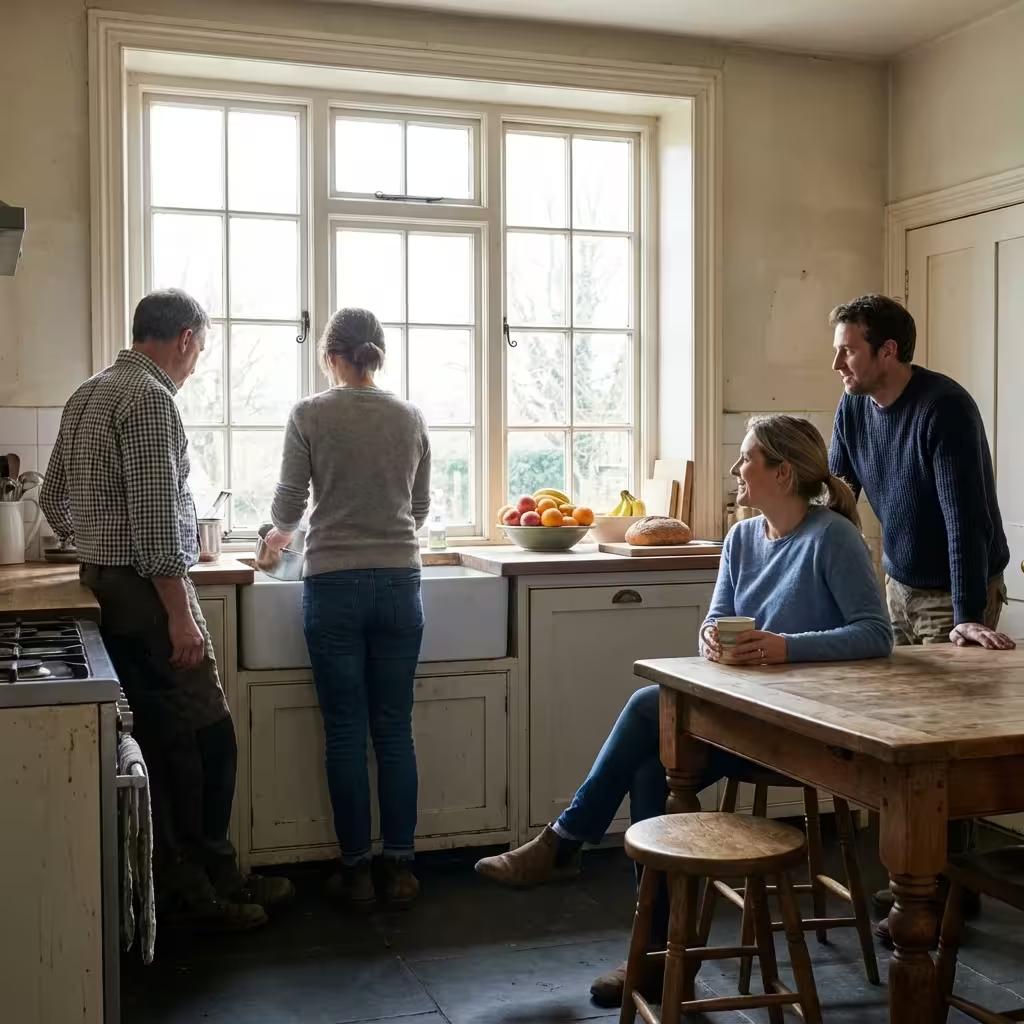
Emma's kitchen light was still on at 11:15 PM, which meant she was either baking bread or couldn't sleep. I knocked anyway.
Advertisement
"Come in," she called, not looking up from her mixing bowl. Sourdough starter. The baking option.
"Can't sleep?" I asked, settling into the chair that's become "mine" in her kitchen—the one by the window with the wobbly leg.
"Can't stop thinking," Emma corrected. "Why did you move here, Annie? Like, really why?"
The question should have been simple. Instead, it opened something neither of us expected—a midnight conversation that turned into our own accidental guide to intentional living.
I told her the truth: I'd been living in Chicago for eight years, making good money, dating someone who was "fine," going to yoga classes where no one learned your name. One day I realized I could describe my entire life without using the word "want." Just "should" and "supposed to."
"So you ran away?" Emma asked, punching down dough with unnecessary force.
"I ran toward," I said. "There's a difference."
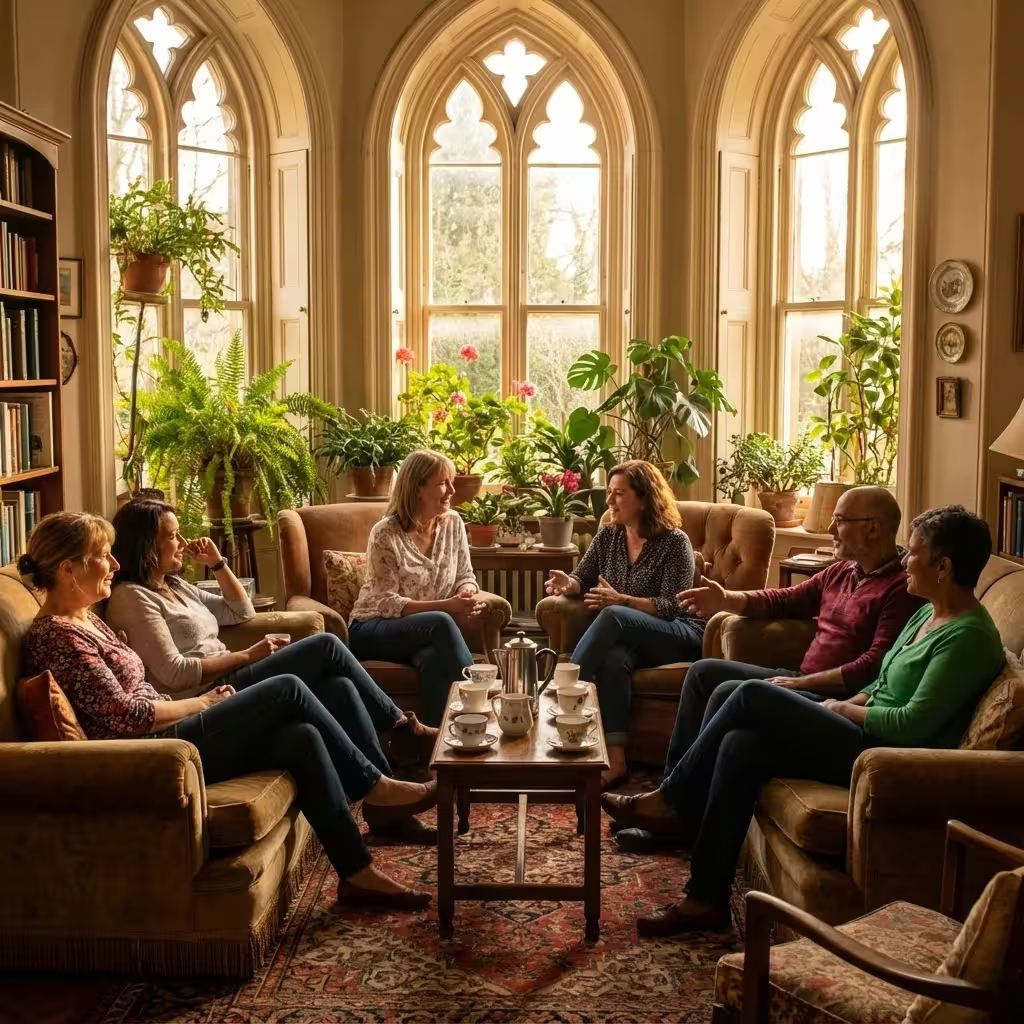
By midnight, we'd been joined by Tom (insomnia), Rachel (heard voices), and Bill (always awake, apparently). Emma's kitchen became an accidental late-night salon, everyone perched on mismatched chairs with mugs of chamomile tea nobody really wanted.
"Okay, same question for everyone," Emma declared. "Why are you here? And I don't mean because rent is cheap or you needed a change. I mean why THIS? Why intentional community?"
Tom went first. Retired Air Force, never lived anywhere longer than three years, finally chose a place and wanted it to mean something. "I've had community assigned my whole life. This is the first time I'm building it."
Rachel: Burned out from teaching, parents asking when she'd settle down, realized "settling" was exactly what she'd been doing. "I wanted uncomfortable. I wanted to have to try."
Bill laughed. "I've been here forty years. Watched this town empty out, come back, empty again. You all showed up and I thought, maybe this is the version that sticks."
We'd accidentally created our own Q&A—the kind magazines run where readers send questions and experts give tidy answers. Except none of us were experts, and the answers were messy and real and exactly what we needed.
Someone asked: "Do you ever regret it?" Everyone's hand went up, then everyone laughed.
"Tuesdays," Rachel said. "Every Tuesday I wonder what the hell I'm doing living in a place with one grocery store and unreliable internet."
"Winter," Tom added. "When the heat goes out and you remember old houses are charming until they're not."
"Community meetings," I admitted. "When we argue about composting for ninety minutes and I think maybe solitary living wasn't so bad."
"But you stay," Bill observed quietly. "You all stay."
We talked until Emma's sourdough had risen, punched it down, let it rise again. Covered everything: loneliness in community (yes, it exists), the difference between chosen and biological family (complicated), how to know if you're running away or running toward (still figuring it out), whether intentional living means giving up privacy (sometimes), and if community can really replace the life you left behind (wrong question—it becomes a different life).
By 2 AM, we were writing questions on Emma's chalkboard wall: "How do you deal with difficult neighbors?" "What if community isn't enough?" "Can you be alone and together at the same time?"
We didn't answer them all. Some we'll never answer. But we wrote them down, which felt like enough.
Now Emma's kitchen chalkboard is our accidental Q&A wall. People add questions in passing, answer them if they can, leave them blank if they can't. It's become our version of those advice columns, except the advice is: "Still learning," "Ask me in a year," "No idea but let's figure it out together."
That's the real answer to all of it, I think. Not wisdom from experts, but honest confusion from people trying their best. The questions matter more than the answers. And sometimes, 2 AM in a Victorian kitchen with rising bread and tired friends is exactly the expert panel you need.
The chalkboard's grown fuller since that first night. Someone wrote "Does it get easier?" and three people answered "No, but you get stronger." Someone else asked "What if I made a mistake?" and Bill wrote underneath: "Then you learn something. That's the point."
We're adding more questions than answers, which feels right. Maya wrote one last week that no one's touched yet: "What if we're doing this all wrong?" It sits there, unanswered, waiting. Maybe it always will be. Maybe that's the most honest thing on the whole wall.
Maya Chen
12 Dec 2025I'm saving this. We need more midnight conversations where nobody pretends to have all the answers.
REPLYTom Richardson
13 Dec 2025"Running toward" vs "running away"—that distinction hit hard. Still figuring out which one I did.
REPLYRachel Kim
13 Dec 2025Every Tuesday I wonder what I'm doing here. Reading this reminds me I'm not alone in that wondering.
REPLYSarah Mitchell
13 Dec 2025The chalkboard wall idea is brilliant. We should all have spaces where unanswered questions are allowed to just sit.
REPLYJacob Torres
14 Dec 2025"Community can't replace the life you left behind (wrong question—it becomes a different life)"—needed to read that today.
REPLYIris Yamamoto
14 Dec 2025The wisdom isn't in having answers—it's in being willing to sit with the questions together. Beautiful piece.
REPLYBill Henderson
15 Dec 2025Been here forty years. Still have questions on that chalkboard. That's how you know you're doing it right.
REPLY