



I moved in the next week. That was three years ago. Back then I'd lived alone for eight years—my own apartment in Columbus, my own schedule, my own everything. Privacy was normal. Sharing was what you did in college dorms, something you suffered through until you could afford your own place.
Then rent went up. Again. And I found myself at thirty-five, priced out of living alone in the city, facing a choice: different city, or different living situation.
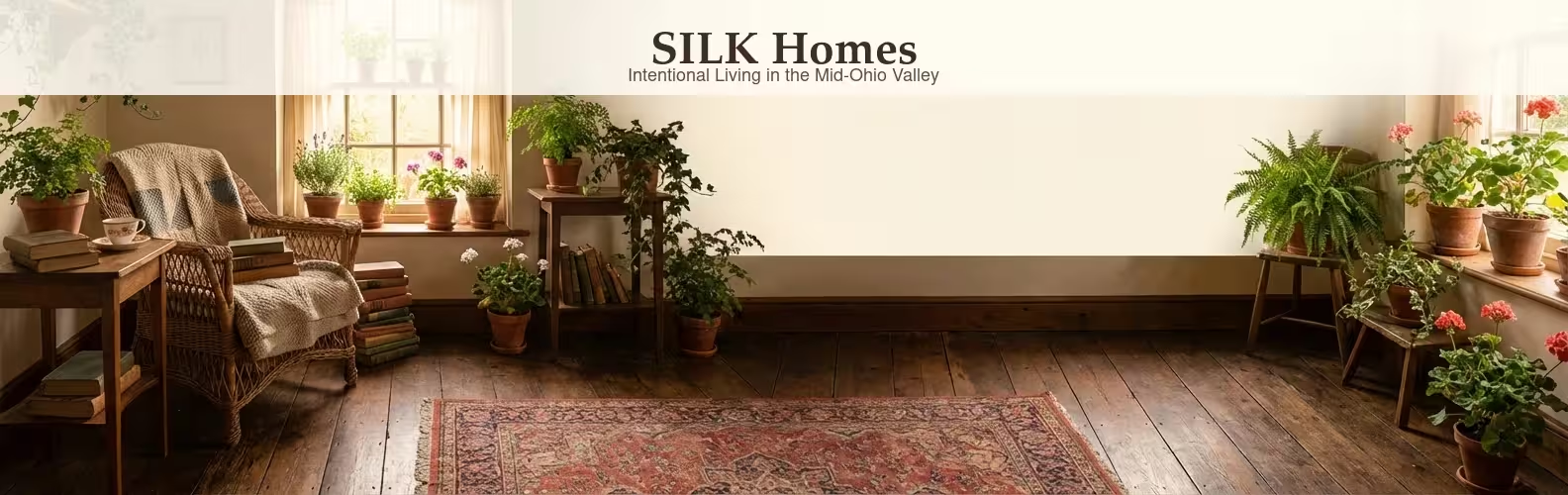
SILK Homes in Ravenswood wasn't what I expected. The cottage is old—1892 old, built when the river town was booming with lumber money. Creaky hardwood floors, vintage radiators that clank like church bells, that particular smell of houses that have seen over a century of people living and leaving. But it's maintained, warm, full of afternoon light through wavy glass windows.
"We share common spaces," Sarah explained during the tour, her voice matter-of-fact but kind. "Kitchen, living room, dining room. Bedrooms are private. We have a cleaning schedule, grocery system, house meetings once a month."
Living with people isn't about losing privacy. It's about gaining presence—someone to notice if you're okay, to share coffee with at odd hours, to remind you you're not alone.
The first month was adjustment. Learning whose footsteps were whose on the old stairs. Understanding the morning bathroom dance—Tom always showered at 5:45, so if you wanted hot water, you went at 6:30. Figuring out which shelf in the fridge was mine, which cookware was communal, when quiet hours started.
I expected friction. Rules broken, arguments over dishes, passive-aggressive notes about thermostats. College dorm drama at middle age.
Instead: Sarah making extra coffee because she heard me coming downstairs. Tom leaving a book on my door with a note: "thought you'd like this." Maya teaching me to cook actual vegetables instead of surviving on takeout and frozen dinners. Bill fixing my bike chain without being asked, just because he saw it was broken.
Small kindnesses. Daily noticing. The opposite of isolation.
Advertisement
We're not best friends. We don't hang out constantly. Tom annoys me sometimes—he talks during movies, leaves beard trimmings in the sink on Sundays when he does his weekly shave. I probably annoy him back with my early-morning keyboard typing when I'm on deadline. But we coexist, and that coexistence has grown into something more: community.
Last February I got sick—actual flu, not just a cold. Fever, chills, the works. Stayed in bed for three days straight. Nobody lectured me about dishes or cleaning duties. Sarah brought soup from her grandmother's recipe. Maya checked on me every few hours. Tom left medicine outside my door with a note: "Take this. Sleep. We've got your chores."
I cried a little, alone in my room with the afternoon light coming through those old wavy windows. When's the last time anyone took care of me? When's the last time anyone noticed I needed taking care of?
Living alone, you can disappear. Not die-and-nobody-finds-you dramatic—just fade. Skip meals. Stay up too late. Neglect yourself in small ways that accumulate. There's no witness, so there's no accountability, no one to call you on your patterns.
This house taught me how to share. Not just kitchen space and bathroom schedules, but life. Presence. Attention. The knowledge that someone's listening when I come home.
Here, there's witness. Sarah notices if I skip breakfast three days in a row. Tom asks if I'm okay when I'm quieter than usual at dinner. Maya calls me out when I'm working too much, forgetting to go outside. I do the same for them. We keep each other human, keep each other honest.
The house teaches this. Victorian architecture designed for multi-generational living—parlors built for gathering, kitchens meant for cooking together, wide porches for sitting outside watching neighbors pass. Modern apartments are designed for isolation, for privacy taken to its logical extreme. These old houses remember community, were built with it in mind.
The radiators demand it too—they're all connected, heating the whole house from one boiler in the basement. You can't just heat your room. When one person adjusts the thermostat, everyone feels it. It's a metaphor I didn't ask for but needed.
Would I go back to living alone? People ask this when they visit, looking around the shared kitchen with barely-concealed concern. I don't know. I miss some things—walking around naked at 2am, playing music loud at midnight, eating cereal for dinner without anyone making gentle suggestions about nutrition. But I don't miss the loneliness. The coming home to empty rooms. The forgetting how to be around people, how to compromise, how to share.
Sarah asked if I wanted to renew my room for another year. I said yes before she finished the question. This Victorian cottage with its creaky floors and shared everything has become more home than any apartment I paid too much rent to live in alone. More real. More true.
The tour was fifteen minutes. Learning to live here is ongoing. But I'm learning. We all are. Together, which turns out to be the whole point.
14 COMMENTS




Sarah Mitchell
16 Dec 2024Emma, this made me tear up. I remember your tour day—you looked so nervous. Look at us now. So glad you stayed.
REPLYMaya Chen
16 Dec 2024The radiator metaphor! Yes! I never thought about it that way but you're absolutely right. We're all connected to the same heat source.
REPLYTom Richardson
16 Dec 2024Sorry about the beard trimmings. I'll work on that. Also you're welcome for the book.
REPLYRachel Kim
17 Dec 2024I've been thinking about co-housing for when my lease ends. This gives me courage to actually try it instead of just wondering.
REPLYBill Henderson
17 Dec 2024Your bike's chain was loose again yesterday. I tightened it. Old houses, old bikes—they both need regular attention.
REPLYAnnie Walsh
17 Dec 2024"Forgetting how to be around people"—I felt that in my bones. Living alone for too long changes you in ways you don't notice until you try to live with others again.
REPLYJordan Hayes
18 Dec 2024Three years! Has it really been that long? Time moves different when you're not just surviving alone in an apartment.
REPLY