



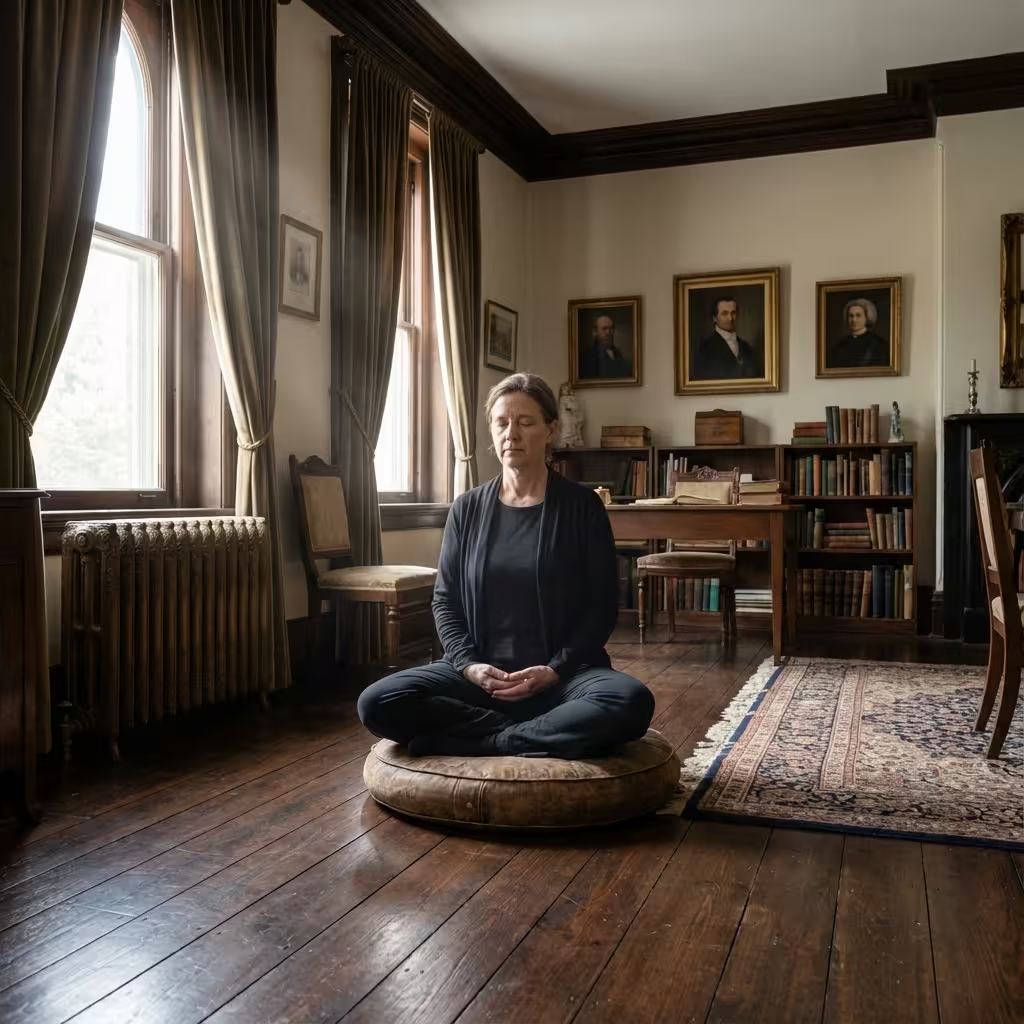
I started meditating because Iris told me I seemed stressed. She didn't say it like criticism—just stated it like you'd mention that someone's shoelace was untied. "You seem stressed." Then she went back to arranging her acupuncture needles, like she'd just offered a weather observation rather than a diagnosis of my entire existence.
This was November, first winter in the Parkersburg cottage, heating bills climbing, work pressure mounting, and apparently broadcasting my internal state to anyone paying attention. Iris hosts Wednesday meditation at her place, but I'd been avoiding it. Too formal. Too committed. Too much sitting with other people's energy when I could barely sit with my own.
But her comment stuck. So one Tuesday morning at 5:45 AM, I sat down in the corner of my parlor—the spot by the radiator where morning light comes through wavy Victorian glass—and set a timer for five minutes.
Five minutes felt like an hour.
I counted breaths like Iris had mentioned once. In for four, hold for four, out for four. Made it through maybe three cycles before my mind wandered to my to-do list. Brought it back. Wandered again, this time to whether I'd paid the electric bill. Back again. Then to what I'd eat for breakfast. Back. To a conversation from three days ago that I wished I'd handled differently.
Meditation isn't about having no thoughts. It's about noticing when you've drifted and choosing to return. Over and over. That's the practice.
When the timer went off, I felt restless and slightly annoyed. This was supposed to help? I just spent five minutes watching my brain spiral through every concern I already knew I had. What exactly was the point?
But I did it again Wednesday. And Thursday. Not because I loved it or because it was working—just because I'd already started and stopping felt like admitting defeat. Stubborn momentum, basically.
Week two, I bumped it to ten minutes. That's when things got weird. Around minute seven, something shifted. Not peaceful, not blissful—just less urgent. Like my thoughts were still there but I was watching them from slightly further back. A thought about work stress would arrive, and instead of engaging with it, I'd notice: "Oh, there's the work stress thought again." Then return to breath.
Peter Novak caught me one morning. He's an early riser, walks past my house around 6:00 AM. Saw me through the parlor window, sitting still in the half-dark. Asked me about it later: "You doing yoga or something?"
"Meditation," I said.
"Does it work?"
I had to think about that. "I don't know yet. But I keep showing up."
The practice isn't about achieving some perfect mental state. It's about building the muscle that brings you back when you've wandered.
By December I was up to twenty minutes. Not because twenty is magic—just because fifteen felt too short and thirty felt unrealistic. Twenty was the edge of my capacity to sit still before my body started staging a full rebellion.
Here's what I learned: meditation doesn't make your problems go away. My heating bill is still high. Work is still demanding. The radiator still clanks at 3:00 AM like it's trying to communicate in Morse code. But something about sitting with all of that—not fixing it, not solving it, just acknowledging it exists—changed my relationship to it.
I still get stressed. But now there's a tiny gap between the stressor and my reaction. Not always. Not even most of the time. But sometimes I'll notice: work email arrives, stress response starts, and there's this half-second where I can choose how to respond instead of just reacting.
Iris noticed the difference before I did. "You seem calmer," she said one Wednesday evening. Not glowing, not transformed—just slightly less wound-up than before.
I started going to her Wednesday sessions. Sitting with other people is different than sitting alone—harder in some ways, easier in others. There's accountability. There's shared silence that somehow feels less lonely than solitary silence. And when someone's stomach growls or the radiator clanks, you remember that this practice is profoundly human and imperfect.
Some mornings I still dread the timer going off at 5:30, knowing I'm about to spend twenty minutes watching my mind do its chaotic thing. But I show up anyway. Set the cushion in the corner. Watch the street wake up through wavy glass. Breathe in for four, hold for four, out for four. Notice when I've drifted. Return.
That's the whole practice: drifting and returning. Not achieving some zen state. Not emptying the mind. Just training the muscle that brings you back. Over and over. Twenty minutes at a time.
I didn't think I had twenty minutes to spare. Turns out, those twenty minutes might be the most important part of my day—not because they're productive or transformative, but because they teach me I can sit with myself, exactly as I am, and that's enough.
16 COMMENTS





Iris Yamamoto
14 Dec 2024Sam—so glad you found your practice. The fact that you keep showing up, even on the hard mornings, is everything. That's the practice.
REPLYMaya Chen
14 Dec 2024"Twenty minutes I didn't think I had" - this is so real. I keep telling myself I'm too busy to meditate, then waste an hour scrolling Instagram. Your honesty helps.
REPLYPeter Novak
15 Dec 2024I've been thinking about this since I saw you that morning. Maybe I should try it. Do you have a timer recommendation or just use your phone?
REPLYEmma Clarke
15 Dec 2024The part about the gap between stressor and reaction—yes. I've been meditating for two years and still only get that gap occasionally, but when it happens it feels like a superpower.
REPLYSarah Mitchell
16 Dec 2024Love that you started with five minutes. Everyone always says "just meditate" like it's simple, but nobody talks about how awkward and uncomfortable it is at first. This is the real story.
REPLYTom Richardson
16 Dec 2024I do something similar before my morning runs. Just three minutes of breathing before I head out. Changes the whole run.
REPLY