



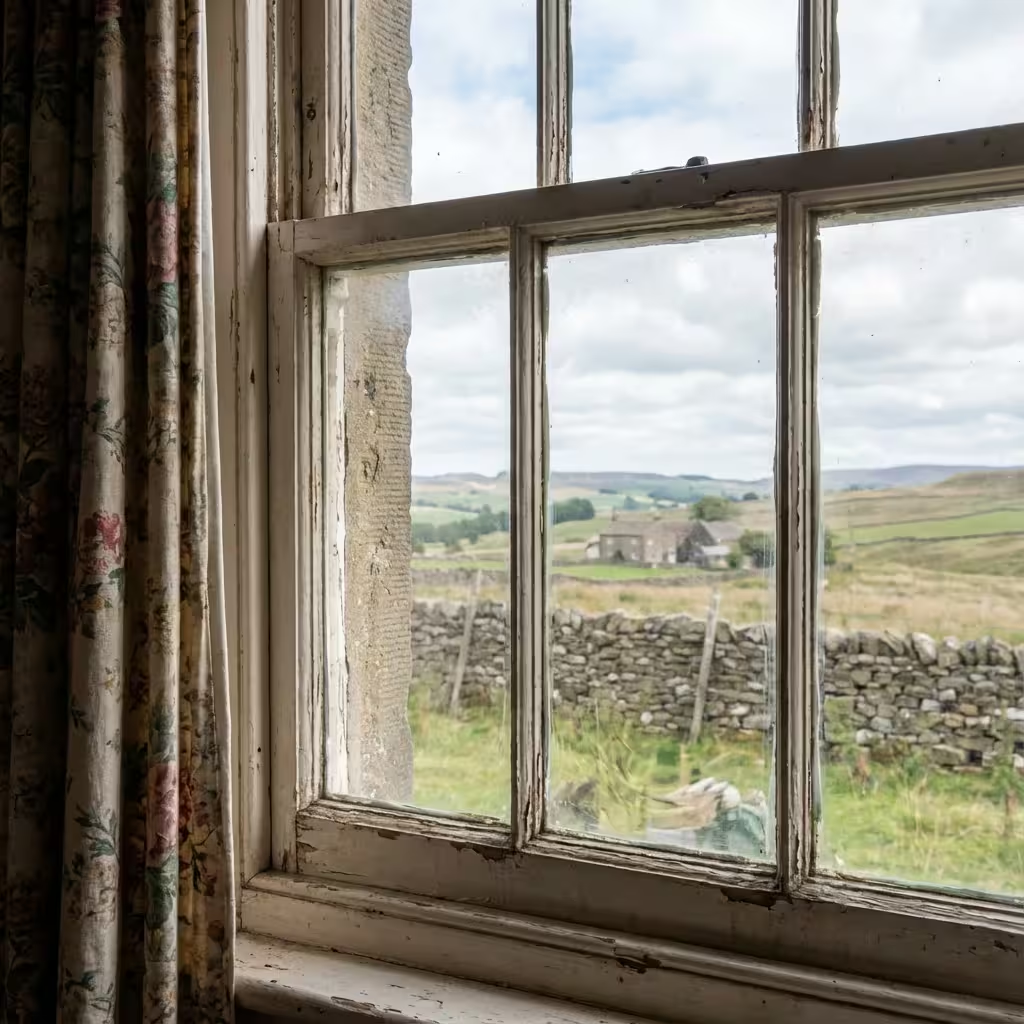
The Marietta cottage came with a list of problems the landlord apologized for but couldn't afford to fix. Single-pane windows. Drafty floors. A basement door that swelled shut every summer. A bathroom exhaust fan that wheezed but didn't actually exhaust anything. I signed the lease anyway because the rent was right and the ceilings were beautiful and I figured I'd learn to live with it.
Turns out "learning to live with it" actually meant learning to fix small things in ways that worked with a 140-year-old house instead of against it. This isn't a story about a dramatic renovation. This is about weatherstripping and caulk and finally understanding why the house did what it did.
The Windows Everybody Warned Me About
Those single-pane, wavy-glass windows? Everyone told me they'd be impossible in winter. "You'll freeze," said the previous tenant. "Might as well open the windows and burn money," said Bill from next door, cheerfully unhelpful.
The first cold snap proved them right. I could feel cold air streaming from the frames even with the windows locked. The glass itself was fine—thick, old glass insulates better than people think—but the wooden frames had warped over a century of settling. No amount of modern weatherstripping would seal gaps that changed shape with temperature and humidity.
Sam, who'd been in the Ravenswood cottage for a decade, came over to assess. "Stop trying to seal them," he said. "You're fighting the house. These frames are going to move. You need a solution that moves with them."
He showed me his setup: heavy thermal curtains hung on wooden rods, mounted several inches above and to the sides of each window. Not sealed to the frame—just creating a dead air space between curtain and glass. "The curtain traps the cold air at the window. Warm air stays in the room. Works with the drafts instead of trying to eliminate them."
I spent $120 at a fabric store clearance sale on heavy canvas. Made simple curtains with iron-on hem tape because I can't sew. Hung them that weekend. My heating bill dropped by almost 40 percent that winter.
Old houses don't need modern solutions. They need you to understand what they were designed to do and work with that.
The Bathroom That Grew Mold
The bathroom exhaust fan made noise but didn't actually vent moisture. I discovered this when black spots started appearing on the ceiling in February. Mold. Perfect.
I assumed I needed a new fan—expensive, probably required an electrician. But Jordan, who works in historic preservation, looked at it and laughed. "Your fan is fine. Your ductwork is backward."
The previous owner had installed a modern exhaust fan but vented it into the attic instead of outside. Moisture was condensing in the unheated attic and dripping back down through the plaster. The fix was rerouting six feet of flexible duct to an existing attic vent. Cost me $30 and a Saturday morning with Jordan directing from the bathroom while I crawled through attic dust.
Mold stopped growing. Ceiling dried out. I painted over the spots with mold-killing primer. Problem solved because someone who understood old houses explained what was actually wrong.
The Kitchen Sink That Wouldn't Drain
Slow drainage is apparently normal in these cottages—ancient pipes, decades of sediment, tree roots infiltrating century-old clay lines. I tried draino, baking soda and vinegar, a plumbing snake. Nothing worked more than temporarily.
Elena finally explained the real issue. "The pitch is wrong. These old pipes were installed when people used way less water. Modern drains need steeper slope. You're not going to fix it without replumbing, and that's thousands of dollars."
Advertisement
Her solution: a mesh drain screen to catch food particles before they hit the pipe, and a simple habit change. Run hot water for 30 seconds after washing dishes. The heat keeps grease liquid long enough to make it through the shallow-pitched pipe instead of solidifying halfway down.
Five years later, I'm still using that screen and running hot water. Haven't had a backup since. The pipe is still wrong—but I changed my behavior to match what the pipe could handle.
The Basement Door That Swelled
Every June like clockwork, the basement door swelled so tight I couldn't open it. Every November it shrank and left gaps. I thought about planing it down, but Bill warned me: "Plane it to fit summer and it'll rattle loose all winter. Plane it to fit winter and you'll never open it in July."
The actual solution was stupid simple: a small dehumidifier in the basement. Kept humidity constant year-round. Door still swells a tiny bit, but it opens fine now. Cost less than a hundred bucks and uses maybe ten dollars of electricity a year.
Again—not fixing the door. Fixing the conditions around the door.
What I Learned About Sustainable Design
None of these fixes are what you'd see in a home renovation show. I didn't install smart thermostats or solar panels or reclaimed barn wood. I hung cheap curtains and rerouted a duct and bought a dehumidifier.
But sustainable design in an old house isn't about adding expensive modern technology. It's about understanding how the house works, what it was built to do, and making small adjustments that let it do that job better.
These Victorian cottages were designed for a world with less stuff, less water use, less heating, more acceptance of seasonal temperature variation. You can fight that and spend a fortune trying to make them perform like new construction. Or you can figure out what they do well and adapt your life to match.
My cottage is still drafty. The floors still creak. The plumbing is still 1885 plumbing with all the quirks that implies. But it's comfortable now because I stopped trying to force it to be something it wasn't built to be.
The most sustainable design choice I made wasn't buying anything new. It was learning to read what the house was trying to tell me—and listening.
16 COMMENTS




Sam Henderson
14 Dec 2024This is exactly right. Took me five years to stop fighting my cottage and start listening to it. Now we get along great.
REPLYJordan Martinez
14 Dec 2024Historic preservation is 90% detective work and 10% actual fixing. Glad you figured out the bathroom vent! Most people just replace the whole thing unnecessarily.
REPLY