


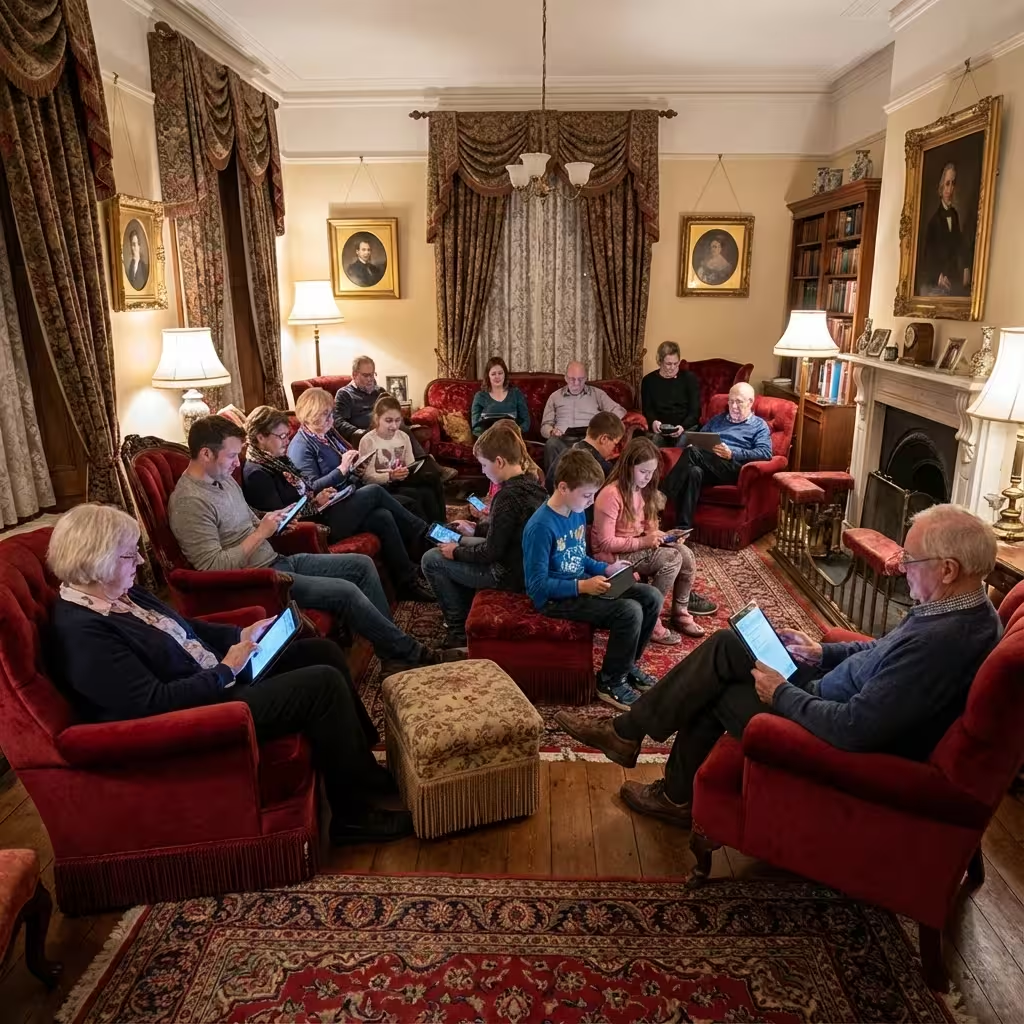
Last Tuesday, eight neighbors crammed into Sarah's Victorian living room to plan the community garden's spring planting. Someone pulled up a shared calendar on a tablet. We spent fifteen minutes discussing tomato varieties. The technology disappeared into the background. That's when I knew we'd gotten it right.
Six months ago, our little cluster of SILK Homes in Ravenswood had a coordination problem. We'd organize potlucks via text chains that somehow always left someone out. Garden work parties would get planned, rescheduled, forgotten. Someone would bake extra bread and want to share, but by the time they'd texted everyone individually, the bread was cold and half the neighbors had started dinner.
Jacob—our resident software developer who works from the parlor of his 1890s cottage—suggested we needed "better infrastructure for spontaneity." That's the most Jacob sentence possible. But he was right.
"What if we had a shared calendar?" he proposed during a porch conversation. "Not for scheduling everything to death. Just for visibility. So we know what's happening and can show up if we want."
Bill, our retired engineer turned garden coordinator, looked skeptical. "I'm not learning another app," he said flatly. "I already have a paper planner that works perfectly fine."
"You don't have to," Jacob said. "I'll set it up so it works however you want to interact with it. Paper, digital, whatever. The point is we all see the same information."
That became our design principle: the technology should adapt to people, not the other way around.
Building for Humans, Not Users
Jacob set up a simple shared calendar—nothing fancy, just a free service that anyone could access from any device. Then he did something clever: he made it available in multiple formats.
For Bill and a few others who prefer paper, Jacob created a weekly printout that goes on the community bulletin board in the shared garden shed. For folks like me who live on our phones, we can add the calendar to our phone's calendar app. For Sarah, who checks email religiously but rarely looks at her phone, she gets a daily digest.
"The tool is the calendar, not the app," Jacob explained. "How you access it doesn't matter as long as everyone's looking at the same information."
We started simple. Garden work parties. Shared meals. "Porch is open if anyone wants to hang out" announcements. Produce sharing—when someone's tomatoes all ripened at once, they'd add it to the calendar and neighbors could swing by to grab some.
When Technology Supports, Not Replaces
The magic happened about a month in. Maya added an event: "Making soup, extras available, kitchen door unlocked, help yourself." Three neighbors showed up. Not because they'd been invited specifically, not because there was social pressure, just because they saw it was happening and wanted to participate.
We ended up with an impromptu dinner party in Maya's Victorian kitchen—six of us crowded around her farmhouse table, eating soup, telling stories, laughing about the day. Someone brought bread. Someone else brought wine. It wasn't planned. It was better than planned.
"This is what I imagined when I moved here," Emma said, her fourth glass of wine making her sentimental. "Not coordinated activities. Just easy togetherness. The calendar makes it easy."
That's when I realized: good technology disappears. During that dinner, nobody mentioned the calendar. Nobody praised the app. We just showed up because we knew we could, and then we had a human experience. The technology had facilitated connection and then gotten out of the way.
Intentionality Through Infrastructure
The calendar hasn't made us into a scheduled, over-programmed community. If anything, it's done the opposite—it's created more spontaneity by reducing coordination costs.
Tom added "Coffee on the porch, join if you're up" to most mornings at 6:30 AM. Some days nobody shows. Some days three people appear with their mugs. The calendar makes it visible without making it obligatory.
Sarah uses it to announce when she's baking sourdough: "Loaves coming out at 4 PM, extras available." Jordan posts when they're doing a hardware store run: "Heading to Marietta for supplies, car has space, anyone need anything?"
Bill, who insisted he wouldn't use apps, now has Jacob add his garden work parties to the calendar—but he still checks the printed version on the bulletin board. "I like paper," he says. "But I like that everyone can see it even better."
The Meeting That Proved It
Last Tuesday's spring planning meeting was the proof of concept. Eight of us in Sarah's living room—a mix of ages, tech comfort levels, and schedules. Someone had the calendar pulled up on a tablet to reference dates. Someone else had the paper printout. Most of us just sat there drinking tea and debating heirloom tomatoes versus hybrids.
At one point, Bill suggested a seed-starting workshop in February. "Put it on the calendar," he said to Jacob, who added it right there. Within fifteen seconds, the event was visible to everyone—those in the room and those who couldn't make the meeting. No follow-up emails. No text chains. Just done.
"That was seamless," Maya noted. "The calendar's in the background doing its job while we focus on the actual conversation."
Exactly right. The technology had become infrastructure—invisible, reliable, supporting human activity without demanding attention.
What We've Learned About Tech With Purpose
Six months in, the shared calendar has changed how our little cluster of neighbors operates. Not because we're more scheduled or more efficient, but because we're more connected with less friction.
The principles we've learned apply way beyond calendars:
Technology should adapt to humans. Bill uses paper. Jordan uses phone notifications. Sarah checks email. The calendar serves all these preferences without forcing anyone to change their habits.
Good tech disappears. When we're having dinner or planting seeds or sharing bread, nobody's thinking about the calendar. It did its job and got out of the way.
Digital tools should enable analog experiences. The calendar's purpose isn't to digitize our community. It's to make in-person connection easier and more frequent.
Spontaneity needs infrastructure. The paradox is real: having a shared system for visibility has made unplanned moments more common, not less.
"Tech companies talk about 'bringing people together,'" Jacob said recently. "But what they usually mean is keeping people on their platform. Actual bringing together looks like using a tool for thirty seconds so you can spend thirty minutes with real humans."
Innovation Meets Intentionality
The best innovations aren't the flashiest. They're the ones that solve real problems for real people without creating new dependencies or demands for attention.
Our shared calendar is mundane technology. There's nothing novel about it. What's novel is using it intentionally—as infrastructure for community, not as a replacement for it.
Yesterday, Rachel added "Phone-free porch evening, games and conversation, BYO snacks" to tonight's calendar. Five people have already said they'll come. We'll spend a few hours playing cards, telling stories, enjoying being together.
The calendar made that gathering possible. But when we're sitting on that porch tonight, nobody will mention the calendar. We'll just be neighbors, together, in the way people have gathered on porches for centuries.
That's the goal. Technology that serves human flourishing and then politely steps aside. Innovation that enables intentionality. Digital tools that make analog life richer.
The calendar sits quietly in the background, doing its job. The foreground is for people, connection, tomato debates, and soup that turns into impromptu dinner parties. That's exactly how it should be.
16 COMMENTS


Jacob Miller
22 Dec 2024The best part of building this was realizing that "user experience" means letting people use technology in ways that actually fit their lives, not forcing everyone into the same interaction model. Bill's paper calendar is just as valid as Jordan's phone notifications.
REPLYSarah Kim
22 Dec 2024That soup night was one of my favorite evenings this year. I love that we've created space for spontaneous gathering without the pressure of formal invitations. The calendar removes the "am I intruding?" question.
REPLYMaya Chen
22 Dec 2024This perfectly captures what I try to explain to clients about "assistive technology"—the best tools are the ones you stop noticing because they're just doing their job. The calendar enables connection and then gets out of the way.
REPLYJames Chen
17 Dec 2024This captures why I moved here from Seattle. Technology should enhance life, not replace it.
REPLYDorothy Chen
17 Dec 2024Intentionality with technology is just wisdom applied to modern tools. We could all use more of both.
REPLYOmar Hassan
17 Dec 2024The repair café runs on this exact principle—choosing what serves us, maintaining it well, and letting go of the rest.
REPLY