


"This tastes different," I said to Maya on a Tuesday morning in late October. She was pouring her usual coffee—same beans from the Marietta roaster, same pour-over method, same chipped ceramic mug she always uses. But something had shifted.
Maya looked up from the counter where she was arranging sliced apples on a plate. "Different how?"
I took another sip, trying to find words for something I'd never paid attention to before. "Darker? No—deeper. Like there's more..." I trailed off, feeling ridiculous. It was just coffee. The same coffee I'd been drinking in her kitchen three mornings a week for eight months.
"There's more what?" she asked, genuinely curious. Maya has this way of asking questions that makes you finish thoughts you didn't know you were having.
"Weight," I finally said. "It feels heavier somehow. Fuller."
She smiled—not the polite smile you give someone who's overthinking things, but the real one that means you've noticed something true. "The roast changed," she said, settling into the chair across from me. "Same beans, same origin. But Jim—the roaster in Marietta—he adjusts for seasons. Darker in fall and winter, lighter in spring and summer. Says it matches what people need when the temperature drops."
I'd been drinking coffee for fifteen years. Multiple cups a day, different cities, hundreds of cafes. And I'd never once tasted the difference between seasons.
That Tuesday morning cracked something open. Not just about coffee, but about paying attention. About slowing down enough to notice what's actually in front of you instead of what you expect to be there.
"Want to try something?" Maya asked. She got up, pulled two bags from her cupboard—one labeled "Summer Blend," one marked "Fall." She made two small cups, pushed them across the table. "Tell me what you notice."
I felt self-conscious, like I was taking a test I hadn't studied for. But Maya wasn't testing—she was just curious. So I tried. Really tried, for the first time in my adult life, to taste coffee instead of just drinking it.
The summer roast was bright. That's the word that came to mind—bright and crisp, almost citrusy. It tasted like mornings when you can leave windows open, when the day ahead feels expansive and light.
The fall roast was completely different. Deeper, like I'd said. Warmer. Tasting it was like wrapping a blanket around my shoulders. There were flavors I didn't have names for—something almost like woodsmoke, something vaguely sweet like maple syrup, something earthy and grounding.
"I never knew," I said quietly.
"Most people don't," Maya said. "We're trained to want consistency—same flavor year-round, same experience every time. But coffee comes from plants. Plants change with seasons, even if they're grown at the equator. The beans are different. The way they roast is different. The way they taste is different. You can pretend that doesn't matter, or you can pay attention."
She took a sip from her own mug—the fall roast, dark and full. "Jim taught me this years ago. He apprenticed with a roaster in Portland who believed coffee should reflect its moment—not just where it's from, but when you're drinking it. Fall coffee for fall mornings. Winter coffee when snow's coming. Spring coffee when things start growing again."
"We rush through so much," Maya said. "Seasons, meals, conversations, entire years. Coffee's just one small thing. But if you can slow down enough to taste the difference between October and June in a cup—maybe you start noticing other things you've been missing."
I started coming to Maya's kitchen earlier after that. Not just for coffee—though the coffee mattered more now that I was actually tasting it—but for what the coffee represented. A deliberate pause. A moment of paying attention. A practice of noticing what's actually present instead of what I assume is there.
Maya showed me how she makes it. The water temperature matters—different for different roasts. The grind size matters. The pour matters—slow, circular, patient. She doesn't rush. Even on mornings when she's running late, when Bill's waiting, when Elena's already knocked twice, Maya takes the time to make coffee properly. Not perfectly—she's not precious about it. But intentionally. Like it matters. Because it does.
"I used to drink coffee in my car," I told her one morning in November. "Drive-through cup, lid on, gulping it at red lights while checking email on my phone. I don't think I tasted a single cup in three years."
"And now?" Maya asked.
"Now I know what November tastes like," I said.
She laughed, but she understood. That's what this place does—this small community of fifteen people in old Victorian cottages in Ravenswood. It teaches you to notice. To slow down. To taste the difference between October and December, between rushed and present, between consuming and actually experiencing.
Last week I visited my sister in Columbus. She made coffee—good coffee, expensive beans, fancy machine. I took a sip and tasted nothing. Not because the coffee was bad, but because I was checking my phone, thinking about work, already halfway out the door in my mind. The coffee was just fuel. A delivery system for caffeine. Background noise.
I put the phone down. Took another sip. Really tasted it. There—underneath my distraction—was something bright and complex and particular to that exact moment. My sister looked at me strangely.
"You okay?" she asked.
"Yeah," I said. "Just learning to pay attention."
Maya doesn't run workshops on mindfulness or teach classes on being present. She just makes coffee in her kitchen and invites people to actually taste it. Turns out that's enough.
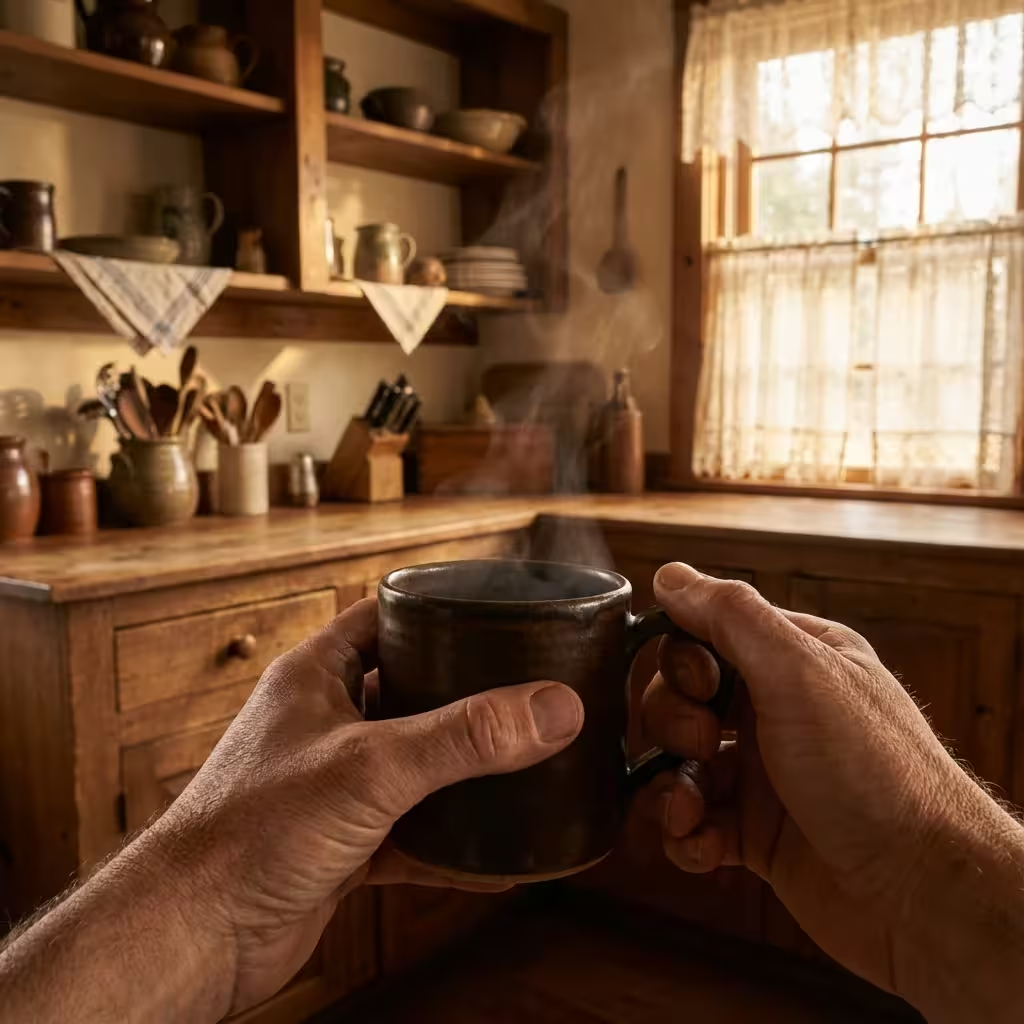
This morning—mid-December now, cold enough that the old cottage windows rattle—Maya handed me a mug of coffee that tasted like winter. Dark, rich, warming from the inside out. I cupped my hands around the ceramic, let the steam warm my face, and actually tasted it. Chocolate notes. Something almost like cinnamon. The particular weight of December in the Ohio Valley.
"Good?" Maya asked.
"Really good," I said. And I meant it. Not just the coffee—though the coffee was excellent. But the whole thing. The slowing down. The noticing. The daily practice of paying attention to small things that turn out to be not so small after all.
I'm thirty-two years old. I've been drinking coffee since college. And I'm just now learning to taste it. Better late than never, I guess. Better to wake up to what you've been missing than to keep sleep-walking through the rest of your life.
The coffee helps. But really, it's Maya—and this place, this community, this commitment to being present—that's teaching me to taste seasons, notice moments, and slow down enough to experience my own life instead of just rushing through it.
Next month the roast will change again. Jim shifts to his darkest winter blend in January—bold and grounding, meant for mornings when it's still dark at 7 AM and the river's frozen over. I can't wait to taste it.
6 COMMENTS






Tom Richardson
17 Dec 2024This is beautiful, Sarah. Makes me want to actually slow down and taste my morning coffee instead of just mainlining it.
REPLYElena Martinez
17 Dec 2024I remember that Tuesday morning! You had this look on your face like you'd discovered something secret. Now I get it.
REPLYMaya Chen
17 Dec 2024I've been buying from Jim for three years now and still learn something new every season. His winter blend is going to blow your mind, Sarah.
REPLYEmma Clarke
17 Dec 2024"Better to wake up to what you've been missing than to keep sleep-walking through the rest of your life." This hit me hard. Thank you for writing this.
REPLYBill Henderson
18 Dec 2024Took me 40 years of drinking coffee to start tasting it. You're ahead of the curve at 32.
REPLY