



It was 8:47 on a Wednesday morning in late April when I learned that gardens have memories longer than ours.
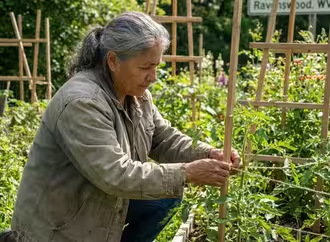
I was carrying my coffee out to the sun porch when I saw Rosa Delgado in her side yard, bent over a wooden stake with a ball of twine in her hand. The tomato plants were still small—barely six inches—but she was already preparing for their eventual size, the way someone who's done this sixty times knows exactly what's coming.
I'd moved into my uncle Jimmy's cottage last June, seven months ago. Still learning the rhythms of this street, still figuring out who's who and what happens when. Rosa lives two doors down in an 1895 Folk Victorian that she's occupied since 1972. Fifty-three years in the same house. I can't imagine.
Rosa's Grandmother's Method
"My grandmother taught me this in 1968," Rosa said when I walked over with my coffee. She didn't look up from her work. "You stake them young so they grow into the support instead of fighting it later."
She was using thick wooden stakes, the kind you don't see anymore—probably eight feet tall, weathered gray. Her hands moved with absolute certainty: stake into the ground twelve inches deep, twine looped around the base of the plant, figure-eight pattern so the stem has room to grow but can't topple.
"These stakes are from Bob's workshop," she continued. "He mills them from old fence posts he salvages. Says it's a shame to let good cedar go to waste."
Bob Harrison lives across the street with his wife Helen. I'd seen him in his garage workshop but hadn't talked much beyond polite waves. Rosa kept working while she talked, the way people do when they're performing a task they could do in their sleep.
"The trick is knowing the tomato varieties. These are Cherokee Purple—they get big, need strong stakes. Those over there are Romas—they're determinate, they stop growing, you can use lighter support." She pointed to another bed where smaller stakes waited. "You learn these things after you've failed enough times."
The Sound of a Porch Being Rebuilt
Across the street, I could hear Bob's saw running. Steady, methodical cuts. I'd been hearing it for three days now—Wednesday through Friday mornings, same rhythm. Rosa noticed me listening.
"He's rebuilding Helen's front porch steps," she said. "One board at a time. Could hire it done in an afternoon, but Bob doesn't work that way. He's replacing each board with matching wood from a salvaged porch in Parkersburg. Wants it to look like it's always been there."
The saw stopped. In the quiet, I could hear Bob measuring something, the tape measure's metallic slide. Then the saw again. Another cut. Another board fitted into a 129-year-old porch that was slowly being made whole.
These houses don't ask us to restore them to perfect condition. They ask us to keep caring, one season at a time, one board, one tomato plant, one layer of wallpaper.
"How long will it take him?" I asked.
"However long it takes," Rosa said. "Bob's been a woodworker for forty-seven years. Retired from the factory in 2018, thought he'd slow down. Instead he just started fixing everyone's porches for free. Says it keeps his hands honest."
Helen's Discovery
Later that morning—10:23, I remember because I'd just refilled my coffee—Helen appeared on her newly-partially-rebuilt porch and called over to Rosa's yard. "Rosa! Can you come see this?"
Rosa wiped her hands on her jeans and headed over. I followed because Helen had that excited tone that means someone found something. In these old houses, people are always finding something.
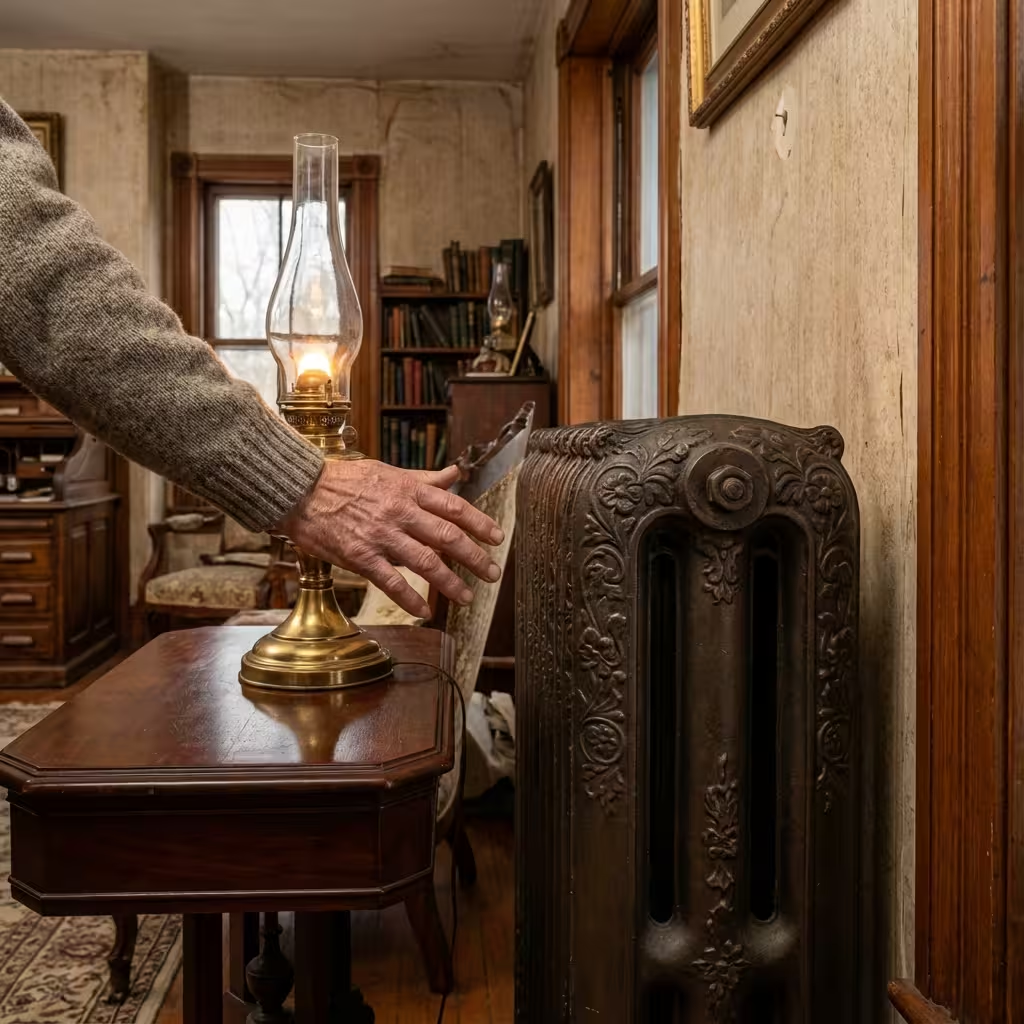
Inside Helen's cottage, in the front parlor, she'd been removing a damaged section of plaster near the bay window. Underneath, there was wallpaper. And underneath that wallpaper, there was another layer. And under that, a third—this one with a pattern of tiny pink roses on a cream background, the paper slightly yellowed but remarkably intact.
"I looked it up," Helen said, pulling out her phone with photos she'd already taken. "This pattern is from around 1953. There's a historical wallpaper database. The one under it might be from the 1920s—I can see geometric Art Deco patterns where it's torn. And the bottom layer, the original, I think that's from when the house was built in 1891."
We stood there in her parlor—me with my coffee, Rosa with dirt under her fingernails, Helen with plaster dust in her hair—looking at 130 years of decorating choices preserved like archaeological strata.
"Are you going to restore it?" I asked.
Helen laughed. "Restore which layer? That's the question, isn't it? The 1890s original is mostly destroyed. The 1920s layer is fragmentary. This 1953 rose pattern is the most complete, but I don't know if I can live with pink roses."
"You could leave it exposed," Rosa suggested. "Frame it somehow. Show all the layers."
Helen considered this. "Like a historical record. Yeah. I like that."
What These Houses Teach
Bob came in around 11:00, done with his morning's work. Three new porch boards installed, perfectly fitted, the wood grain matched so carefully you couldn't tell new from old unless you looked closely. He was seventy years old and had just spent three hours on his knees fitting tongue-and-groove boards into a porch built before his grandmother was born.
"You keeping the wallpaper?" he asked Helen, looking at the exposed section.
"Thinking about it. Making a feature of it somehow."
"I could build a shadow box frame. Seal it under glass so it doesn't deteriorate further. Let people see the layers." He was already measuring with his eyes, planning the joinery.
This is what I'm learning about this street, these cottages, these people who've been here longer than I've been alive. They don't approach these houses as projects to be completed. They approach them as ongoing relationships. Rosa doesn't just plant tomatoes—she plants them the way her grandmother taught her, using stakes from Bob's workshop, knowing she'll do this again next April and the April after that. Bob doesn't just fix porches—he sources matching wood and works slowly because the house deserves that kind of attention. Helen doesn't restore wallpaper to some imagined original state—she considers preserving the history of all its changes.
The Afternoon Shift
Around 2:30 PM, I was back on my sun porch working—I write from home, irregular hours—when I saw Bob back in his workshop. But this time he wasn't cutting porch boards. He was milling stakes. Long, straight cedar stakes like the ones Rosa was using.
I walked over. "Making stakes for Rosa?"
"For whoever needs them," Bob said. "Spring's here. People will be planting. I make about fifty stakes every April, fifty more in May. Keep them in the garage. Anyone on the street wants one, they just take it."
He showed me his process: salvaged fence posts from demolished properties around Parkersburg, cut to eight-foot lengths, run through the table saw to get them square and smooth, ends sharpened to a point with the belt sander. Each stake took about seven minutes. He was making his twelfth when I arrived.
"You charge for these?"
He looked at me like I'd asked if he charged people for breathing. "It's cedar that was going to be thrown away. I'm just giving it another fifty years of use. Rosa will use these stakes until 2040 probably. Then someone else will inherit them and use them another twenty years. That's how these things work."
What I Planted
That evening—6:15, the light going golden—I went to Bob's garage and took three stakes. I'd bought tomato seedlings at the hardware store two weeks ago: two Cherokee Purple and one Roma, because that's what they had and I didn't know any better. They'd been sitting in their plastic containers on my sun porch, waiting for me to figure out what I was doing.
Rosa saw me carrying the stakes to my backyard. She appeared five minutes later with her ball of twine and a hand trowel.
"First time planting tomatoes?" she asked.
"That obvious?"
"You bought them two weeks ago and haven't planted them yet. That's the obvious part." She smiled. "Come on. I'll show you the grandmother method."
We planted those three tomatoes in my backyard as the sun set behind the river hills. Rosa showed me how to dig the hole deeper than I thought necessary—"Tomatoes grow roots along the buried stem"—and how to stake them young so they grow into the support. How to make the figure-eight tie that's firm but allows for growth. How to water deeply at the base, not overhead.
"You'll need to tie them up again in three weeks," she said. "They grow fast. And you'll probably lose some fruit to cracking your first year—everybody does. You're learning what the plant needs, and the plant's learning what your yard provides. Takes a season to figure each other out."
Advertisement
The Long View
I'm writing this on my sun porch three days later. Sunday, April 27, 9:34 AM. Across the street, Bob is back at Helen's porch—I can hear the methodical work, another board going in. Rosa's in her garden, checking her stakes. Helen's in her parlor; I can see her through the bay window, probably still deciding what to do about the wallpaper.
My three tomato plants are in the backyard, staked and tied with Rosa's twine, using Bob's stakes, planted in soil that's been growing things in this same spot since 1892. In three weeks I'll need to tie them up again. In July I'll probably lose some fruit to cracking, because that's how you learn. In September, if I'm lucky, I'll have tomatoes, and I'll bring some to Rosa and maybe she'll tell me more about her grandmother's methods.
These houses don't ask us to restore them to perfect condition. They ask us to keep caring, one season at a time. One board. One tomato plant. One layer of wallpaper discovered and carefully preserved. The continuity isn't in the objects—it's in the attention. Rosa learned from her grandmother. Bob learned from forty-seven years of factory work and woodworking. Helen's learning from the house itself, reading its history in plaster and paper layers. And I'm learning from all of them, slowly, one Wednesday morning at a time.
The stakes will outlast the tomatoes. The porch boards will outlast Bob's hands. The wallpaper will outlast all of us. But the attention we bring to these small acts of maintenance and care—that's what keeps these old houses alive. Not as museums, but as homes where people still plant gardens using their grandmother's methods, still rebuild porches one board at a time, still discover layers of history and decide what to preserve.
Spring arrives through human hands. Same as it always has.
12 COMMENTS




Maya Chen
24 Apr 2024Annie, this is beautiful. Rosa taught me the same staking method last year. I still managed to lose half my tomatoes to splitting, but she was right—year two is better. You learn what your soil wants.
REPLYBob Harrison
24 Apr 2024Those stakes should last you twenty years if you bring them in each November. Just lean them in the garage or basement. The cedar will outlive all of us if we take care of it.
REPLYHelen Harrison
25 Apr 2024Update: Bob finished the shadow box frame for the wallpaper yesterday. We sealed the layers under museum glass. It's stunning—you can see all three generations of decorating choices. Come by and see it sometime.
REPLYEmma Clarke
25 Apr 2024I love how you captured the patience of these houses. Everything takes longer than you think it should, but the slowness is the point. Rosa once told me her grandmother said "gardens grow on their own schedule, not yours."
REPLYTom Richardson
26 Apr 2024If those Cherokee Purples need extra support mid-summer, come get me. They get heavy when they fruit. Better to add a second stake in July than watch the plant collapse under its own success.
REPLY