



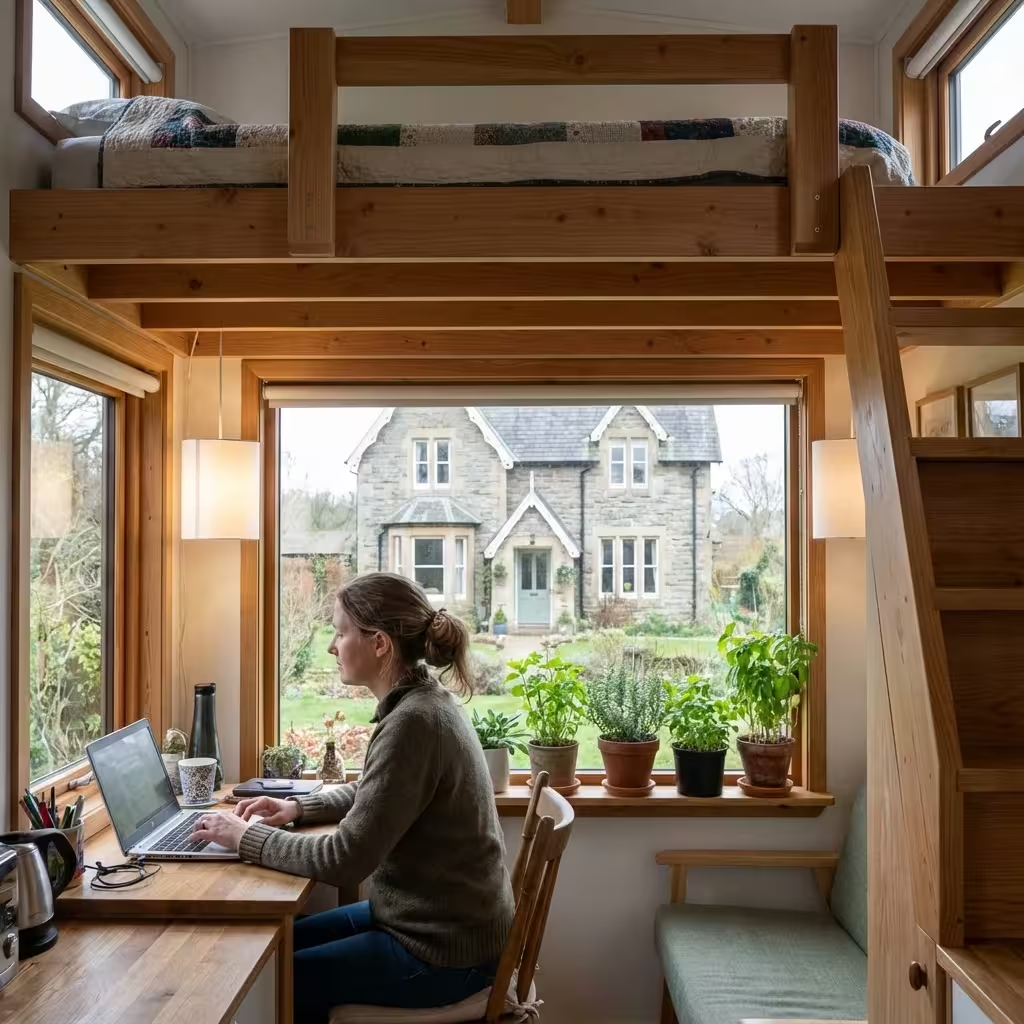
The SILK cottage in Marietta came with a two-bedroom house I didn't need and a backyard big enough for something smaller. I'd been watching tiny house videos for years—those perfectly curated spaces where everything has a place and nothing is wasted. It looked peaceful. Intentional. Affordable.
I had $18,000 saved, basic carpentry skills from helping my dad build a deck once, and the confidence of someone who'd never actually built anything larger than a bookshelf.
Spoiler: it cost $31,000, took fourteen months, and required permits I didn't know existed. But I'm writing this from inside it, so something went right.
The Plan That Changed Six Times
I started with an 8x20 foot trailer I found on Craigslist. The guy selling it had also planned to build a tiny house, got as far as buying the trailer, then gave up. "You'll see," he said ominously when I picked it up.
My initial design was sleek and minimal: sleeping loft, composting toilet, tiny kitchen, lots of windows. I drew it up on graph paper, calculated square footage, felt very accomplished. Then I showed it to Bill.
"Where's your heat source?" he asked.
I hadn't included one. The videos made it look like a space that small would just...stay warm? Bill explained, very patiently, how heat and insulation work in West Virginia winters. I added a propane heater to the design.
"And plumbing? You running water from the main house?"
I hadn't thought about that either. Composting toilet meant no sewer connection, but I'd still need fresh water. Which meant trenching a line from the cottage, which meant permits, which meant the city finding out I was building this thing.
Tiny houses look simple in videos because they skip the part where you argue with zoning officials about whether your accessory dwelling unit meets setback requirements.
Permits, Or: How I Learned to Love Bureaucracy
Marietta's zoning code doesn't mention tiny houses. It does mention "accessory structures," which my build technically was. The city planner, a patient woman named Deborah, walked me through what I'd need: building permit, electrical permit, plumbing permit if I connected to city water, setback measurements, fire safety compliance.
"Most people don't bother with all this for a shed," she admitted. "But if you're living in it, we need to make sure it's safe."
Fair. The permit process added $1,200 and two months of waiting, but Deborah caught things that would've been disasters later—like my original plan putting the house too close to the property line, or my electrical setup that would've been a legitimate fire hazard.
Jordan, who's an electrician when he's not hanging out at Bill's porch gatherings, looked at my wiring diagram and just laughed. "You cannot run a space heater and a hot plate off the same 15-amp circuit. You will burn this thing down."
He redrew my electrical plan. I bought better wire. Another $800 gone, another lesson learned.
Building It, Very Slowly
Construction started in May. I thought I'd be done by August. Optimism is beautiful and stupid.
The frame went up in three weeks—mostly because Tom and Jacob helped on weekends. They'd built decks and sheds before, knew how to square corners and level headers. I provided lunch and learned how to use a circular saw without cutting off my fingers.
The walls took longer. I insisted on real insulation—R-19 in the walls, R-30 in the roof—because Bill's winter heating lecture had scared me straight. Insulating a tiny curved space is like doing a jigsaw puzzle where the pieces fight back. Every cut had to be exact. Every gap meant cold air leaking in.
By July I was behind schedule and over budget. The exterior siding cost twice what I'd estimated. The windows—I splurged on double-pane, energy-efficient ones—were $1,400 for three tiny windows. I kept a spreadsheet of expenses that made me nauseous to look at.
Advertisement
Emma found me in the backyard one August evening, sitting on the unfinished steps, staring at my half-built house. "You okay?"
"I've spent $22,000 and I can't even sleep in it yet."
She sat down next to me. "But you're going to finish it."
"Yeah." I was too committed to quit now, financially and emotionally.
"Then it's not wasted money. It's just...delayed housing." She brought me a beer from Bill's porch. We sat there until the fireflies came out, and the half-built tiny house looked less like a mistake and more like a project in progress.
Move-In Day: November
I moved in the week before Thanksgiving. The house wasn't finished—there were gaps in the trim, the loft ladder was temporary, I hadn't installed the bathroom sink yet. But it had heat, light, running water, and a door that locked. Legally habitable, per the city inspector who signed off after a very thorough walkthrough.
That first night was surreal. I made tea on the two-burner propane stove. Climbed the ladder to the sleeping loft. Lay in my bed looking at the ceiling that was exactly four feet above my face. The space heater clicked on, warm air filling the tiny room fast.
I owned almost nothing anymore. Most of my stuff hadn't made the cut during the Great Purge of August, when I'd measured every possession against the question: is this worth the space it takes? Turns out you don't need three sets of dishes. Or a collection of books you haven't read in years. Or half the clothes you think you do.
What I kept: one good knife, four plates, two pots, a French press, enough clothes for a week, books I actually reread, my laptop, a quilt my grandmother made. Everything fit.
Winter: The Real Test
December tested every decision I'd made. The insulation proved its worth—the space heater kept the whole house comfortable, even when it was 20 degrees outside. The propane bill was manageable, around $40 a month.
But small things became big deals. Condensation on the windows from cooking or showering. The composting toilet needed more frequent emptying than advertised. The loft got stuffy at night because heat rises and there was nowhere for it to go.
I added a small fan to circulate air. Cracked a window when cooking. Developed a routine for managing the toilet that was unglamorous but functional. Jesse, from the Parkersburg cottage, came by to check out the build and we talked through my condensation problem. "You need more ventilation," he said. "Tiny space, lots of moisture, it's gonna build up."
I installed a bathroom vent fan. Problem mostly solved. Another $200, another lesson.
What It Actually Cost
Final budget: $31,400. Breakdown:
- Trailer: $2,800
- Lumber and framing: $4,200
- Insulation: $1,800
- Windows and door: $2,100
- Exterior siding: $2,400
- Roofing: $1,600
- Interior finishes: $3,200
- Plumbing: $2,800
- Electrical: $3,100
- Heating/ventilation: $1,900
- Permits and fees: $1,200
- Composting toilet: $1,100
- Appliances: $1,400
- Tools I had to buy: $900
- Mistakes and do-overs: $900
Not exactly the $20,000 tiny house dream. But it's mine, it's legal, and it works.
What I Learned
Living in 200 square feet isn't about deprivation. It's about precision. Every item earns its place. Every system has to function well because there's no room for backup plans. You can't just shove things in a closet—there is no closet. You can't ignore problems—a small leak becomes a big deal fast.
But there's freedom in it too. Cleaning takes ten minutes. Heating costs are low. I know where everything is because there aren't many places it can be. When I leave for work, I'm leaving 200 square feet, not a whole house that needs maintenance.
The main cottage sits empty most of the time now. I use it for storage, host dinners there when people visit, do laundry. But I sleep in the tiny house, eat breakfast in the tiny house, live my actual life in 200 square feet behind the Victorian I technically rent.
It's weird, probably. Emma calls it my "fancy shed." Jacob asks when I'm building him one. Bill just nods approvingly, like I've joined some club of people who've built things with their hands and survived.
I'm still finishing details—proper shelving, better window treatments, maybe a small deck off the door. But I'm living in it while I do that, which feels right. Not a project I completed and then moved into. A space I'm building while I inhabit it, adjusting as I learn what I actually need.
Turns out tiny living isn't simple. But it is, weirdly, enough.
16 COMMENTS




Jordan Mills
20 Dec 2024Still proud of that electrical work. Your tiny house is the only one I've wired that I'm confident won't burn down.
REPLYBill Harrison
20 Dec 2024I remember when you were sitting on those unfinished steps looking defeated. You did good, kid.
REPLYEmma Clarke
20 Dec 2024It's not a fancy shed! It's a...very nice shed. With excellent electrical work.
REPLY