



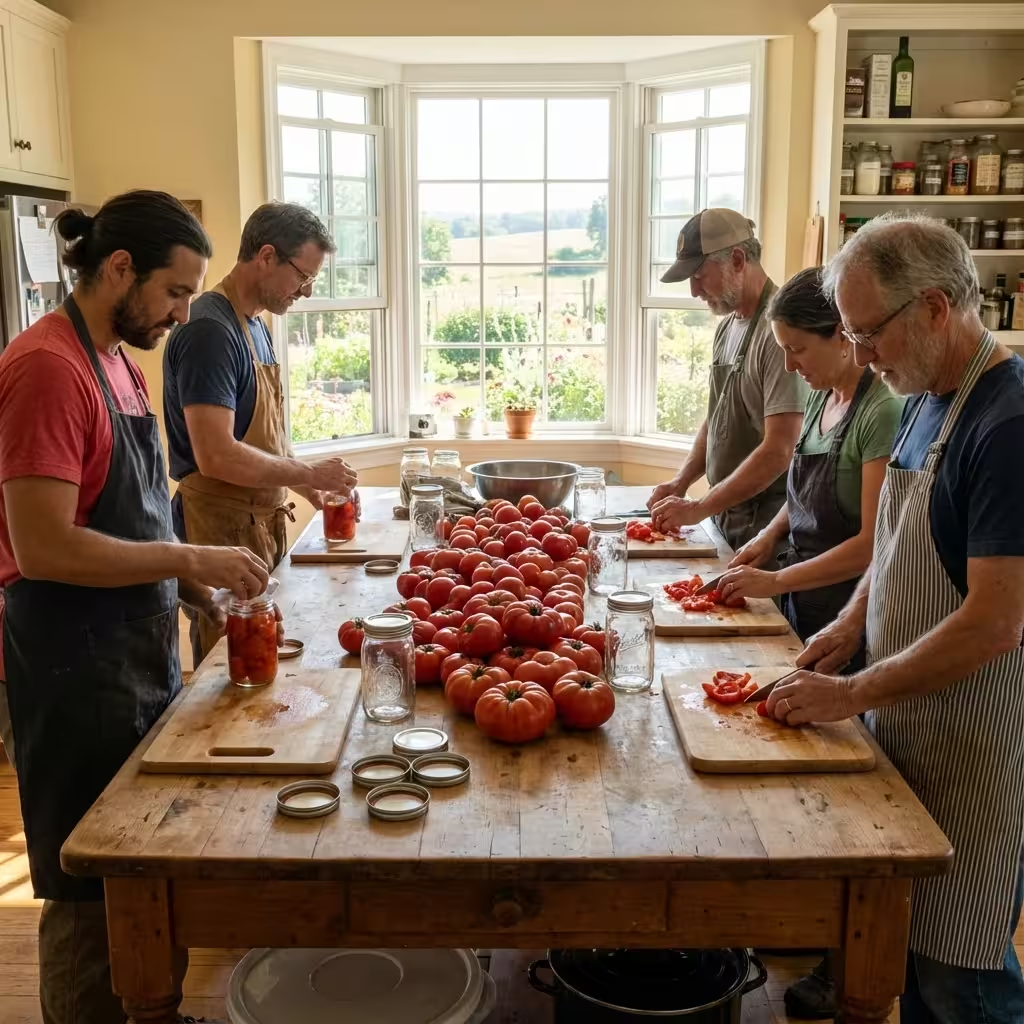
Jesse arrived at Maya's kitchen on a Thursday afternoon in late August carrying five cardboard boxes and wearing the sheepish expression of someone who knows they've miscalculated. "I might have overplanted," he said, setting the boxes on the counter. Inside: forty-seven pounds of heirloom tomatoes at absolute peak ripeness.
This was Jesse's first year seriously gardening. He'd been inspired by Bill's backyard plot, watched YouTube videos all winter, started seeds under grow lights in March. Planted fifteen tomato plants in May. "Everyone says some don't make it," he explained, surveying the kitchen now covered in tomatoes. "But they all made it. And then they all produced. A lot."
Maya looked at the tomatoes—Cherokee Purples, Brandywines, Green Zebras, a few red slicers—and started laughing. Not mean laughter, the kind that comes from recognizing a familiar problem. "Every gardener does this once," she said. "Plants too much, everything comes in at once, stands there wondering what hubris looks like in vegetable form."
"Can you use any of them?" Jesse asked hopefully.
"I can use maybe ten pounds before they go bad. But we can process the rest. You free this evening?"
And just like that, the tomato emergency became a community event.
Seasonal eating isn't a choice when you're dealing with a garden. Tomatoes come in August whether you're ready or not. You either figure out preservation or you watch forty-seven pounds of food rot. We chose preservation.
By 6 PM, Maya's kitchen held seven people and forty-seven pounds of tomatoes. Elena showed up with her canning supplies—jars, lids, the giant pot she uses for water bath canning. Tom brought his immersion blender. Bill arrived with the ancient food mill he inherited from his mother. I brought cutting boards and the enthusiasm of someone who's read about preservation but never actually done it.
"Okay," Maya said, taking charge the way she does when food's involved. "We're making sauce. Basic marinara that'll freeze well. Jesse, you're washing. Tom, you're cutting. Elena's handling the canning station. Bill's running the food mill. Emma—you're on quality control and morale."
"What's morale?" I asked.
"Music, snacks, keeping energy up. This'll take hours."
She wasn't wrong. Processing forty-seven pounds of tomatoes turns out to be a meditation in repetition. Wash, cut, simmer, mill, reduce. The kitchen got hot—stove running, August humidity, seven bodies in a space meant for two. We opened all the windows. Someone put on music. Bill produced a bottle of wine from somewhere. Tom ordered pizza when we realized nobody'd eaten dinner.
Around 8 PM, standing at the sink washing my third cutting board, I had this moment of clarity about seasonal eating. This is what it actually means—not shopping at farmers markets or reading farm-to-table menus, but standing in a hot kitchen processing forty-seven pounds of tomatoes because they're ripe now and won't be next week. The season dictates. You respond.
"How much did these cost you?" Tom asked Jesse, running tomatoes through the food mill.
"Maybe sixty dollars in seeds and supplies," Jesse said. "Plus the time, I guess."
"So we're making probably thirty jars of sauce that would cost, what, four dollars each at the store? That's like a hundred and twenty dollars of sauce."
"If you only count the money," Maya interjected. "But you're not accounting for quality. This is organic, fresh, no preservatives, made by people who care. You can't buy that."
Preservation isn't about saving money, though it does. It's about capturing summer in a jar so you can taste it in February. It's about refusing to waste food just because it came all at once. It's about learning skills your grandparents knew that somehow got lost.
By 10 PM we had twenty-eight quart jars of tomato sauce cooling on Maya's counter, their lids making that satisfying "pop" sound as the seals set. Jesse's tomatoes had been transformed from a crisis into something that would feed multiple households through winter. His face when he saw the jars lined up—pride mixed with disbelief that he'd grown this, that his garden had produced something real and useful and more than he needed.
"What do I do with them?" he asked.
"Keep what you'll use," Maya said. "Share the rest. That's how this works."
So we divided the jars. Jesse took eight. Maya kept six. The rest got distributed among the people who'd shown up to help—payment in sauce for labor given freely. This is the seasonal economy in miniature: abundance shared, skills traded, nobody keeping precise accounts because the point isn't fairness but sufficiency.
I took two jars home that night and used one in October to make pasta when the weather turned cold. The sauce tasted like August—bright, acidic, sweet. I could remember Jesse's sheepish face, Maya's hot kitchen, the hours we'd spent processing tomatoes while music played and wine got shared and pizza got eaten standing up because all the counter space was covered in food.
That jar of sauce connected me to a moment, a season, a community. You can't buy that at a grocery store no matter how much you pay.
Jesse learned from his mistake. This year he planted five tomato plants instead of fifteen. He's got a better sense of scale now, understands that a 40x60 foot garden plot can produce shocking amounts of food if you know what you're doing (or get lucky with weather, which amounts to the same thing).
But the interesting thing is, he still had surplus. That's what happens when you grow food—nature doesn't deal in precise quantities. So now he's part of the Sunday distribution, bringing his extra tomatoes to Bill's backyard, contributing to the informal sharing economy that keeps everyone in fresh vegetables all summer.
The seasonal harvest isn't a problem to solve but a rhythm to learn. Everything comes at once. You preserve what you can, share what you can't, accept that some will go to compost because abundance is like that—messy and more than you need and requiring skills (canning, freezing, fermenting, drying) that our grandparents knew but we're having to relearn.
Modern food systems taught us to expect tomatoes year-round. But tomatoes come in August. Learning to eat seasonally means letting go of constant availability and accepting the feast-or-famine rhythm of actual growing. It's harder. It's also more honest.
This winter, when I open my second jar of Jesse's tomato sauce, I'll remember this. The day our community gathered in a too-hot kitchen to process forty-seven pounds of tomatoes. The music and wine and pizza and laughter. The way Elena taught us canning like her grandmother taught her. The look on Jesse's face when he realized his mistake had become something valuable.
That's what local harvest means at ground level. Not idealized farmer's market aesthetics but the practical, sweaty, communal work of dealing with abundance. Learning preservation. Sharing surplus. Eating with the seasons because the seasons don't give you a choice.
Maya keeps threatening to charge admission to her kitchen. "Community preservation nights," she jokes. "Bring your surplus, we'll teach you how to deal with it." She's kidding, but also maybe not. Because this is what we're building here—not just a place to live but a network of people who remember how to handle real food in real quantities at the actual time it's ready.
Jesse's tomatoes taught us that. Nature produces abundance. Community figures out how to use it. And sometimes, when you get it right, you end up with jars of summer on your shelf and the knowledge that you're not facing February alone.
15 COMMENTS






Jesse Thompson
12 Dec 2024I still can't believe how this turned out. From disaster to twenty-eight jars of sauce. This community is incredible.
REPLYLaura Martinez
13 Dec 2024This is my favorite kind of story—practical wisdom wrapped in community. I'm inspired to learn canning now!
REPLYFrank Morrison
17 Dec 2024Farm-to-table isn't just a trend for us—it's how we live. Thank you for sharing our story.
REPLYMaya Chen
18 Dec 2024Those tomatoes from Frank's farm changed everything for me. You can taste the care.
REPLYEmma Clarke
18 Dec 2024Supporting local farmers like Frank has transformed how I think about food.
REPLY